
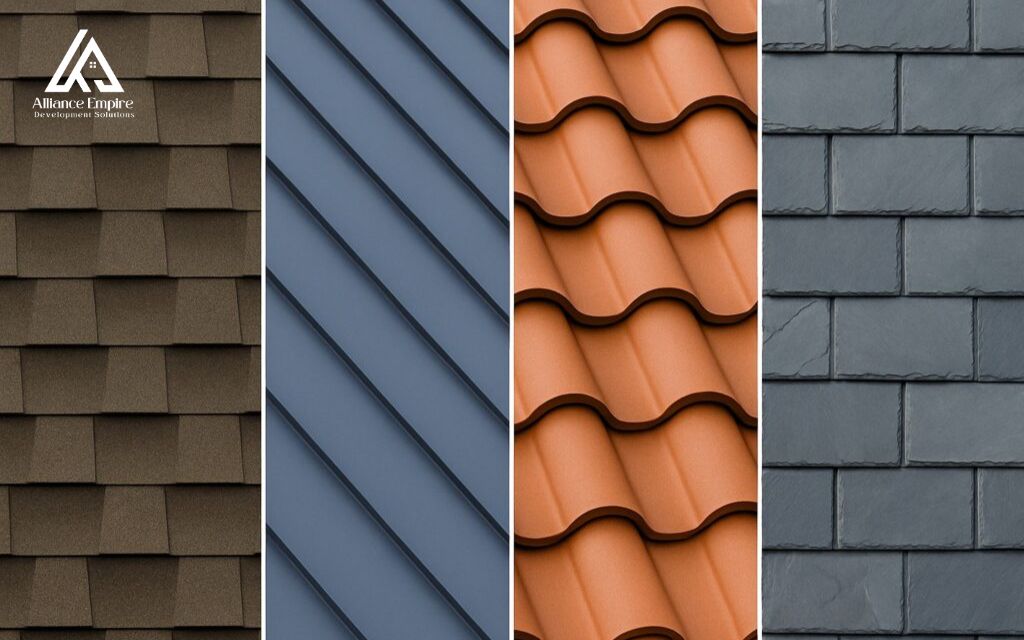
What if your roof – the very thing protecting your family, your possessions, and your biggest financial investment – was the wrong type of roofs for where you live? In Denver, that question matters more than almost anywhere else in the country.
Colorado homeowners face a punishing combination of intense hailstorms, heavy snow loads, rapid freeze-thaw cycles, and some of the strongest UV exposure at altitude in North America. The wrong roof type can mean repeated insurance claims, costly emergency repairs, and premature replacement. The right one can deliver decades of reliable protection and real long-term savings.
This guide walks you through the main types of roofs in Denver, explains how each one performs in Colorado’s climate, and helps you make a confident, informed decision, whether you’re planning a full replacement, recovering from hail damage, or managing an aging roof that keeps springing leaks. You’ll also learn when repair is genuinely enough and when a material upgrade is the smarter move.
Alliance EDS has served Denver homeowners for 15+ years. We match the right type of roofs to your home, neighborhood, and storm history, and we never push unnecessary replacements. Call (720) 207-4646 or visit allianceeds.com for an honest assessment.
Why type of roofs matters more in Denver’s climate
Most roofing guides treat material selection as a budget decision. In Denver, it’s a performance and risk decision first. The city’s climate creates challenges that simply don’t exist in milder parts of the country, and they affect each type of roofs in very different ways.
Here’s what Denver roofs deal with that roofs in most U.S. cities do not:
• Hailstorms: Denver sits in the heart of ‘Hail Alley.’ The metro area regularly sees stones 1 to 2 inches in diameter, and storms can arrive with little warning from late spring through early fall.
• Heavy snow loads: A single major snowstorm can deposit hundreds of pounds of snow and ice on a flat or low-slope roof. Pitched roofs shed snow faster, but ice dams at eaves remain a real problem when insulation and ventilation are inadequate.
• High-altitude UV: At 5,280 feet and above, UV radiation is significantly more intense than at sea level. This accelerates granule loss on asphalt shingles and degrades lower-quality membranes and synthetics faster than manufacturers’ warranties may account for.
• Rapid temperature swings: Denver is famous for going from 70 degrees to a snowstorm within hours. These swings cause roofing materials to expand and contract repeatedly, stressing seams, flashings, and fasteners over time.
• Freeze-thaw cycles: Water infiltrates small cracks or gaps, freezes, expands, and widens those gaps. Flat roofs and aged asphalt shingles are especially vulnerable.
The bottom line: the best type of roofs for your Denver home is the one that handles all of these conditions reliably over 20 to 30 years, not just the one with the lowest upfront cost.
Overview 8 main types of roofs in Denver
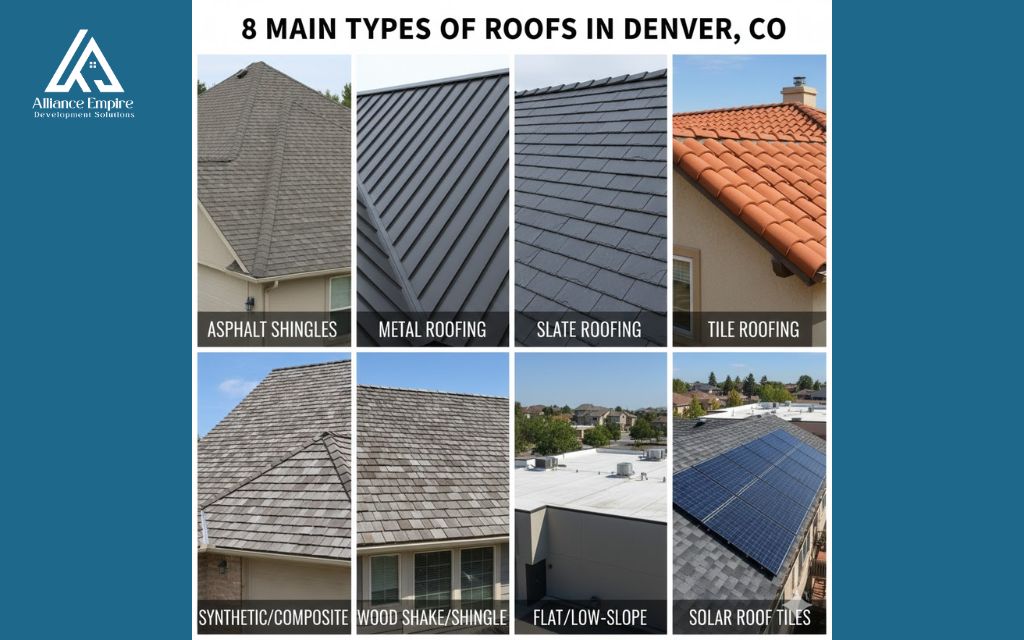
Denver homeowners and property managers have more roofing options today than ever before. Here’s a quick-reference summary before we go deeper into each one:
| Roof type | Best for | Avg. lifespan (CO) | Hail resistance | Snow performance |
| Asphalt shingles (standard) | Residential, budget-conscious | 15-25 years | Moderate | Good (pitched) |
| Class 4 impact-resistant shingles | Hail-prone residential | 25-30 years | High | Good (pitched) |
| Metal (standing seam/panels) | Residential & commercial | 40-70+ years | Very high | Excellent (sheds snow) |
| Stone-coated steel | Residential, premium look | 40-50+ years | Very high | Very good |
| TPO / EPDM / Mod Bitumen (flat) | Commercial, modern residential | 15-30 years | Moderate | Requires drainage |
| Concrete/clay tile | Upscale residential | 30-50 years | High (varies) | Heavy; needs structural review |
| Natural slate | Premium residential | 75-100+ years | High | Excellent (heavy) |
| Synthetic/composite | All residential types | 30-50 years | High | Good to very good |
Asphalt shingle roofs
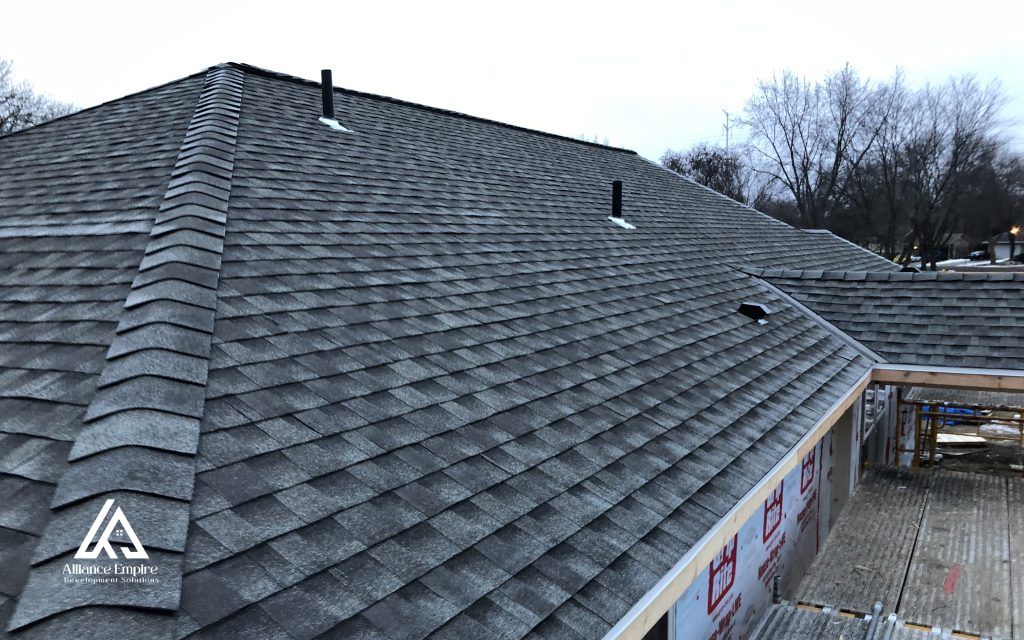
Asphalt shingles are the most common residential type of roofs in Denver and across the Front Range. They’re affordable, widely available, and straightforward to install, which means faster turnaround after storm damage. They come in two main formats:
• 3-tab shingles: Thinner, flat-profile, lighter, and less expensive. Less common on newer homes but still found across older Denver neighborhoods.
• Dimensional/architectural shingles: Thicker, layered profile that mimics the look of wood shake. More durable and more resistant to wind uplift than 3-tab.
Under Colorado conditions, standard asphalt shingles typically last 15 to 25 years, compared to the 25 to 30 years often quoted in milder climates. High-altitude UV exposure and repeated freeze-thaw cycles accelerate granule loss and cracking.
The upgrade that makes sense in Denver: Class 4 impact-resistant shingles.
Class 4 is the highest UL 2218 impact-resistance rating available for asphalt shingles. These products use rubberized or reinforced polymer construction that absorbs and disperses hail impact rather than cracking or bruising. The performance difference versus standard shingles in a real Denver hailstorm is significant.
In many Colorado counties and zip codes, upgrading to Class 4 shingles when replacing your roof can qualify you for a discount on your homeowner’s insurance premium. That alone can meaningfully offset the modest cost premium over standard shingles.
• When repair is enough: Isolated missing shingles, minor granule loss in one area, or a handful of cracked tabs after a small storm.
• When replacement is the honest answer: Widespread granule loss exposing mat material, hail bruising across most of the roof surface, multiple leaks, or a roof approaching 20+ years old.
Seeing missing shingles or water spots on your ceiling after a recent storm? Don’t climb the ladder yourself. Call Alliance EDS at (720) 207-4646 for a safe inspection and honest repair-vs-replacement recommendation.
Metal roofing (including stone-coated steel)
Metal roofing has grown significantly in popularity across Denver and the surrounding Front Range, and for good reason. It’s the roofing system best designed for Colorado’s combination of hazards.
The two most common metal systems for residential use in Denver are:
• Standing seam metal: Concealed fasteners, raised seams that interlock panels, and excellent resistance to wind uplift. Smooth profile sheds snow efficiently.
• Stone-coated steel: Steel panels coated with an acrylic-bonded stone granule surface that mimics the appearance of traditional shingles, tile, or shake. Combines the aesthetics of conventional roofing with the structural durability of steel.
| Feature | Standard asphalt | Metal/stone-coated steel |
| Lifespan (CO climate) | 15-25 years | 40-70+ years |
| Hail resistance | Class 3 (standard) / Class 4 (IR) | High to very high (varies by gauge) |
| Snow performance | Good (pitched) | Excellent: sheds snow, reduces ice dams |
| UV performance | Degrades over time | Excellent (reflective finishes) |
| Insurance considerations | Standard rating | Potential premium benefits (Class 4) |
| Typical cost relative to asphalt | Base | 2-3x upfront; lower long-term cost |
An important point on hail and metal: Large hail can cause cosmetic denting on metal roofs, particularly on thinner panels. However, cosmetic dents rarely mean structural failure or leaks. Textured finishes (like stone-coated steel) and heavier gauge materials both reduce visible denting significantly.
Metal roofs also reflect solar heat rather than absorbing it, which can lower cooling costs during Denver’s hot summer months. And their smooth surface means snow slides off cleanly, reducing the ice dam risk that plagues asphalt roofs in neighborhoods with complex roof geometries.
For Denver homeowners who are tired of filing a hail claim every few years and watching their insurance history accumulate damage reports, upgrading from asphalt to metal or stone-coated steel at replacement time is often the most cost-effective decision over a 20 to 30-year horizon.
Alliance EDS guides Denver homeowners through metal roof installation from panel profile selection to underlayment specs, fastener systems, and insurance coordination. Call (720) 207-4646 or email [email protected] to schedule a consultation.
Flat and low-slope roofing systems
Flat and low-slope roofing is standard on commercial buildings throughout Denver and is increasingly used on modern residential designs, additions, and detached garages. The most common systems in Colorado are:
• TPO (Thermoplastic Polyolefin): A single-ply white membrane that reflects UV and solar heat. Highly popular for commercial flat roofs in Denver. Seams are heat-welded, creating a strong, watertight bond.
• EPDM (Ethylene Propylene Diene Monomer): A synthetic rubber membrane, very durable in freeze-thaw conditions, typically black (which can raise cooling costs). Long track record and easy to repair.
• Modified Bitumen: Asphalt-based multi-layer system with excellent flexibility in cold temperatures. Often used on residential flat or low-slope sections and aging commercial buildings.
The critical challenge for flat roofs in Colorado is drainage. Heavy snow that sits and then partially melts creates ponding water, which stresses seams and accelerates membrane degradation. Clogged drains, improper slope, and failed flashing details are the three most common causes of flat roof leaks in Denver.
Reflective TPO membranes can meaningfully reduce cooling costs in commercial buildings during Denver’s sunny summers. Some building owners are also exploring spray polyurethane foam (SPF) systems that add insulation value directly to the roof assembly, which improves energy performance year-round.
DIY patching on flat roofs almost always creates more problems than it solves. Improperly applied patches fail quickly, often void manufacturer warranties, and can mask underlying structural issues that only worsen over time.
Alliance EDS inspects flat roofs for subtle hail damage, seam failures, drain blockages, and aging, then provides honest recommendations on repair, coating, or full replacement. Reach us at (720) 207-4646 for emergency flat roof repair in Denver.
Tile, slate, and synthetic/composite roofs
These systems represent the premium end of the Denver roofing market. They offer exceptional curb appeal, long lifespans, and strong performance in the right applications.
• Concrete and clay tile: Excellent longevity (30-50+ years), fire resistance, and a distinctive look popular in upscale Denver neighborhoods and communities with Spanish or Mediterranean architectural styles.
• Natural slate: One of the longest-lasting roofing materials in existence (75-100+ years when properly installed). Heavy, expensive, and requires experienced installers. Handles Colorado hail and UV very well.
• Synthetic/composite shingles: Engineered products that replicate the appearance of slate, cedar shake, or tile using rubber, polymer, or composite materials. Significantly lighter than natural tile or slate, which reduces structural loading in snow country. Many synthetic products carry Class 4 impact ratings.
Weight is the primary structural consideration for tile and slate on Denver homes. A structural assessment is essential before installation, particularly in older homes not originally designed for these heavier systems. Heavy snow loads combined with already-substantial roof weight can exceed design limits.
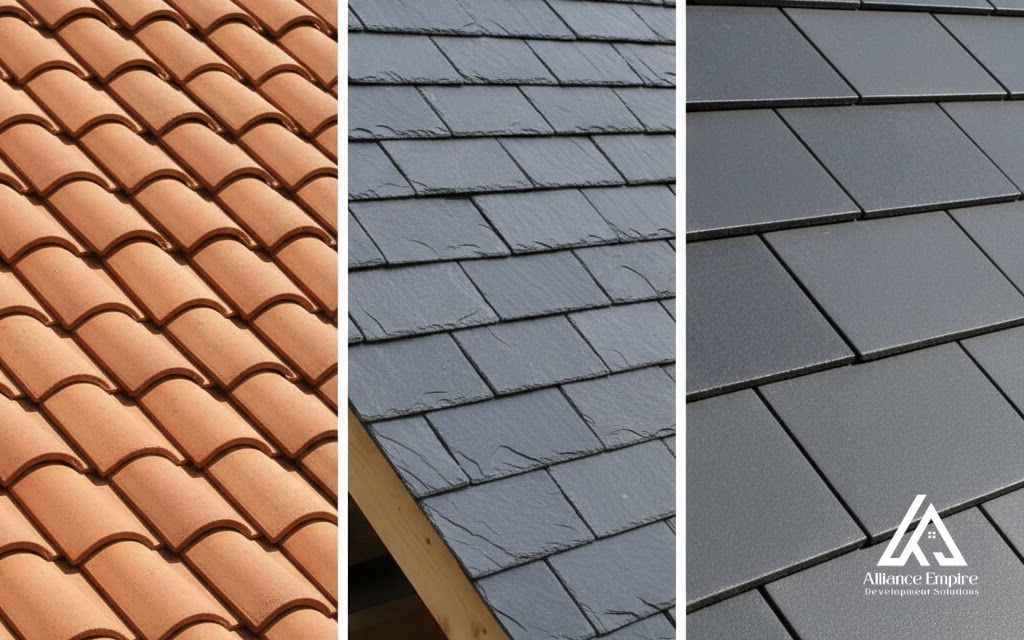
Synthetic alternatives solve the weight problem without sacrificing appearance or performance. High-quality synthetic shingles now offer impact and UV resistance that rivals natural materials, and they’re particularly well-suited to the Colorado climate.
For cracked or broken tile, localized repair is often very practical, since individual tiles can be replaced without disturbing the surrounding field. Widespread storm damage or repeated failures across large sections of a tile roof, however, typically indicate it’s time to evaluate a full replacement.
How Colorado weather affects different type of roofs
Hailstorms and impact resistance
Denver receives more hail events per year than almost any other major U.S. metro. When a storm rolls through, hail size, wind speed, and storm direction all affect how different roofing materials respond.
| Roof material | Typical hail response | Key consideration |
| Standard asphalt | Granule loss, bruising, potential cracking | Inspect after every significant storm |
| Class 4 IR asphalt | Much stronger resistance to bruising and cracking | Best upgrade for budget-focused homeowners |
| Metal (standing seam) | Possible cosmetic dents; rarely leaks | Thicker gauge and textured finishes reduce denting |
| Stone-coated steel | Stone granule layer absorbs impact; denting minimized | Strong performer in large hail events |
| TPO/EPDM (flat) | Puncture risk from large hail; inspect seams | Proper drainage critical post-storm |
| Tile/synthetic | Individual tiles can crack; synthetics absorb impact well | Class 4 synthetic performs comparably to metal |
Selecting impact-resistant materials and ensuring proper installation details (like correct underlayment and fastener patterns) reduces both the frequency of insurance claims and the long-term cost of roof ownership in Denver’s hail alley. Alliance EDS can help you choose materials that match your neighborhood’s storm history and your home’s specific risk profile.
Snow loads, ice dams, and freeze-thaw
Denver’s snowstorms can deposit heavy loads quickly. Here’s how different type of roofs respond:
• Metal roofs shed snow most efficiently due to their smooth surface, significantly reducing load accumulation and ice dam formation at eaves.
• Asphalt shingle roofs hold snow longer. Without adequate attic insulation and ventilation, heat loss through the roof surface melts snow that then refreezes at the cold eave overhang, creating ice dams that force water under shingles.
• Flat and low-slope roofs are most vulnerable. Snow that melts and refreezes across the membrane stresses seams and, if drainage is compromised, can create ponding that leads to leaks or even structural overload.
Freeze-thaw cycling also accelerates material fatigue in asphalt shingles, particularly on older or lower-grade products. Cracking, granule loss, and flashing movement are all downstream effects. Recurring winter leaks that appear around chimneys, skylights, or valleys are often freeze-thaw failures rather than simple puncture damage, and they require proper flashing repair rather than surface patching.
High-altitude UV and temperature swings
Denver’s elevation puts the roof in direct, intense contact with UV radiation throughout the year. The effects by material:
• Asphalt shingles: UV degrades the asphalt binder and accelerates granule loss, effectively shortening the roof’s useful life. Higher-quality shingles use enhanced UV-resistant coatings, but no asphalt product is immune.
• Metal and stone-coated steel: Highly UV resistant. Reflective metal finishes actually reduce solar heat gain, which lowers summer cooling costs.
• EPDM and TPO membranes: Quality varies. White TPO’s UV reflectance is a major selling point for commercial buildings. Lower-quality EPDM can chalk and become brittle over time.
• Synthetic shingles: Premium synthetic products are engineered specifically for high UV environments and often outperform asphalt significantly in this regard.
Denver’s rapid temperature swings, sometimes 50 degrees or more within a single day, cause all roofing materials to expand and contract. This places particular stress on seams, flashings, and fasteners. Panel clips on metal roofs are specifically designed to allow for this thermal movement without compromising the roof’s watertight integrity.
Repair vs replacement: choosing the right path for your roof type
One of the most common questions we hear from Denver homeowners is: do I need a full replacement, or is repair the right call? The honest answer depends on your roof type, its age, the extent of damage, and your long-term plans for the property.
| Scenario | Likely recommendation |
| Isolated missing shingles after a storm, roof under 15 years old | Repair |
| Granule loss across more than 30% of the surface | Replacement evaluation |
| Single flat roof seam failure, membrane otherwise intact | Targeted repair or coating |
| Multiple recurring leaks across different sections | Full replacement |
| Cosmetic hail denting on metal, no leaks | Document for insurance; likely no action needed |
| Cracked tiles in isolated section, underlying deck intact | Tile replacement |
| Hail bruising on 70%+ of asphalt shingle surface | Insurance claim + full replacement |
| Aging asphalt roof near 20 years, multiple repair history | Replacement, consider upgrade to IR or metal |
Repeated emergency repairs after hail events can cost significantly more over time than a proactive replacement with a more resilient material. For homes in hail-prone Denver zip codes, upgrading to Class 4 shingles, stone-coated steel, or metal at replacement time is often the financially smarter decision over a 20 to 30-year ownership horizon.
Alliance EDS evaluates each situation individually: your roof’s age, storm history, insurance coverage, and your plans for the property. We recommend repair when repair is genuinely enough. When it isn’t, we’ll tell you that directly and walk you through your options.
When to call for emergency roof help
Some situations require immediate professional attention regardless of roof type. Contact a roofing contractor right away if you see any of the following:
• Active water intrusion during or immediately after a storm
• Visible daylight through the roof deck when viewed from the attic
• Large sections of shingles or panels missing or displaced
• Significant interior water staining that is spreading or pooling
• Structural sagging or visible deck deflection under snow load
• Damaged or dislodged flashing around chimneys, vents, or skylights
In these situations, your first priority is safety. Temporary tarping by a professional prevents further interior damage while a permanent repair plan is developed. Do not attempt to access a damaged, icy, or wet roof yourself.
Why professional inspection beats DIY
After a Denver hailstorm, the damage isn’t always obvious from the ground. Hail bruising on asphalt shingles appears as dark spots or soft depressions that are difficult to identify without getting on the roof and knowing what to look for. Membrane punctures on flat roofs can be nearly invisible but allow water infiltration over weeks. Failed flashing sealant looks intact until it starts directing water into wall assemblies.
Professional inspections from a qualified local contractor provide:
• Photo documentation of all damage, essential for insurance claims
• Accurate scope of repair or replacement, based on actual conditions rather than guesswork
• Identification of secondary issues (deck damage, ventilation problems, flashing failures) that DIY assessment typically misses
• A written assessment you can present to your insurance adjuster with confidence
Climbing onto a wet, icy, hail-damaged, or steep roof without proper safety equipment is one of the leading causes of serious home improvement injuries. Alliance EDS performs safe, thorough inspections and provides clear, documented findings with no obligation to hire us for the work.
Schedule a storm damage roof inspection near me in Denver. Call Alliance EDS at (720) 207-4646 or email [email protected]. We serve Denver, Lakewood, Aurora, Littleton, Arvada, Westminster, Thornton, Highlands Ranch, Centennial, and all surrounding Front Range communities.
Insurance, property value, and roof type choices
In Colorado, your roof type directly affects your insurance situation, often in ways that homeowners don’t realize until they’re filing a claim or renewing their policy.
Here’s what Colorado homeowners should understand:
• Roof age and material matter to your insurer: Older asphalt shingle roofs, particularly those over 15-20 years old, may trigger a roof condition inspection or affect your coverage terms at renewal.
• Class 4 shingles and impact-resistant systems may reduce premiums: Many Colorado insurance carriers offer discounts for Class 4 impact-resistant shingles, metal roofing, or stone-coated steel systems. The savings vary by carrier and policy but can be meaningful over time.
• A clean claims history has value: Repeated hail claims can increase your premiums or complicate your coverage. Upgrading to a more resilient roof type at replacement time can reduce future claim frequency and protect your long-term insurability.
On the property value side, a new roof is consistently one of the top-performing home improvements for resale return in the Denver market. Buyers and their inspectors scrutinize roof condition closely. A recently replaced roof, particularly one upgraded to impact-resistant or metal, adds buyer confidence and supports your asking price.
Alliance EDS helps homeowners document existing damage, present accurate assessments to adjusters, and make upgrade decisions that are both financially and structurally sound. If you’re navigating an insurance claim after a storm, we can walk alongside you through that process with clear documentation and honest guidance.
FAQs: Denver homeowners ask about type of roofs
What is the best type of roof for Colorado hail and snow?
For maximum hail and snow performance, metal roofing (standing seam or stone-coated steel) is the top performer in Colorado. It sheds snow efficiently, resists hail impact at the structural level, and lasts 40 to 70+ years. For homeowners who prefer the look of traditional shingles, Class 4 impact-resistant asphalt shingles are the best value upgrade. High-quality synthetic shingles rated Class 4 are another strong option. Alliance EDS can match the right system to your home’s style, structure, and budget.
How long do different types of roofs last in Denver?
Under Colorado conditions, expect these approximate lifespans:
| Roof type | Approx. lifespan in Colorado |
| Standard asphalt (3-tab) | 12-20 years |
| Architectural/dimensional asphalt | 18-25 years |
| Class 4 impact-resistant asphalt | 25-30 years |
| Metal (standing seam) | 40-70+ years |
| Stone-coated steel | 40-50+ years |
| TPO/EPDM flat membrane | 15-25 years |
| Modified bitumen | 15-20 years |
| Concrete/clay tile | 30-50+ years |
| Natural slate | 75-100+ years |
| Synthetic/composite | 30-50 years |
These ranges assume proper installation, maintenance, and average storm exposure. High hail frequency can shorten asphalt lifespans considerably.
Are metal roofs worth the cost in Denver’s climate?
For most Denver homeowners who plan to stay in their home for 15+ years, the answer is yes. Metal costs more upfront, typically 2 to 3 times the price of asphalt, but the math changes significantly when you factor in 40 to 70+ years of lifespan, reduced hail claim frequency, lower maintenance costs, snow-shedding performance, and potential insurance benefits. Contact Alliance EDS for a Virtual Roof Estimate that breaks down the numbers for your specific situation.
Do I need impact-resistant shingles on my Denver home?
Not everyone needs them, but in Denver’s hail alley, they are strongly worth considering for most homeowners. Class 4 shingles cost modestly more than standard architectural shingles and provide significantly better hail performance. They may also reduce your insurance premium, depending on your carrier. If your current asphalt roof is approaching replacement age, upgrading to Class 4 at that time is almost always the right decision in the Denver market. Alliance EDS can help you evaluate whether the investment makes sense for your specific neighborhood and insurance situation.
How do I choose between roof repair and full replacement after a Colorado hailstorm?
The key factors are: the extent of damage across the roof surface, your current roof’s age, how many prior repairs have been done, and your insurer’s assessment. A professional inspection with photo documentation gives you an accurate picture. Alliance EDS provides honest repair-vs-replacement evaluations with no obligation. We’ll tell you directly when repair is the right call and when a full replacement, potentially with a material upgrade, is the better long-term investment.
5 reasons to choose Alliance Empire Development Solutions
• 15+ years of Denver roofing experience: We’ve worked through hundreds of hail seasons, major snowstorms, and insurance claims across Denver, Lakewood, Aurora, Littleton, Arvada, and every surrounding Front Range community. We know how Colorado weather behaves and what your roof needs to stand up to it.
• Honest, pressure-free guidance: We will never push an unnecessary replacement or upgrade. When repair is genuinely the right answer, that’s what we’ll recommend, in writing, with clear documentation.
• Deep local Denver expertise: We understand Denver neighborhood norms, HOA requirements, local building codes, and the specific storm patterns that affect different zip codes. Our recommendations are tailored to your address, not generic formulas.
• Storm damage specialists: From emergency tarping and leak mitigation to full insurance-supported replacements, we handle storm damage from first inspection through final installation. We work with your adjuster and provide the documentation needed to support your claim.
• Virtual Roof Estimate capability: Get an accurate roof estimate without waiting for an in-person appointment. Our Virtual Roof Estimate process lets you get started quickly, whether you’re planning ahead or dealing with urgent storm damage.
Conclusion
Understanding the main types of roofs in Denver gives you the foundation to make a genuinely informed decision, one that protects your home, your insurance situation, and your long-term investment. Asphalt shingles, metal systems, flat membranes, tile, slate, and synthetic products each have a role in the Denver market, and the right choice depends on your home’s design, your neighborhood’s storm history, your budget, and how long you plan to stay in the property.
What’s consistent across all roof types in Colorado is this: the quality of the inspection, the accuracy of the assessment, and the integrity of the contractor matter as much as the material itself. A Class 4 shingle installed wrong performs like a standard shingle. A metal roof with inadequate underlayment fails in freeze-thaw conditions. Professional guidance isn’t an upsell. It’s the difference between a roof that lasts and one that doesn’t.
Don’t wait for the next hail season to find out your roof isn’t ready. Reach out to Alliance EDS now for an honest inspection, a clear recommendation, and the kind of local expertise that comes from 15+ years of protecting Denver homes.