
Thinking about a metal roof, but not sure if it’s worth the investment? You’re not alone. More homeowners than ever are weighing the switch from traditional asphalt shingles to metal roofing – and for good reason. Metal roofs last longer and perform better across nearly every durability metric. But they do come with a higher upfront cost that gives many buyers pause. This guide breaks down everything you need to know to make a confident decision. By the time you’re done reading, you’ll have a clear picture of the metal roof pros and cons, the different materials and styles available, and a realistic cost comparison against asphalt shingles. Let’s find out!
What is a metal roof?
A metal roof is a roofing system constructed from metallic materials engineered to provide structural protection, weather resistance, and long-term durability.
Unlike traditional asphalt shingles that rely on granule-coated fiberglass mats, metal roofs are manufactured from solid metal panels or formed metal shingles that interlock and fasten directly to the roof deck.
Metal roofing is used in both residential and commercial construction and is available in a wide range of profiles, colors, and finishes. The most common metals used are:
- Steel
- Aluminum
- Copper
- Zinc
Metal roof material types
Not all metal roofs are the same. The material you choose affects performance, cost, maintenance, and how well the roof holds up in your specific climate.
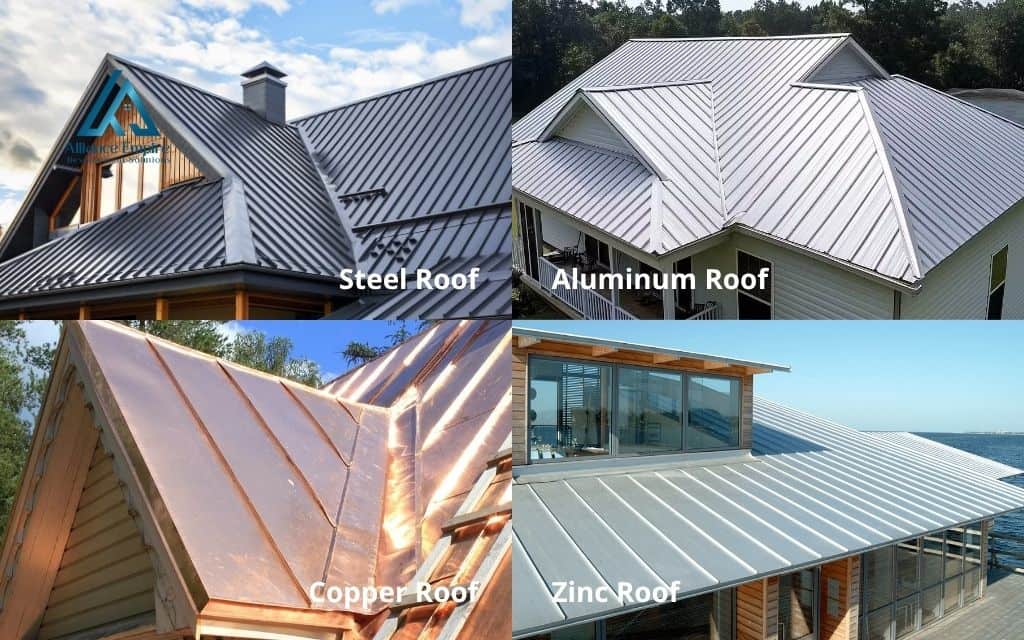
Here’s a breakdown of the 4 main metal roofing materials available to homeowners:
Steel (Galvanized / Galvalume)
Steel is by far the most common metal roofing material used in residential construction. It’s strong, widely available, and manufactured in a variety of profiles and coatings.
Galvanized steel is coated with zinc to resist corrosion, while Galvalume steel uses an aluminum-zinc alloy coating for enhanced protection against rust and weathering.
Both options offer excellent strength-to-cost value and are suitable for most climates across the United States.
Aluminum
Aluminum is lighter than steel and naturally resistant to corrosion, making it the top choice for coastal environments and humid climates.
Unlike steel, aluminum doesn’t rust when exposed to salt air, moisture, or high humidity, which is why metal roof installation in Florida and other coastal states often defaults to aluminum.
It costs a bit more than galvanized steel but offers better long-term performance in salt-heavy or wet environments.
Copper
Copper is the premium tier of metal roofing. It’s exceptionally durable, naturally antimicrobial, and develops a distinctive green patina over time that many homeowners find appealing. Copper roofs can last well over 100 years with minimal maintenance.
However, the high material cost makes copper most common on historic homes, luxury residences, and decorative architectural elements rather than full-home installs.
Zinc
Zinc is highly durable and has a unique self-healing surface: minor scratches gradually close up as the metal’s patina reforms, which helps prevent moisture intrusion.
Like copper, zinc is a long-term investment with lifespans exceeding 80 to 100 years in many conditions. It sits at the higher end of the pricing range but offers one of the best combinations of longevity and low maintenance available.
Metal roof styles
Metal roofing comes in several distinct profiles and styles. The style you choose affects the roof’s appearance, durability, installation method, and overall cost.
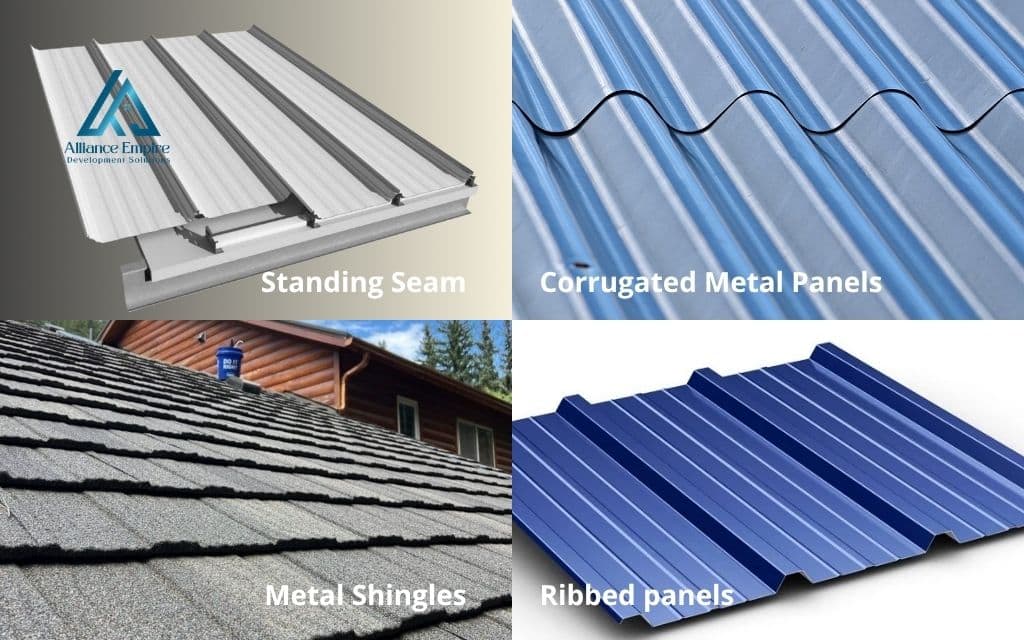
Here are the 4 most common options:
Standing seam
Standing seam is widely considered the gold standard in metal roofing.
Vertical metal panels interlock at raised seams that run the full length of the roof, with all fasteners completely concealed beneath the panels. This design eliminates exposed screw holes, significantly reducing leak risk and long-term maintenance needs.
Standing seam systems have a clean, modern aesthetic and are compatible with solar panel mounting systems. They’re the most durable style available and the most commonly recommended for residential homes with long ownership timelines.
Corrugated metal panels
Corrugated metal panels feature a wavy or ribbed profile and use exposed fasteners to attach directly to the roof deck. This is the most budget-friendly metal roofing style and is popular for agricultural buildings, barns, sheds, and rural homes.
Installation is faster and cheaper than standing seam, but the exposed fasteners require periodic inspection and resealing over time to prevent water infiltration as the rubber washers age.
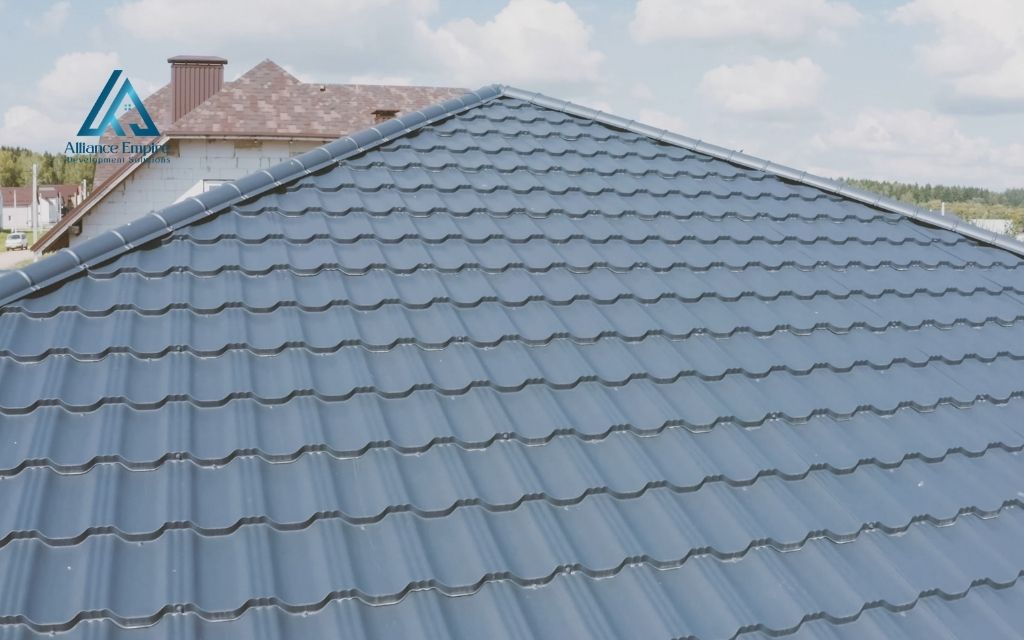
Metal shingles
Metal shingles are manufactured to mimic the look of traditional asphalt shingles, slate, clay tile, or cedar shake. They offer the durability and performance of metal roofing while blending with more conventional architectural styles.
Metal shingles are a great choice for homeowners who want a metal roof’s longevity and resilience without a dramatically different exterior appearance. They’re moderately priced between corrugated panels and standing seam.
Ribbed panels
Ribbed panels sit between corrugated and standing seam in terms of cost and performance. They feature a series of raised ribs across the panel surface and may use exposed or partially concealed fasteners depending on the system.
Ribbed panel roofs offer better weather resistance than basic corrugated systems while keeping costs lower than full standing seam installation.
Fastening method / installation
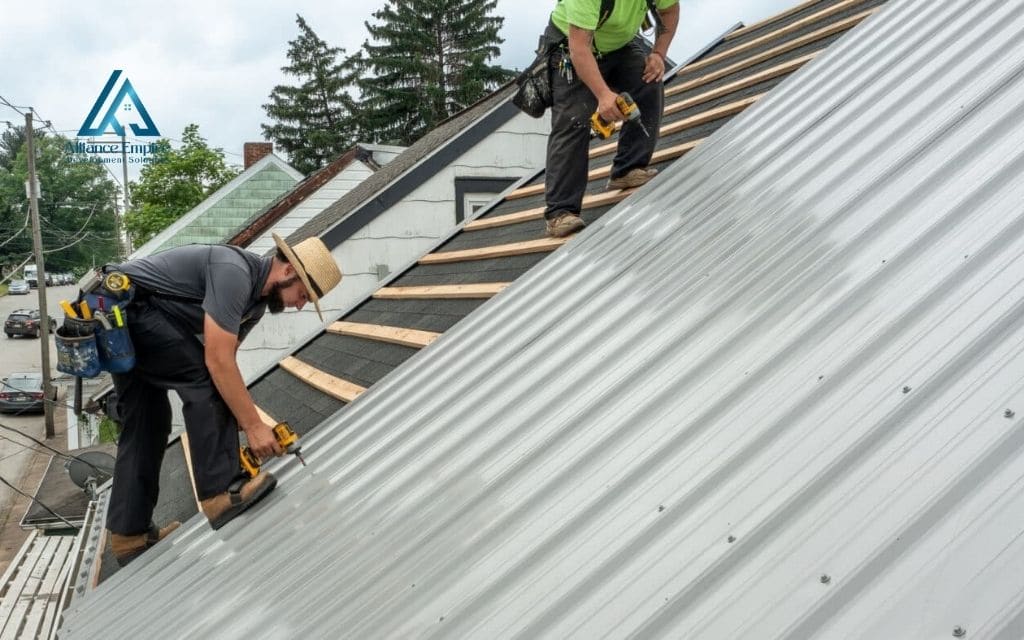
How a metal roof is fastened to your home directly affects its weather resistance, lifespan, and maintenance requirements. There are two primary fastening systems used in metal roofing installation:
Exposed fastener systems
Exposed fastener systems use screws driven directly through the surface of the metal panels into the roof deck below. The screw heads sit flush with or slightly above the panel surface, typically sealed with rubber washers.
This method is:
- Lower cost to install
- Faster to complete
- More widely available from contractors
The tradeoff is that exposed fasteners require more maintenance over time. As the rubber washers age, crack, or compress, they can allow water to seep through the screw holes, which makes periodic inspection and resealing an important part of long-term upkeep.
Hidden fastener systems (standing seam)
Hidden fastener systems use concealed clips and fasteners that attach behind the face of the panel, completely out of sight and out of reach of weather exposure. The panels lock together over the clips at the raised seam, covering every connection point.
This method offers:
- Superior weather resistance with no exposed penetration points
- Longer lifespan with minimal maintenance
- Better accommodation of metal expansion and contraction cycles
- Higher upfront installation cost
Metal roof pros
Here are the major advantages that make metal roofing one of the most popular upgrade decisions for US homeowners:
Long lifespan
The most compelling argument for metal roofing is how long it lasts. A properly installed metal roof typically lasts 40 to 70 years, with premium materials like copper and zinc exceeding 100 years in ideal conditions.
Compare that to asphalt shingles, which average 15 to 25 years, and the math becomes clear: over the life of a home, a metal roof may require only one installation versus three or four shingle replacements.
Excellent durability against extreme weather
Metal roofs are built to withstand the forces that damage conventional roofing. Most systems are rated to handle wind speeds of 140 mph or higher, making them an excellent choice in hurricane-prone regions.
Metal is also Class A fire-resistant and handles heavy snow loads without warping or cracking. For homeowners in wildfire risk zones, coastal storm areas, or high-snow regions, these properties are not just beneficial, they can be essential.
Energy efficiency (reflects heat)
Metal roofing reflects a significant portion of the sun’s radiant heat rather than absorbing it, which helps reduce the thermal load on your home’s cooling system.
Depending on your climate and insulation, this can translate to cooling cost reductions of 10% to 25% during hot summer months. Cool-roof coatings are available for most metal roofing systems and can further improve energy performance.
Low maintenance
Once a metal roof is properly installed, it requires very little routine maintenance compared to asphalt shingles. Metal doesn’t crack, curl, or lose granules over time. It resists moss and algae growth and doesn’t rot or warp when exposed to moisture.
Basic annual inspections to clear debris and check flashing and sealants around penetrations are generally all that’s needed to keep a metal roof in top condition for decades.
Eco-friendly and recyclable
Metal roofing is one of the most environmentally responsible roofing choices available. Most metal roofing products contain 25% to 95% recycled content, and the material is 100% recyclable at the end of its service life.
In contrast, asphalt shingles are a petroleum-based product that generates billions of pounds of landfill waste annually in the United States. If sustainability is a priority, metal roofing aligns well with eco-conscious home improvement goals.
Increases resale value
A metal roof is a recognized value-add in the real estate market. Buyers appreciate the reduced need for near-term roof replacement, lower insurance premiums (many carriers offer discounts for metal roofing), and the energy efficiency benefits.
Metal roof cons
Honest evaluation of metal roofing requires looking at the real disadvantages alongside the benefits. Here’s what to know before committing:
Higher upfront cost
The most significant barrier for most homeowners is the upfront price. Metal roofing typically costs $8,000 to $20,000 or more for an average-sized home, compared to $5,000 to $12,000 for asphalt shingles. Premium materials like copper or zinc push costs significantly higher.
Potential noise without proper insulation
Rain and hail on a metal roof can be noticeably louder than on asphalt shingles, particularly in homes with minimal attic insulation or open-framing construction.
With proper underlayment and attic insulation, most homeowners report that sound levels are comparable to or no worse than a shingle roof.
However, in homes with thin or insufficient insulation, this can be a meaningful quality-of-life concern during heavy storms.
Denting risk from large hail
While metal roofs are highly durable, large hailstones can dent certain types of metal panels, particularly softer metals like aluminum and copper. Steel panels with higher gauge ratings are more resistant to denting, but no metal roof is entirely immune to damage from severe hail events. In high-hail regions, look for panels with a Class 4 impact resistance rating, which is the highest available and may also qualify for insurance discounts.
Expansion and contraction issues
Metal expands in heat and contracts in cold, which means a metal roof undergoes regular dimensional movement throughout daily and seasonal temperature cycles.
When not accounted for in the installation design, this movement can loosen fasteners, cause panels to buckle, and create gaps that allow moisture entry. Hidden fastener systems using floating clips are specifically engineered to handle this movement.
Requires skilled installation
Metal roofing is not a DIY-friendly project, and not every roofer is qualified to install it correctly.
The panels require precise cutting, proper underlayment, and specific fastening techniques that vary by system. Errors during installation are far more consequential with metal roofing than with shingles and can result in leaks, noise, or warranty voidance.
Always verify that your contractor has documented metal roofing experience and manufacturer certifications before signing any contract.
What’s the difference between metal roofs and shingles?
If you’re comparing metal roofing directly against asphalt shingles, the table below gives you a clear side-by-side view of the most important decision factors:
| Feature | Metal Roof | Asphalt Shingles |
| Lifespan | 40 – 70 years (up to 100+ with copper/zinc) | 15 – 25 years |
| Cost | Higher upfront ($8,000–$20,000+) | Lower upfront ($5,000–$12,000) |
| Durability | Excellent (wind, fire, snow, hail) | Moderate |
| Maintenance | Low (annual inspection only) | Higher (granule loss, cracking, algae) |
| Energy Efficiency | High (reflects solar heat) | Moderate |
| Environmental Impact | Recyclable, eco-friendly | Petroleum-based, landfill waste |
| Resale Value | Positive impact | Neutral to moderate impact |
| Installation Complexity | Requires certified contractors | Widely available contractors |
Should I buy a metal roof or shingles?
The right answer depends on your timeline, budget, and the conditions your roof will face. Here’s a practical decision guide:
Choose a metal roof if:
- You plan to stay in the home for 15 or more years and want a roof that outlasts your ownership
- You want a low-maintenance roof that won’t require ongoing repairs
- You live in an area with extreme weather (high winds, heavy snow, wildfire risk, or hurricane exposure)
- You’re focused on energy efficiency and reducing cooling costs
- You want to make a long-term investment that adds tangible resale value
Choose asphalt shingles if:
- You need the most affordable upfront option and budget is the primary constraint
- You plan to sell the home within the next 5 to 10 years and won’t recoup the metal premium
- You prefer the ease of spot repairs using widely available materials and contractors
Conclusion
Metal roofs offer exceptional durability, long-term cost efficiency, and energy performance but they do require a higher upfront investment than traditional asphalt shingles. The best choice for your home comes down to 3 core factors: your budget, your climate, and how long you plan to stay in the home.
If you’re a long-term homeowner in an area with severe weather, high temperatures, or hurricane risk, a metal roof is almost certainly worth the investment. If you’re working with a tight budget or planning to move within the next decade, shingles may be the more practical option for now.
The most important next step is getting a professional assessment. A qualified roofing contractor can inspect your current roof, evaluate your home’s structure, and provide a side-by-side quote comparing metal and shingle options tailored to your specific situation.
Ready to compare your options?Contact Alliance EDS today to schedule a free roof evaluation and get a professional quote for metal vs. shingles for your home.
Frequently asked questions (FAQs)
Are metal roofs noisy?
Not with proper insulation. The noise reputation of metal roofs largely comes from open-structure agricultural buildings with no insulation underneath. In residential homes with standard attic insulation and underlayment, a metal roof is not significantly louder than asphalt shingles during rain events. If noise is a concern, ask your contractor about acoustic underlayment options, which further dampen sound.
Do metal roofs rust?
Modern metal roofs are engineered with protective coatings specifically designed to prevent rust. Galvanized and Galvalume steel panels are coated with zinc or zinc-aluminum alloys, while aluminum and zinc roofing materials are naturally corrosion-resistant. With proper installation and basic maintenance, rust is not a realistic concern for contemporary metal roofing systems.
Do metal roofs increase home value?
Yes. A metal roof consistently performs well as a home improvement investment in terms of resale return. Prospective buyers recognize the value of a roof that won’t need replacement for 40 to 70 years, and in markets where energy efficiency matters to buyers, the cooling benefits of a reflective metal roof add further appeal. Insurance savings from metal roofing also factor into buyer calculations. While return on investment varies by region and market conditions, metal roofing generally delivers better resale performance than most other exterior improvement projects.