

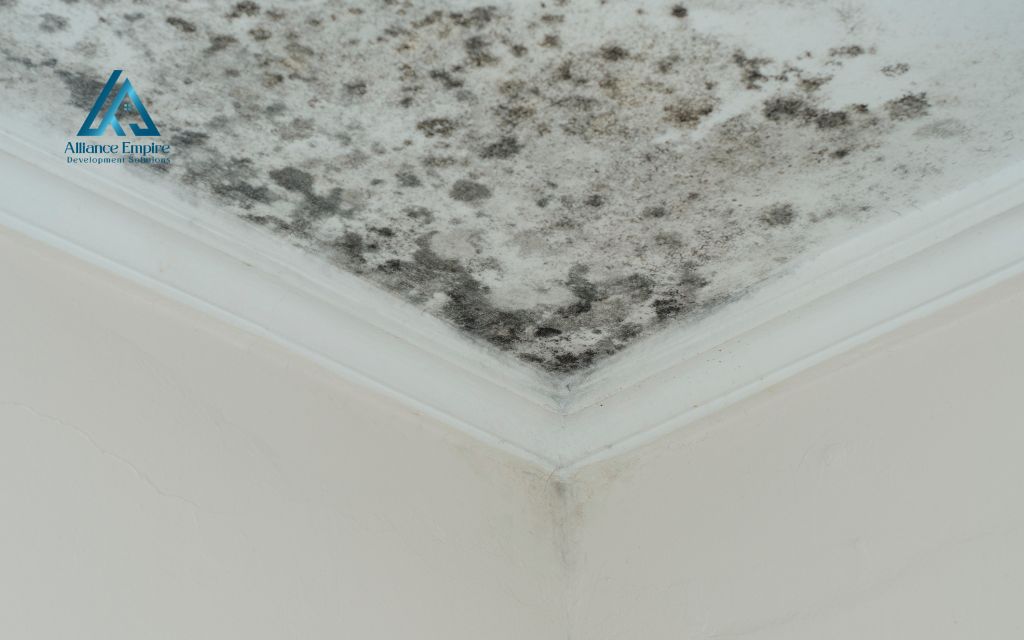
Will a leak in the roof cause mold? Yes, a roof leak can cause mold, often within 24 to 48 hours if moisture is left to sit. That may sound alarming, but here is the good news: this does not always mean you are facing catastrophic damage. What matters most is how fast you act.
Whether you have noticed a fresh ceiling stain after a storm or spotted suspicious dark spots near a skylight, understanding what happens next can make the difference between a manageable repair and a full-scale remediation project.
In this article, you will learn:
- Why roof leaks create ideal conditions for mold growth
- How quickly mold can develop after water intrudes
- The warning signs
- Exactly what to do in the first hours and days
Will a leak in the roof cause mold?
How mold forms
Mold is a living organism that thrives wherever 3 conditions exist at the same time:
- Moisture: Even small amounts of trapped water are enough
- Organic material: Drywall, wood framing, and insulation all serve as food
- Warm indoor temperatures: Most homes maintain the 60 – 80°F range that mold prefers
A roof leak delivers moisture directly into your home’s structural layers. Once water soaks into a ceiling or wall cavity, it stays trapped, hidden from airflow and sunlight, and remains wet long after the rain has stopped.
Why roof leaks are particularly risky
Unlike a burst pipe or an overflowing sink, a roof leak is rarely discovered the moment it begins. Water travels along rafters and insulation before it ever appears as a visible stain. By the time you see a brown ring on your ceiling, moisture may have already been sitting in your attic or wall cavity for days.
Common areas where roof leak moisture hides:
- Above and between ceiling drywall panels
- Inside attic insulation (fiberglass, cellulose, or spray foam)
- Along wood rafters, sheathing, and framing
- Behind interior walls near exterior penetrations
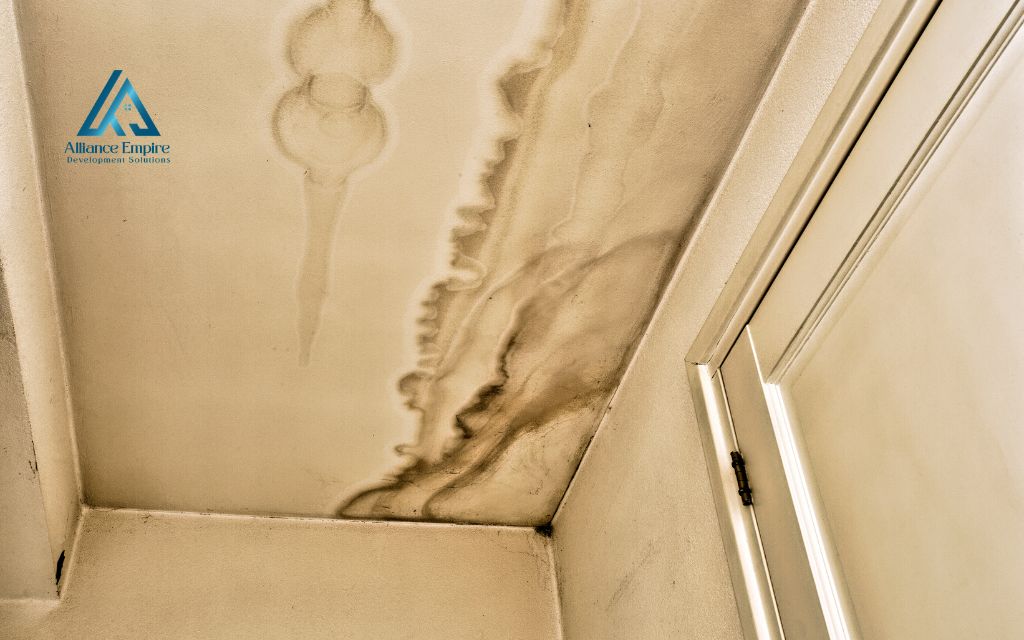
How fast can mold grow after a roof leak?
Under the right conditions, mold spores can begin colonizing a damp surface in as little as 24 to 48 hours.
Growth accelerates when:
- Indoor humidity is already high (above 60%)
- The affected area stays continuously damp
- Ventilation in the attic or ceiling cavity is poor
Mold growth timeline after a roof leak
| Timeframe | What Happens |
| Day 1 – 2 | Moisture is absorbed into drywall, wood, and insulation. No visible mold yet, but ideal conditions are forming. |
| Day 2 – 3 | Mold spores begin colonizing damp surfaces. A faint musty odor may appear before any visible growth. |
| Day 3+ | Visible mold patches and spreading discoloration. The odor intensifies. Structural materials begin to weaken. |
Signs of mold from a roof leak
Knowing what to look for – and where to look – helps you catch mold early, before it spreads deeper into your home’s structure.
Early warning signs
- A musty, damp, or earthy smell – especially in rooms below the attic
- Small dark spots (black, green, gray, or brown) on the ceiling or upper walls
- Yellowish or brownish water stain rings that seem to grow over time
- Slight discoloration along ceiling seams or around light fixtures
Advanced signs
- Peeling, bubbling, or flaking paint on ceilings or walls
- Sagging or soft spots in drywall – a sign of prolonged saturation
- Visible mold patches that are fuzzy or powdery in texture
- Warping or staining on wood trim near the affected ceiling area
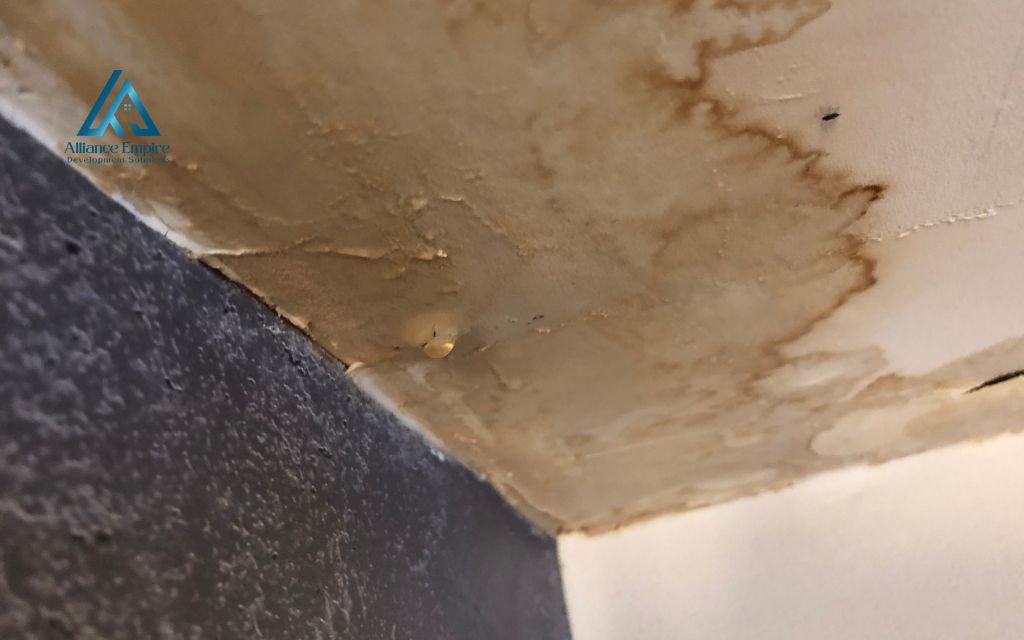
What does ceiling mold look like?
Early-stage mold on a ceiling from a roof leak often looks like small clusters of dark dots. Many homeowners mistake it for a water stain. As it spreads, it takes on a fuzzy or patchy appearance, sometimes in shades of black, dark green, or gray.
If you press gently on a suspicious spot and the drywall feels soft or crumbles, mold has likely penetrated deeper than the surface.
Common locations to inspect
- Ceiling corners – especially in rooms directly below the roofline
- Around roof penetrations: vents, skylights, chimneys, and flashing joints
- Attic insulation and the underside of roof sheathing
- Interior walls adjacent to exterior-facing structural elements
Is mold from a leaky roof dangerous?
The short answer is: it depends on the type and extent of the mold, and on who is in your home. While not every mold colony is toxic, none of it should be ignored – and some types pose real health risks.
Health risks associated with mold exposure:
- Allergic reactions: sneezing, runny nose, itchy eyes, skin irritation
- Respiratory issues: coughing, wheezing, shortness of breath
- Persistent headaches or fatigue with no clear explanation
- Asthma flare-ups that seem to worsen at home
Certain mold species – including some strains of Stachybotrys chartarum (commonly called black mold) – can produce mycotoxins that cause more serious symptoms with prolonged exposure.
Note: Not all mold is toxic, but all mold should be addressed promptly. Even non-toxic mold can damage building materials and worsen air quality over time. When in doubt, get a professional assessment.
What to do immediately: A step-by-step guide
Time is your most valuable asset when dealing with a roof leak and potential mold. Here is what to do as soon as you discover moisture damage.
Step 1: Stop the leak at the source
- Place buckets or waterproof tarps to catch or divert dripping water
- Apply a temporary patch to the exterior if you can safely access the area
- Call a licensed roofing contractor to inspect and permanently repair the leak – do not skip this step
Step 2: Dry the affected area immediately
- Run box fans directed at the wet ceiling or wall surface
- Use a dehumidifier in the affected room to reduce indoor humidity below 50%
- Open windows if the outdoor air is dry and conditions allow
- Remove standing water with wet/dry vacuum equipment
Step 3: Remove saturated materials
- Pull up and discard waterlogged carpet, carpet padding, or rugs
- Remove wet insulation – once saturated, it rarely dries completely and becomes a mold reservoir
- Cut out severely water-damaged drywall sections (those that are soft, discolored, or crumbling)
Step 4: Clean small mold areas (if it is safe to do so)
- Only attempt DIY mold cleaning for areas smaller than approximately 10 square feet
- Mix one cup of bleach per gallon of water, or use an EPA-registered mold cleaner
- Wear N95 respirator, waterproof gloves, and safety goggles
- Scrub the affected surface thoroughly, then dry the area completely
- Do not paint over mold – this masks the problem but does not solve it
Step 5: Document all damage for insurance
- Photograph every affected area before cleanup begins
- Keep a written log of the date the leak was discovered and all actions taken
- Save receipts for any materials purchased for emergency repairs or drying equipment
- Contact your homeowners insurance company promptly to report the claim

When to call a professional
Calling the right professional at the right time can save you thousands of dollars and protect your family’s health.
Call a licensed roofer if:
- You have an active or recurring leak that has not been permanently repaired
- You notice roof damage after a storm, including missing shingles, damaged flashing, or gutter problems
- Water stains on your ceiling keep reappearing after previous repairs
- You are unsure where the leak is originating from
Call a mold remediation or water damage restoration specialist if:
- Visible mold covers an area larger than approximately 10 square feet (roughly 3 x 3 feet)
- You detect a strong musty odor that does not go away after drying the area
- Mold has penetrated into wall cavities, attic framing, or structural wood
- Household members are experiencing unexplained health symptoms
- The damage involves HVAC systems, which can spread spores throughout the home
How to prevent mold from roof leaks
The most effective mold prevention strategy is preventing roof leaks in the first place – and catching moisture early when leaks do occur. The following maintenance practices can reduce your risk.
Annual roof and attic maintenance checklist:
- Inspect your roof at least once per year, ideally in spring and fall
- Clean gutters and downspouts regularly
- Check attic ventilation
- Inspect flashing around chimneys, skylights, and vents
- Fix any small cracks or damaged shingles immediately
- Keep indoor humidity below 50% year-round using exhaust fans and dehumidifiers
Pro tip: Schedule a professional roof inspection before and after storm season. Catching minor flashing gaps or worn shingles early can prevent the moisture intrusion that leads to mold and save you thousands in remediation costs.
Conclusion
A roof leak can absolutely cause mold and it can happen faster than most homeowners realize. The 24 – 48 hour window from water intrusion to mold colonization means that every hour you wait to act increases the risk and the cost.
The key steps to remember are straightforward:
- Fix the leak first – nothing else matters if water keeps entering
- Dry the area immediately using fans and dehumidifiers
- Address any mold early before it spreads to structural materials
- Call a professional when the damage exceeds what you can safely handle yourself
Do not wait for a stain to get bigger before taking action. Early intervention is always cheaper, healthier, and less stressful than large-scale remediation.
Ready to protect your home?
Schedule a roof inspection or mold assessment with Alliance Empire Development Solutions (Alliance EDS) before the problem worsens. Our team of licensed Denver-area roofing and restoration specialists is ready to help.
Frequently asked questions (FAQs)
Will a small roof leak cause mold?
Yes. Even a minor roof leak can lead to mold growth if the moisture is not removed quickly. Small leaks often go undetected for days or weeks, giving mold more than enough time to establish itself in hidden areas like attic insulation or ceiling cavities. Size of the leak matters less than duration – a slow drip left for a week is riskier than a larger leak caught and dried within hours.
How long does it take for mold to grow after a roof leak?
Mold can begin forming in as little as 24 to 48 hours after moisture is introduced. The exact timeline depends on temperature, humidity, and how well the area is ventilated. Warm, humid conditions with poor airflow are the fastest recipe for mold growth.
What does ceiling mold look like?
Early-stage ceiling mold from a roof leak typically appears as small clusters of dark spots that may initially resemble dirt or soot. As it develops, it takes on a fuzzy or patchy texture that spreads outward from the moisture source. You may also notice discoloration in circular patterns radiating out from a stain ring, or a powdery coating on wood surfaces in your attic.
How long does it take for a roof leak to cause mold?
Under typical indoor conditions, mold spores can begin colonizing a wet surface within 24 to 48 hours. If the area stays damp beyond 72 hours, visible mold growth is likely. The longer the moisture sits, the more extensive the mold problem will be.
Does a leaky roof always mean mold?
Not necessarily. If a leak is caught immediately and the affected area is thoroughly dried within 24 hours, mold may not develop at all. The risk increases significantly when moisture remains trapped for multiple days, when humidity is high, or when the water has soaked into porous materials like insulation or drywall. Prompt action is the key factor – not the leak itself.
What kills black mold immediately?
For small surface areas, mix one cup of household bleach with one gallon of water and scrub thoroughly. Note that bleach only works on non-porous surfaces – drywall and wood affected by mold typically need to be removed and replaced. For any growth larger than 10 square feet, call a certified mold remediation professional.
What are the first signs of mold toxicity?
Early symptoms include nasal congestion, sneezing, coughing, itchy eyes, and skin irritation. Some people also experience headaches, fatigue, or worsening asthma at home. If symptoms improve when you leave the house, mold exposure may be the cause. A professional assessment is strongly recommended.