


Every construction project carries risk. But few risks hit harder than poor quality. A single defect that slips through inspections can trigger rework, delay schedules, spike costs, put workers in danger, and damage a contractor’s reputation for years. The frustrating part? Most quality failures are entirely preventable.
According to industry research, rework in construction accounts for between 5% and 20% of total project costs. That is not a margin problem; it is a systems problem. When teams lack clear processes, consistent documentation, and structured oversight, mistakes compound. What starts as a minor deviation can become a costly NCR, a failed inspection, or worse, a safety incident on-site.
This is exactly why construction quality management matters. It is not just a box to check for compliance. Done right, it is the operational backbone that keeps projects on budget, on schedule, and built to last.
What is construction quality management?
Construction quality management is the process of ensuring that a project meets required standards, specifications, and client expectations from planning through closeout.
Quality management in construction is not a single action or a final inspection. It is an ongoing system that governs how work is planned, performed, verified, and documented across every phase of a project. The same core question applies: Are we building it correctly, and can we prove it?
Construction quality management spans 3 levels of activity:
- At the strategic level, it defines what “good” looks like through standards and specifications.
- At the operational level, it controls how work is performed through procedures, checklists, and inspections.
- At the accountability level, it records what was done, by whom, and whether it met the required standard.
Learn more: https://allianceeds.com/how-to-plan-a-construction-project/

Why is construction quality management so important?
Quality management in the construction industry is not optional for teams that want to stay competitive, profitable, and compliant. Here is what is at stake when quality management is absent or underdeveloped.
Prevent costly rework
Rework is one of the most damaging and most avoidable costs in construction. When work does not meet specifications the first time, the team must stop, assess, remove, and redo. That process consumes labor, materials, and time that were never budgeted.
Fixing mistakes after the fact is significantly more expensive than preventing them through structured QA processes upfront. Every dollar spent on quality planning saves multiples in rework costs downstream.
Protect project schedule
Poor quality does not just cost money; it costs time. Defects discovered mid-project force schedule disruptions, change orders, and sequencing conflicts.
When a roofing membrane fails inspection or a structural element is out of tolerance, everything downstream from that scope gets pushed. Construction project quality management gives teams the tools to catch problems early, keeping the schedule intact and stakeholders informed.
Improve safety
Defects are not just a performance issue; they are a safety issue. Substandard materials, improper installations, and overlooked deviations can create serious hazards for workers and occupants. A rigorous quality management system in construction creates checkpoints that catch these problems before they become incidents, reducing liability and protecting lives.
Maintain compliance
Every construction project operates within a framework of building codes, client specifications, regulatory requirements, and contractual obligations. Construction quality management ensures that all work meets these requirements and that compliance is documented. Without that documentation, disputes, failed inspections, and legal exposure become far more likely.
Protect reputation and profit
High-quality work builds trust. Repeat clients, referrals, and a strong track record in the market all depend on consistently delivering what you promised. Contractors who invest in quality management practices in the construction industry protect their margins, reduce change order disputes, and position themselves as reliable partners worth hiring again.

Pillars of construction quality management
Effective construction quality management rests on five interconnected pillars. Together they form the operational structure of a quality management system in construction.
| Pillar | Purpose | Key Activities |
| 1. Planning | Define what quality looks like before work begins | Set standards, specs, and acceptance criteria; develop the quality plan |
| 2. Quality Assurance (QA) | Prevent defects through systematic processes | Develop procedures, conduct audits, train teams, review submittals |
| 3. Quality Control (QC) | Detect and correct issues through inspection | Field inspections, material testing, ITPs, punch lists, NCR management |
| 4. Documentation | Create a traceable record of all quality activities | Maintain inspection reports, logs, submittals, approvals, daily reports |
| 5. Continuous Improvement | Learn from each project to raise performance | Review lessons learned, update procedures, track trends and root causes |
Each pillar supports the others. Planning without documentation produces no accountability. Inspections without continuous improvement produce no growth.
When all 5 operate together, the result is a quality management system in construction that is both proactive and self-correcting.
QA vs. QC in construction: Understanding the difference
Two terms that are used constantly in construction quality management are Quality Assurance (QA) and Quality Control (QC). They are often used interchangeably, but they serve very different functions.
| Quality Assurance (QA) | Quality Control (QC) | |
| Focus | Process-focused | Product-focused |
| Goal | Prevent defects before they occur | Detect defects during or after work |
| When it happens | Before and during execution | During and after execution |
| Who is responsible | Management and quality teams | Inspectors, field supervisors |
| Examples | Procedure development, team training, submittal review, pre-task planning | Field inspections, material testing, punch lists, NCR issuance |
The clearest way to remember the distinction: QA is about building the right system so the work goes well; QC is about verifying that the work actually did go well.
Strong construction site quality management plans define responsibilities for both QA and QC, specify when each applies, and assign accountability to named roles or teams.

Commonly confused construction quality management terms
Construction quality management comes with its own vocabulary. Misunderstanding these terms can cause gaps in your process.
Here are the key definitions every project professional should know:
Submittals
Submittals are documents or material samples submitted for approval before work begins. They include shop drawings, product data sheets, samples, and certifications.
The approval of a submittal confirms that a proposed material or method meets the project’s specifications. Skipping or rushing the submittal process is one of the most common causes of downstream quality problems.
Inspection And Test Plans (ITPs)
An Inspection and Test Plan defines when and how inspections occur throughout a project. It identifies the specific activities to be inspected, the criteria for acceptance, who is responsible for the inspection, and whether a hold point or witness point applies. ITPs are the field-level roadmap for QC execution.
Non-Conformance Report (NCR)
A Non-Conformance Report documents any instance where work does not meet the defined standard. When a defect is identified, an NCR is issued to record what the problem is, where it occurred, and what corrective action is required. NCRs are a formal accountability tool. They also provide data for continuous improvement reviews.
Punch list
A punch list is the final list of items that must be corrected or completed before a project reaches substantial completion. It is generated at or near the end of construction and captures all outstanding quality issues. Resolving the punch list efficiently is critical to project closeout and client satisfaction.
Acceptance criteria
Acceptance criteria are the specific, measurable standards used to determine whether a piece of work is acceptable. They define the line between conformance and non-conformance.
On a roofing project, acceptance criteria might include minimum lap dimensions, approved adhesive application rates, or maximum allowable deflection. Without clear acceptance criteria, inspections become subjective and disputes are far more likely.
What is a construction quality management system (QMS)?
A Construction Quality Management System, or QMS, is a structured framework that defines how quality is managed, controlled, and documented across a project or an organization.
Think of it as the operating system for quality. It brings together the standards, procedures, roles, and records that keep every project aligned with client expectations, regulatory requirements, and internal benchmarks.
Key components of a construction QMS:
- Standards and procedures: Written instructions that define how work should be performed and what results are expected
- Documentation systems: Templates, logs, and record-keeping practices that create a traceable quality history
- Inspection processes: Defined checkpoints where work is reviewed against acceptance criteria
- Roles and responsibilities: Clear assignments for who owns QA, QC, and corrective action at every level
- Continuous improvement methods: Mechanisms to capture lessons learned and update processes accordingly
For contractors in the commercial and industrial sector, a well-built QMS is a competitive differentiator. It reduces project risk, supports faster closeouts, and demonstrates to owners and GCs that your team has the systems to back up your bid.
ISO 9001 is the international standard most commonly used as the foundation for a construction QMS. While certification is not always required, the framework it provides is widely recognized as a benchmark for quality management practices in the construction industry.
Documentation used in construction quality management
Documentation is what transforms good intentions into verifiable results. Without a proper paper trail, there is no way to prove compliance, resolve disputes, or improve future performance.
Quality documentation in construction falls into several categories.
| Document Type | Purpose |
| Quality management plan | The master document defining quality standards, responsibilities, and processes for the project |
| Inspection reports | Field records of individual inspections, including date, scope, findings, and sign-off |
| Submittals and approvals | Pre-construction documentation confirming materials and methods meet specifications |
| NCR logs | Running record of all non-conformances, corrective actions, and closure status |
| Punch lists | Final quality deficiency list used to track and close outstanding items before completion |
| Daily reports and site logs | Ongoing records of work performed, conditions, personnel on-site, and quality-related observations |
Documentation matters for 3 core reasons:
- It provides accountability. When every inspection and approval is recorded, there is a clear chain of responsibility.
- It supports compliance. Regulators, owners, and auditors all require evidence that required standards were met.
- It helps resolve disputes. When a defect claim arises, proper records tell an objective story about what was done, when, and by whom.
The most effective construction site quality management plans treat documentation not as administrative overhead but as a core part of the quality process itself.
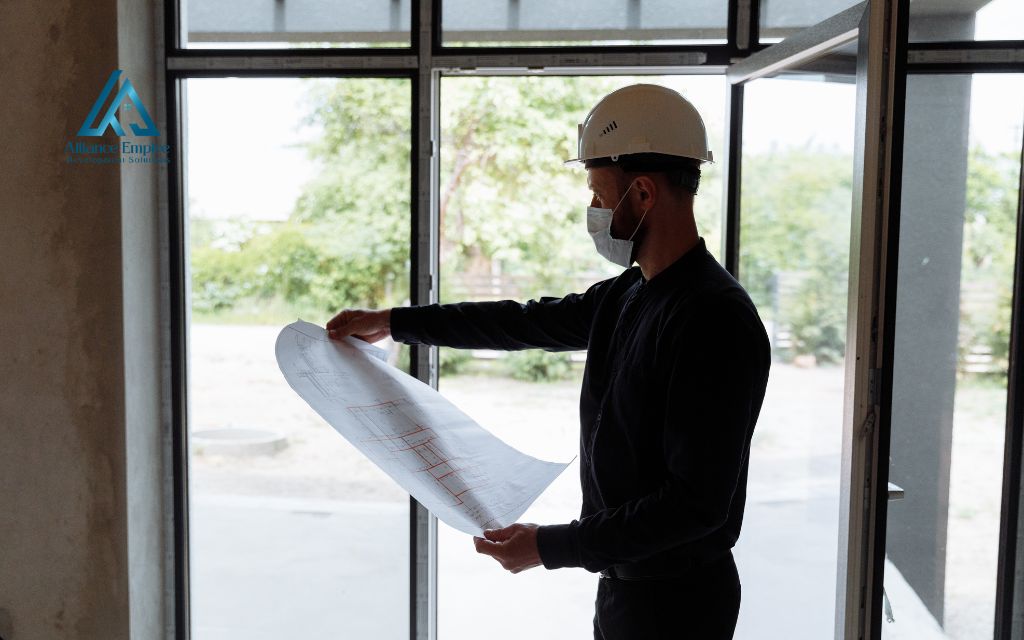
Factors that can influence safety and quality
Quality does not happen in a vacuum. Several variables on every project affect how well quality standards are actually met in the field. Understanding these factors is the first step toward controlling them.
Workforce skill level
Poor training leads to mistakes. When workers do not fully understand the specifications, installation methods, or quality requirements for their scope, errors are inevitable. Investing in workforce training, pre-task planning, and ongoing skill development is one of the highest-return quality interventions available.
Communication gaps
Misalignment between design, management, and field teams produces inconsistent results. When specifications are not clearly communicated, when RFIs go unanswered, or when field crews are working from outdated drawings, quality suffers.
Regular coordination meetings, clear submittal processes, and well-maintained document control all reduce communication-driven defects.
Material quality
Substandard or incorrect materials cause failures regardless of how well the installation work is performed. That is why the submittal review and approval process exists: to verify that materials meet project specifications before they ever arrive on-site. Material testing, certificate of compliance requirements, and clear procurement standards are all essential QA tools.
Time pressure
Rushed work increases errors. When schedule pressure forces teams to skip inspections, abbreviate pre-task planning, or cut corners on installation, the quality consequences are predictable. Construction project quality management includes proactive scheduling of quality activities so they are built into the timeline, not squeezed out of it.
Site conditions
Weather, access constraints, temperature extremes, and logistical challenges all affect quality in the field. Roofing in particular is highly sensitive to temperature and moisture during installation.
A strong QMS accounts for site conditions by including environmental requirements in ITPs and empowering crews to pause work when conditions do not meet spec.
Supervision and management
Weak oversight reduces quality control. When supervisors are stretched too thin, when inspection authority is unclear, or when non-conformances are tolerated instead of documented, quality standards deteriorate.
Effective construction site quality management requires supervisors who are accountable for both production and quality outcomes, not one at the expense of the other.
How to improve construction quality management
Improving quality management on your projects does not require a complete organizational overhaul. The most effective improvements are systematic, incremental, and embedded in how teams already work.
Standardize processes
Use consistent workflows, checklists, and procedures across all projects. When every crew approaches an installation the same way, with the same documented steps, quality becomes predictable. Standardization also makes it easier to identify when something goes wrong and trace it back to its root cause.
Train your team
Invest in skills and quality awareness at every level. Field crews need to understand not just how to do the work but why the quality requirements exist. Superintendents need training on NCR management and inspection protocols. Project managers need fluency in QMS documentation and audit practices.
Use technology
Modern QA and QC software tools have transformed construction quality management. Digital inspection platforms allow field teams to complete ITPs, capture photo evidence, issue NCRs, and close punch lists in real time from a mobile device.
This reduces documentation lag, improves data accuracy, and gives managers instant visibility into quality status across multiple projects.
Improve communication
Align all stakeholders early. Quality expectations should be defined and communicated before mobilization, not discovered during inspections. Kickoff meetings, pre-construction quality reviews, and clear submittals all reduce the misalignments that cause quality failures.
Conduct regular audits
Schedule internal quality audits to identify gaps between your written procedures and actual field practice. Audits are not punitive exercises; they are diagnostic tools. When conducted regularly and constructively, they surface improvement opportunities before those gaps become defects.
Learn from past projects
Apply lessons learned systematically. After project completion, review NCR logs, punch list trends, and any rework that occurred. Identify patterns. Update procedures, checklists, and training to address recurring issues. Continuous improvement is what separates teams that keep getting better from those that repeat the same mistakes.
Learn more: Construction Risk Management

When to implement or upgrade a quality management system
Many construction teams reach a point where informal quality practices are no longer sufficient. Recognizing the warning signs early allows you to address systemic issues before they compound into major losses.
Signs you need to improve your quality management system
- Frequent rework is consuming budget and labor that should be driving profit
- Projects are experiencing delays tied to failed inspections or deficiency corrections
- Client complaints are increasing or repeat business is declining
- Your team struggles to produce quality records when owners or GCs request them
- NCRs are being issued without consistent corrective action or closure
- Different projects are following different procedures with no standardization
If any of these patterns sound familiar, it is time to act. The good news is that meaningful improvement does not require starting from scratch.
Practical next steps
- Develop or update your Quality Management Plan to reflect current project scope and standards
- Adopt QA and QC software tools to replace paper-based documentation with real-time digital records
- Train your team on inspection protocols, NCR management, and documentation requirements
- Schedule a quality audit on an active project to benchmark your current performance
- Engage with a quality consultant or review industry frameworks such as ISO 9001 to guide long-term improvement
Conclusion
Construction quality management is not optional for teams that want to build safely, deliver profitably, and grow sustainably. Whether you are managing a commercial roofing project, a general construction build, or a specialized subcontract scope, the fundamentals are the same: plan for quality, control it in the field, document everything, and continuously improve.
The contractors who consistently win in competitive markets are not the ones who got lucky. They are the ones who built quality management systems that prevent problems instead of just reacting to them.
The key is combining strong planning, clear processes, and a team culture that takes quality seriously at every level. When those three elements are in place, rework decreases, schedules hold, clients stay happy, and profit follows.
Ready to take the next step? Start by reviewing your current Quality Management Plan or talk to our team about how Alliance Empire Development Solutions (Alliance EDS) approaches quality on every project we take on.
Frequently asked questions (FAQs)
What is construction quality management?
Construction quality management is the process of ensuring that a construction project meets all required standards, specifications, and client expectations. It encompasses everything from upfront quality planning and material approvals to field inspections, documentation, and corrective action when issues arise.
What is the difference between QA and QC in construction?
Quality Assurance (QA) is process-focused and aims to prevent defects before they occur through proper planning, procedures, and training. Quality Control (QC) is product-focused and involves inspecting and testing actual work to detect and correct defects. Both are essential components of a complete construction quality management system.
Why is quality management important in construction?
Quality management directly impacts project cost, safety, schedule, and reputation. Without it, rework escalates costs, defects create safety hazards, inspections fail, and clients lose confidence. A strong QMS prevents these outcomes by building accountability and consistency into every phase of the project.
What is a construction quality management system (QMS)?
A QMS is a structured framework of standards, procedures, documentation systems, and inspection processes that governs how quality is managed across a project or organization. It defines who is responsible for quality, what standards must be met, and how all quality-related activities are recorded and reviewed.
What documents are used in construction quality management?
Common quality management documents include the Quality Management Plan, inspection reports, submittal logs, Non-Conformance Reports (NCRs), Inspection and Test Plans (ITPs), punch lists, and daily site reports. Together these records create a traceable, auditable history of quality activity on a project.