

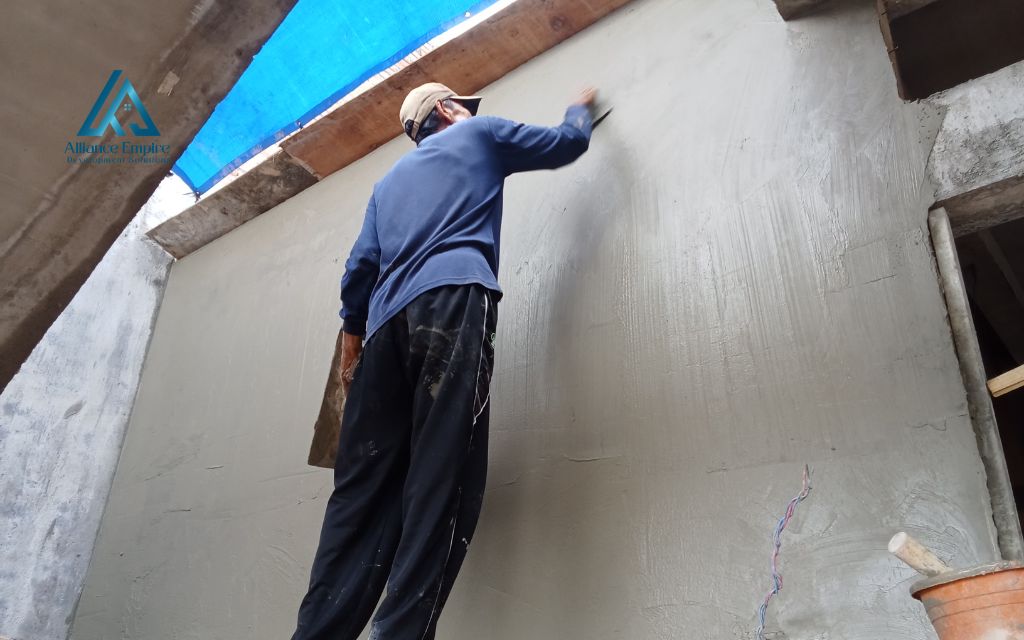
If you’ve ever admired a smooth, sleek exterior wall on a house or commercial building, there’s a good chance you were looking at the rendering.
In construction, rendering refers to the process of applying a protective and decorative coating to exterior walls. It’s one of the oldest and most reliable methods of finishing a building’s outside surface, and it remains widely used today.
In this guide, you’ll learn everything you need to know about rendering in building construction, including the main types of render, where and how it’s used, what surfaces it works on, how much it costs, and how to decide which option is right for your project.
What is rendering in building construction?
Rendering in building construction is the process of applying one or more coats of a protective and decorative material to the exterior surface of a wall. The result is a finished layer that guards the underlying structure against moisture, weathering, and physical wear while also improving the building’s visual appeal.
In the simplest terms, think of it as a tough, weather-resistant skin applied to the outside of your walls. Render coats bond to the masonry, brick, concrete, or block beneath, forming a surface that’s both attractive and functional.
Common materials used in render mixes include:
- Cement
- Lime
- Acrylic
- Silicone-based compounds
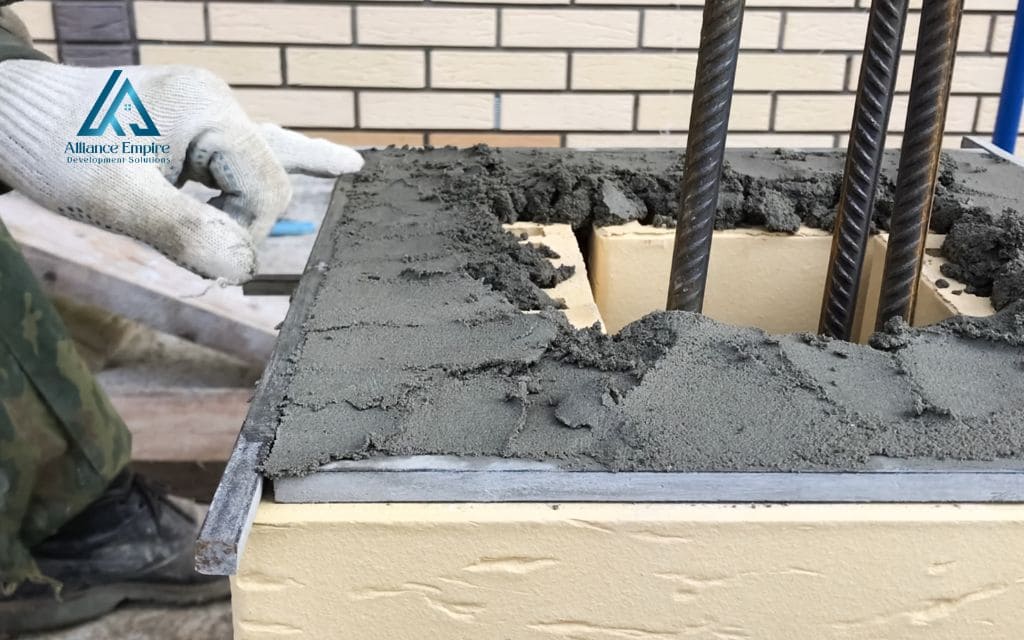
Where rendering is used
Rendering is a versatile solution used across a wide range of building types and applications. Understanding where it’s most commonly applied helps you identify whether it’s the right choice for your project.
Common applications
- Residential homes: Rendering is applied to the exterior walls of single-family homes, townhouses, and apartment buildings to improve durability and appearance.
- Commercial buildings and facades: Office buildings, retail centers, and warehouses use rendering to create a professional-looking facade and protect structural walls from weather damage.
- Renovations and exterior upgrades: Older homes with aging or damaged exterior walls are often re-rendered as part of a renovation, giving them a fresh look and renewed protection.
Typical areas where rendering is applied
- Exterior walls: The primary application area, covering the full surface of outside-facing walls.
- Boundary walls: Garden walls, perimeter walls, and retaining walls are commonly rendered for a uniform, finished look.
- Architectural features: Columns, decorative accents, arch surrounds, and other exterior design elements are often rendered to match or complement the main wall finish.
What surfaces can be rendered?
Not every surface accepts render equally well, but rendering can be applied to a wide variety of exterior substrates when properly prepared.
Suitable surfaces for rendering
- Brick: One of the most common substrates for rendering. Brick walls accept render well, especially when the mortar joints are well-keyed.
- Concrete blocks: Concrete masonry units (CMUs) are widely rendered in both residential and commercial construction.
- Stone: Natural stone walls can be rendered, though the irregular surface may require additional preparation to ensure good adhesion.
- Cement board: A popular substrate in modern construction, cement board (such as Hardieboard) provides a stable, flat surface ideal for rendering.
- Existing render: Old render can be re-coated, provided the existing layer is sound, clean, and not crumbling.
Surface preparation requirements
Regardless of the substrate, three conditions must be met before rendering can begin:
- Clean: The surface must be free of dust, grease, paint, algae, mold, and any loose material that could compromise adhesion.
- Stable: The surface must be structurally sound with no significant cracks, loose sections, or active movement that could cause the new render to fail.
- Properly primed: Applying a bonding agent or primer before rendering helps the coat adhere firmly and reduces the risk of delamination, especially on smooth or low-absorption surfaces.
Skipping surface preparation is one of the most common causes of render failure. A properly prepared substrate is the foundation of a long-lasting result.
Rendering vs. plastering: What’s the difference?
Rendering and plastering are often confused because both involve applying a smooth coating to walls. However, they serve different purposes, use different materials, and are applied in different locations. The distinction is straightforward:
| Feature | Rendering | Plastering |
| Location | Exterior walls | Interior walls and ceilings |
| Purpose | Weather protection + decorative finish | Smooth interior finish |
| Materials | Cement, acrylic, lime, silicone | Gypsum, lime |
| Exposure | Outdoor elements, UV, moisture | Controlled indoor environment |
The key takeaway is simple: rendering is an exterior process, while plastering is an interior one. If you’re finishing the outside of a building, you need to render.
If you’re smoothing interior walls, you need plaster. The two are not interchangeable, and using the wrong material in the wrong location will result in premature failure.
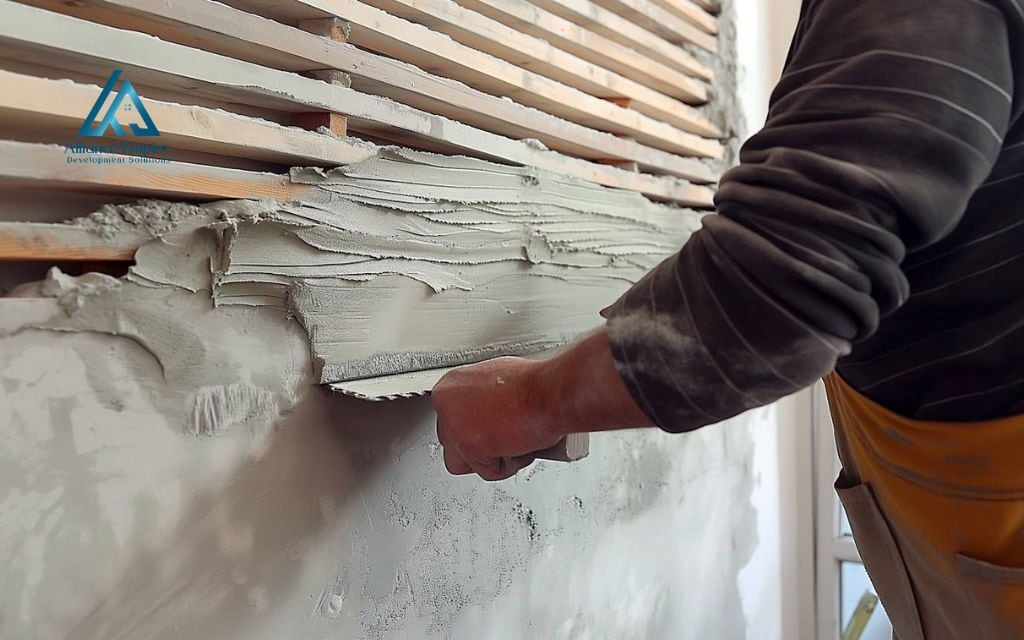
Types of rendering in construction
Not all renderings are created equal. The type of render you choose will affect the appearance, performance, longevity, and cost of your project. Here is a breakdown of the most widely used rendering systems in construction today.
Cement Render
Cement render is the traditional and most widely recognized rendering system. It consists of a mixture of Portland cement, sand, and water, sometimes with the addition of lime to improve workability.
- Traditional and widely used: Cement render has been the industry standard for decades and is familiar to most contractors.
- Affordable and durable: It is one of the most cost-effective rendering options, offering solid protection against weathering.
- Prone to cracking: Because cement render is rigid, it is susceptible to cracking over time, especially in areas with significant temperature fluctuations or building movement. Expansion joints and proper application technique can minimize this risk.
Cement render works best on stable substrates in mild climates where thermal movement is limited. It is a practical choice for homeowners on a budget who are willing to monitor for hairline cracks and address them promptly.
Acrylic Render
Acrylic render is a polymer-modified render that incorporates acrylic resins to improve flexibility and adhesion. It represents a significant upgrade over traditional cement render in several key areas.
- Flexible and crack-resistant: The acrylic content allows the render to flex slightly with the substrate, reducing the likelihood of cracking due to movement or thermal expansion.
- Faster drying: Acrylic render typically dries faster than cement, which can shorten project timelines.
- More expensive than cement: The improved performance comes at a higher upfront cost, but the reduced maintenance requirements often offset this over time.
Acrylic render is an excellent choice for homes in areas with moderate temperature swings or for buildings that experience some structural movement. It is available in a wide range of colors and finishes, making it popular for residential renovations.
Polymer / Synthetic Render
Polymer render uses synthetic polymer compounds – typically a blend of cement and advanced polymer binders – to deliver enhanced performance across multiple dimensions.
- Improved adhesion and durability: Polymer render bonds more effectively to a wider range of substrates, including smooth and low-absorption surfaces.
- Better weather resistance: The polymer matrix creates a denser, more water-resistant surface that stands up better to rain and UV exposure.
- Used in modern systems: Polymer render is a common component in modern multi-coat exterior wall systems and is often specified in commercial and high-performance residential construction.
EIFS (Synthetic Stucco)
EIFS stands for Exterior Insulation and Finish System. In the U.S., it is widely known as synthetic stucco and represents the most advanced and energy-efficient rendering system available today.
- Includes insulation layer: EIFS is a multi-layer system that combines a rigid foam insulation board with a reinforcing mesh and a finish coat. This layered approach makes it fundamentally different from single- or two-coat stucco systems.
- High energy efficiency: The insulation layer significantly reduces thermal transfer through exterior walls, which can lower heating and cooling costs.
It is worth noting that EIFS requires careful installation and proper drainage detailing to prevent moisture intrusion. When correctly specified and installed, it is one of the best-performing exterior finish systems available.
Silicone render
Silicone render is a premium rendering product that incorporates silicone compounds to deliver exceptional water resistance combined with breathability.
- Highly water-resistant and breathable: Silicone render repels rainwater from the surface while still allowing moisture vapor from inside the wall to escape, preventing trapped moisture and damp problems.
- Self-cleaning properties: The silicone surface has a low surface energy that causes dirt and pollutants to be washed away naturally by rainwater, keeping walls looking cleaner for longer.
- Excellent for wet climates: For homes in regions with high rainfall, coastal exposure, or persistent humidity, silicone render offers outstanding long-term protection.
Lime render
Lime render is one of the oldest rendering materials in existence, and it remains highly relevant today, particularly for older and historic buildings.
- Breathable and eco-friendly: Lime render allows walls to breathe, which is essential for older masonry construction that relies on vapor permeability to manage moisture. It also has a lower carbon footprint than cement-heavy mixes.
- Ideal for older or historic buildings: Modern cement render applied to historic masonry can trap moisture and cause serious damage. Lime render, by contrast, is compatible with the soft masonry used in pre-20th century construction.
- Flexible and reduces cracking: Lime naturally accommodates minor structural movement, reducing the risk of cracking over time.
Monocouche render
Monocouche (French for “single coat”) is a factory-mixed through-colored render designed to be applied in a single coat, eliminating the need for multiple layers and a separate topcoat.
- One-coat system: The single-coat application reduces labor time and overall installation cost compared to traditional multi-coat systems.
- Pre-mixed and consistent finish: Because monocouche is manufactured to precise formulations, it delivers a consistent color and texture across the entire wall.
- Popular in modern construction: Its speed, consistency, and clean appearance make it a preferred choice for new-build residential and light commercial projects.

Benefits of rendering
Whether you choose cement, acrylic, silicone, or EIFS, rendering delivers a consistent set of advantages that make it one of the most valuable exterior finishing investments you can make.
Weather protection
Render forms a continuous barrier against rain, wind-driven moisture, and freeze-thaw cycles. By preventing water infiltration, it protects the underlying masonry and structural components from damage that can be costly to repair.
Improved appearance
A freshly rendered wall looks clean, modern, and well-maintained. Render is available in a wide range of textures and colors, allowing homeowners and architects to achieve everything from a classic smooth finish to a rustic textured look.
Increased durability
Beyond aesthetics, render physically shields the wall structure from impact, abrasion, and environmental wear. This extends the lifespan of the underlying material and reduces long-term maintenance costs.
Energy efficiency (EIFS)
EIFS systems add a continuous insulation layer to exterior walls, reducing thermal bridging and improving the overall energy performance of the building envelope. For homeowners facing high heating or cooling costs, this benefit alone can justify the investment.
Low maintenance
Modern rendering systems, especially acrylic, silicone, and monocouche, are designed to require minimal upkeep. Many are washable and resistant to algae and mold growth, keeping walls looking fresh with little effort.
When should you consider rendering?
Rendering is not the right solution for every situation, but there are several scenarios where it makes a great deal of sense.
- Exterior renovation: If your home’s exterior walls are showing signs of age, weathering, or surface damage, rendering can refresh the appearance and restore protection without the need for full wall replacement.
- New construction: For new homes or commercial buildings with masonry or block construction, rendering is often specified as part of the original exterior finish system.
- Improving curb appeal: For homeowners preparing to sell or simply wanting to update the look of their property, rendering offers a high-impact visual transformation.
- Protecting aging walls: Walls showing hairline cracks, efflorescence (white salt deposits), or surface erosion can benefit significantly from a fresh render coat, particularly if the underlying structure is still sound.
How much does rendering cost?
Rendering costs in the United States vary depending on the type of render selected, the size and condition of the wall, and local labor rates. The figures below represent typical installed costs and are intended as general planning benchmarks.
On average, homeowners can expect to pay between $6 and $15 per square foot for a professionally installed rendering system, including materials and labor.
Cost by render type:
| Render Type | Cost per Square Foot |
| Cement Render | $6 – $10 |
| Acrylic Render | $8 – $12 |
| Silicone Render | $10 – $15 |
| EIFS (Synthetic Stucco) | $10 – $15 |
| Monocouche Render | $9 – $13 |
| Polymer / Synthetic | $9 – $13 |
| Lime Render | $12 – $18 |
Keep in mind that these figures are estimates. The actual cost for your project may be higher or lower depending on local market conditions, the complexity of the work, and site-specific factors. Always obtain at least two or three quotes from licensed contractors before committing to a project.
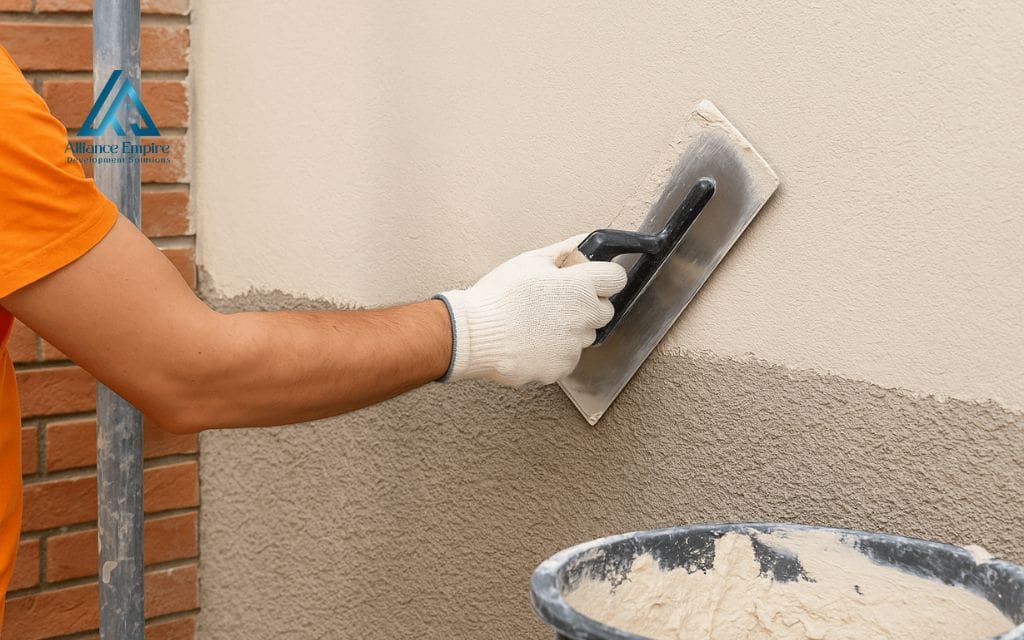
Conclusion
Rendering is one of the most effective ways to enhance both the protection and the appearance of a building’s exterior. From traditional cement render to advanced EIFS systems, each type offers a different balance of cost, performance, and aesthetic appeal.
Choosing the right render for your project comes down to 3 key factors:
- Budget: Cement and monocouche renders offer cost-effective solutions, while silicone and EIFS systems command a higher price for superior performance.
- Climate: In wet or coastal environments, silicone render delivers the best moisture protection. In hot and dry climates, cement and acrylic systems perform reliably. For energy efficiency in any climate, EIFS is the top choice.
- Maintenance needs: If low maintenance is a priority, opt for acrylic, silicone, or monocouche systems, which are designed to stay looking their best with minimal upkeep.
Ready to move forward? Compare render types based on your specific conditions, or contact a licensed local contractor who can assess your walls, recommend the best system, and provide a detailed quote. Making the right choice now will pay dividends in durability, appearance, and value for years to come.
About Alliance Empire Development Solutions (Alliance EDS) Company
At Alliance EDS, we specialize in high-quality exterior finishing solutions for residential and commercial properties across the Denver area. From traditional cement render to modern EIFS and acrylic systems, our experienced team helps you choose the right product for your climate, budget, and building type.
With years of hands-on experience in roofing and exterior construction, we don’t just apply render – we assess your walls, prepare the surface properly, and deliver a finish built to last. Every project is completed with attention to detail, quality materials, and workmanship you can count on.
Ready to upgrade your exterior? Contact Alliance EDS today for a free consultation and quote. Call us or visit our website to get started.
Frequently asked questions (FAQs)
How much does rendering usually cost?
In the United States, the typical cost of professionally installed rendering ranges from $6 to $15 per square foot, depending on the render type selected and local labor rates. Surface preparation, building height, and regional market rates can push costs higher.
Is rendering the same as stucco?
For most practical purposes, yes. In the United States, “stucco” is the common term for “rendering.” Traditional stucco is a cement-based render, which is one of several rendering systems. Modern rendering also includes acrylic, silicone, polymer, lime, and EIFS systems, some of which differ significantly from classic stucco in composition and performance.
How long does rendering last?
A well-applied render system on a properly prepared surface should last 20 to 30 years or longer with appropriate maintenance. Cement render typically requires more frequent attention due to its susceptibility to cracking, while acrylic, silicone, and polymer systems tend to maintain their appearance and integrity for longer periods with less intervention. EIFS systems, when correctly installed with proper drainage details, can also achieve long service lives.
Is render just sand and cement?
Traditional cement render is primarily a mix of sand and Portland cement, sometimes with the addition of lime to improve workability and flexibility. However, modern rendering systems are considerably more advanced. The term “render” now covers a broad family of products that go well beyond a simple sand-and-cement mix.
Can water get through render?
Properly applied render is highly water-resistant but not completely waterproof. Traditional cement render can develop hairline cracks over time that allow moisture ingress. Acrylic and silicone renders are significantly more water-resistant due to their flexible, polymer-modified formulations. Silicone render, in particular, is designed to actively repel water while still allowing moisture vapor to escape from within the wall.