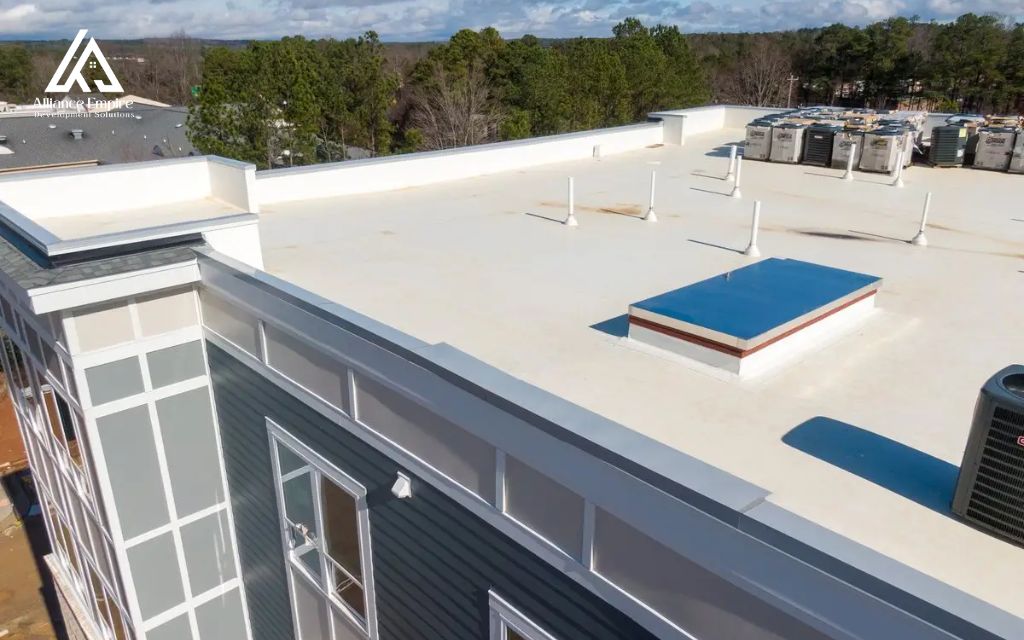
When hail pelts your Denver flat roof or heavy spring snowmelt pools on the surface, the hidden insulation beneath your roofing membrane determines whether you face a minor inconvenience or a costly leak disaster. Most property owners never think about flat roof insulation until energy bills spike, ice dams form, or water stains appear on ceilings. Choosing the right insulation type matters enormously in Colorado’s punishing climate, where freeze-thaw cycles, intense UV at altitude, and sudden hailstorms age roofs faster than almost anywhere else in the country.
This guide explains the major flat roof insulation types available today, how each performs under Denver’s unique weather conditions, and when repair, retrofit, or complete replacement makes the most financial sense. You will learn practical signs of insulation failure, cost considerations, and why a professional inspection from a local Denver roofing expert like Alliance Empire Development Solutions protects your property investment far better than guesswork or DIY fixes.
Why flat roof insulation matters in Denver
Flat roof insulation serves three critical functions that homeowners and commercial property managers often overlook until problems arise.
- First, insulation provides thermal control, keeping conditioned air inside your building and reducing the strain on heating and cooling systems during Denver’s temperature swings.
- Second, it offers moisture management by creating a stable temperature layer that minimizes condensation beneath the roofing membrane.
- Third, quality insulation protects the roof deck and membrane from temperature-driven expansion and contraction that accelerates wear and opens seams.
Denver’s climate makes these roles even more important. Summer temperatures can hit the 90s while winter nights drop below zero, creating thermal shock that stresses under-insulated roof assemblies. High-altitude UV exposure degrades membranes faster on roofs that run hot due to inadequate insulation. Heavy snow loads in spring require robust insulation layers that maintain structural integrity under weight and moisture. When you add frequent hailstorms and the freeze-thaw cycles that crack poorly protected surfaces, the insulation beneath your flat roof becomes your first line of defense against leaks, energy waste, and premature roof failure.
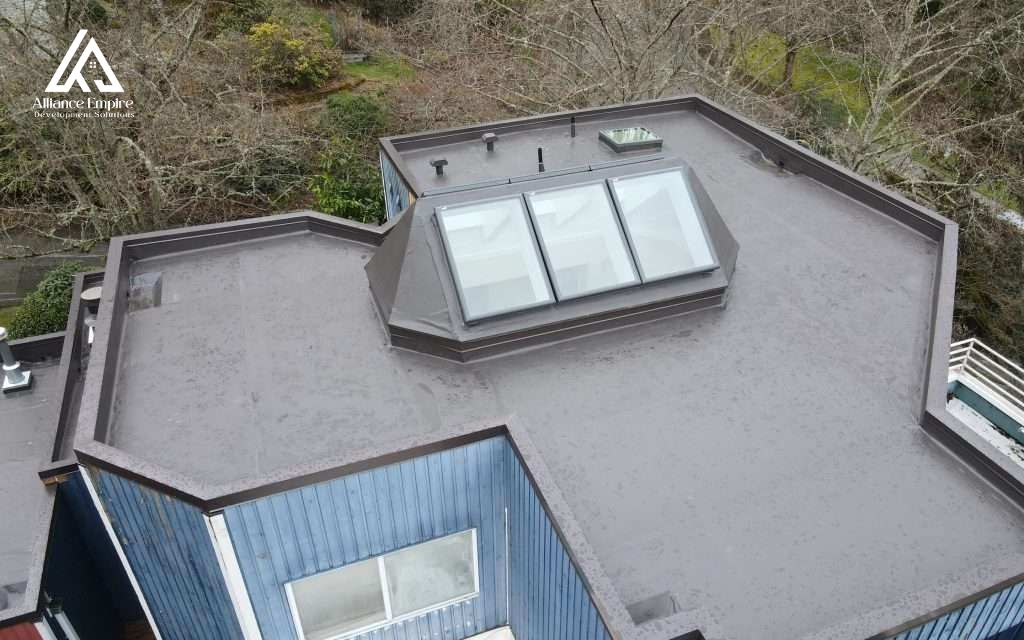
Understanding R-value (resistance to heat flow), continuous insulation (unbroken thermal layer), and tapered versus flat layouts helps you make informed decisions. Higher R-values mean better energy performance, but the right insulation type depends on your roof deck material, the membrane system above (TPO, EPDM, PVC, modified bitumen), and whether drainage issues already exist on your building.
The right insulation matters in Denver
Flat roof insulation does three jobs: controls temperature, manages moisture, and protects your roof deck and membrane from expansion damage. Denver’s climate makes this critical. Summer temps hit the 90s while winter nights drop below zero, creating thermal shock on under-insulated roofs. Add high-altitude UV, heavy snow loads, frequent hail, and freeze-thaw cycles, and your insulation becomes the first defense against leaks, energy waste, and premature roof failure.
Key terms to know:
- R-value: Resistance to heat flow (higher = better insulation)
- Continuous insulation: Unbroken thermal layer across the roof
- Tapered systems: Sloped insulation that directs water to drains
The right insulation depends on your roof deck material, membrane type (TPO, EPDM, PVC, modified bitumen), and existing drainage issues.
5 Main flat roof insulation types insulation
1. Polyisocyanurate (Polyiso) – Denver’s workhorse insulation
Polyiso dominates Denver’s flat roofing market for good reason. This rigid foam delivers R-6 to R-6.5 per inch at competitive prices and works with all major membrane types.
- Colorado consideration: Polyiso loses some R-value below 25°F. Denver contractors address this by layering with cover boards or pairing with EPS or mineral wool on unheated buildings.
- Best for: Most residential and commercial roofs seeking cost-effective energy efficiency and code compliance.
2. EPS and XPS foam boards
| Feature | EPS | XPS |
| R-value per inch | R-4 | R-5 |
| Cost | Lower | Higher |
| Best trait | Tolerates ponding water | Superior compressive strength |
| Ideal use | Drainage issues, thick layers needed | Under rooftop equipment, high foot traffic |
| Temperature performance | Stable | More consistent than polyiso |
Denver applications: Choose EPS for chronic ponding issues or settled decks. Pick XPS beneath HVAC units or where snow loads require crush resistance.
3. Mineral wool and high-performance assemblies
Mineral wool (rock wool) offers unique benefits for specific Denver buildings:
- R-4 to R-4.5 per inch with excellent fire resistance
- Non-combustible for mixed-use, multi-family, or buildings with strict fire codes
- Sound attenuation reduces HVAC noise and street activity
- Stable R-value across extreme temperature swings
Contractors layer mineral wool with foam boards for hybrid assemblies that meet aggressive energy codes while satisfying fire and noise requirements. Costs more upfront but delivers long-term value for urban buildings where safety and tenant comfort justify the investment.
4. Cover boards, gypsum, and wood fiber
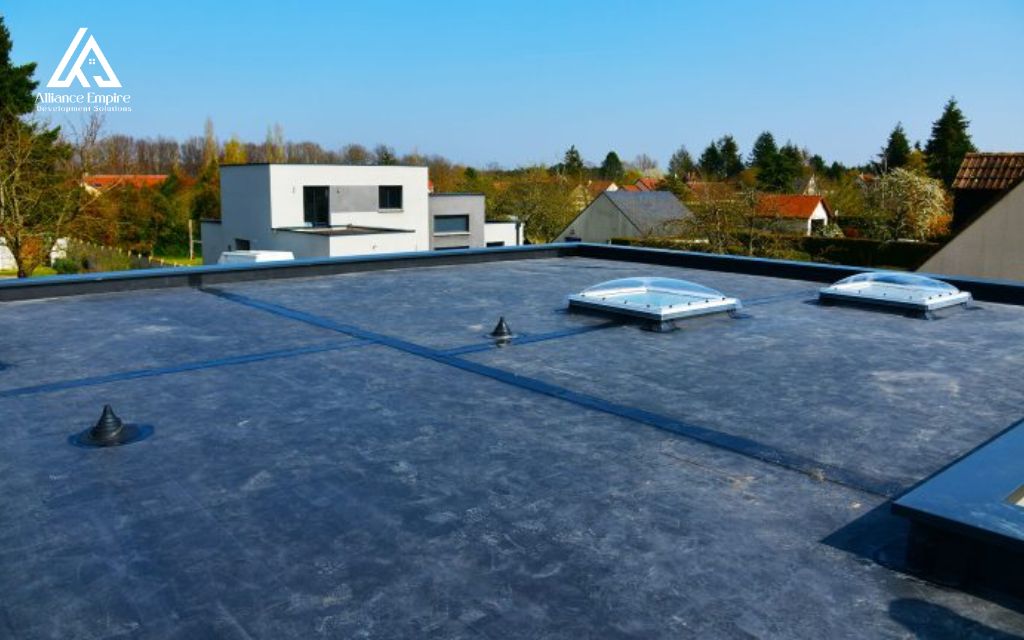
Cover boards sit above insulation and below membranes, adding protection against hail, foot traffic, and fire:
| Material | Key benefit | Best for |
| Gypsum | Fire resistance, smooth surface | General protection, code compliance |
| Cement fiber | Superior hail resistance | Denver’s hail corridor |
| Wood fiber | Impact protection + modest R-value | Balancing hail defense with thermal performance |
In Denver’s hail corridor, pairing insulation with robust cover boards and Class 4 impact-resistant membranes creates layered storm defense that pays off through extended membrane life and better insurance claim outcomes.
5. Spray foam insulation for flat roofs (where it fits)
Spray polyurethane foam (SPF) creates seamless, high-R-value layers (R-6 to R-7 per inch) that fill gaps rigid boards cannot reach. Can function as both insulation and roofing membrane.
- Challenges: Requires precise temperature, humidity, and substrate prep. Denver’s variable spring and fall weather complicates installation. Poorly applied SPF traps moisture and fails to bond properly.
- Best applications: Complex roof shapes, difficult access, or encapsulating existing insulation where removal is impractical. Alliance EDS uses spray foam selectively with trained crews to avoid DIY pitfalls.
Colorado climate challenges for flat roof insulation
Hail, UV, and thermal shock
- Denver’s hail threat: 7-10 hail days per year with golf-ball-sized stones that bruise membranes and fracture insulation boards beneath. Hidden damage creates moisture problems that appear as ceiling stains months later.
- High-altitude UV: At 5,280 feet, UV degrades membranes faster, especially on poorly insulated roofs running 160°F+ in summer sun.
- Insurance claims: Proper documentation (photos, infrared scans, core samples) ensures fair claim outcomes. Alliance EDS provides detailed reports that justify replacing damaged insulation, not just patching visible membrane damage.
Snow loads, ice dams, and freeze-thaw
How insufficient insulation causes problems:
- Warm air escapes through roof deck
- Snow melts on warm sections, stays frozen on cold areas
- Meltwater refreezes at edges, creating ice dams
- Water backs up under membranes and flashing
Freeze-thaw damage: Water in small cracks freezes, expands, widens openings. After multiple cycles, minor imperfections become major leaks.
Solution: Tapered insulation systems create positive slope, directing water to drains instead of allowing ponding that freezes repeatedly.
Inspection timing: Schedule professional inspections after major snow events and spring melt periods to catch issues before they escalate into emergency repairs.
Repair vs replacement: How to decide for flat roof insulation
Signs your flat roof insulation is failing
Several warning signs indicate that flat roof insulation has reached the end of its service life or sustained damage requiring immediate attention:
| Warning sign | What it means | Why it matters |
| Recurring leaks after membrane patches | Water is bypassing repairs, likely traveling through wet insulation or under failed flashing | Wet insulation loses R-value and must be replaced to stop the cycle |
| Stained or sagging ceilings | Moisture has saturated insulation and may have damaged roof decking | Structural integrity is at risk; mold growth is probable |
| Unusually high energy bills | Insulation has lost thermal performance due to moisture, compression, or age | Replacing insulation pays for itself through lower heating and cooling costs |
| Cold or hot spots on interior ceilings | Insulation is missing, crushed, or wet in specific areas | Uneven insulation creates comfort problems and membrane stress |
| Ponding water remaining 48+ hours after rain | Roof slope is inadequate or insulation has compressed unevenly under weight | Standing water accelerates membrane aging and freeze-thaw damage |
| Blistered or bubbling membrane | Moisture or air is trapped beneath the membrane, often in wet insulation | Blisters grow over time and eventually rupture, causing leaks |
Homeowners and property managers often see only the surface symptoms (water stains, high bills) while the real problem hides in the roof assembly. Professional roofing contractors use infrared thermal scanning and core cut samples to map wet insulation that appears dry from below. These diagnostic tools reveal the true extent of damage, helping you avoid spending money on membrane repairs when the insulation beneath has already failed.
Wet insulation cannot simply be “dried out.” Foam and mineral wool that have absorbed water lose structural integrity, become breeding grounds for mold, and continue to wick moisture through the roof assembly. Removing and replacing wet sections is the only reliable fix, which is why accurate diagnosis before repair decisions is critical.
When a targeted repair makes sense
Targeted insulation repair works well in specific scenarios where damage is localized, the surrounding insulation and membrane remain in good condition, and the building owner wants to extend the roof’s life by several years without the cost and disruption of full replacement. Common situations include:
- Storm damage affecting one section of the roof (e.g., hail crushed insulation near a parapet wall but left other areas intact)
- Leak from a single penetration (skylight, vent pipe, HVAC curb) that saturated nearby insulation
- Recent roof (less than 10 years old) with a warranty that covers repair materials and labor
- Budget constraints where phased repairs keep the building protected until full replacement becomes feasible
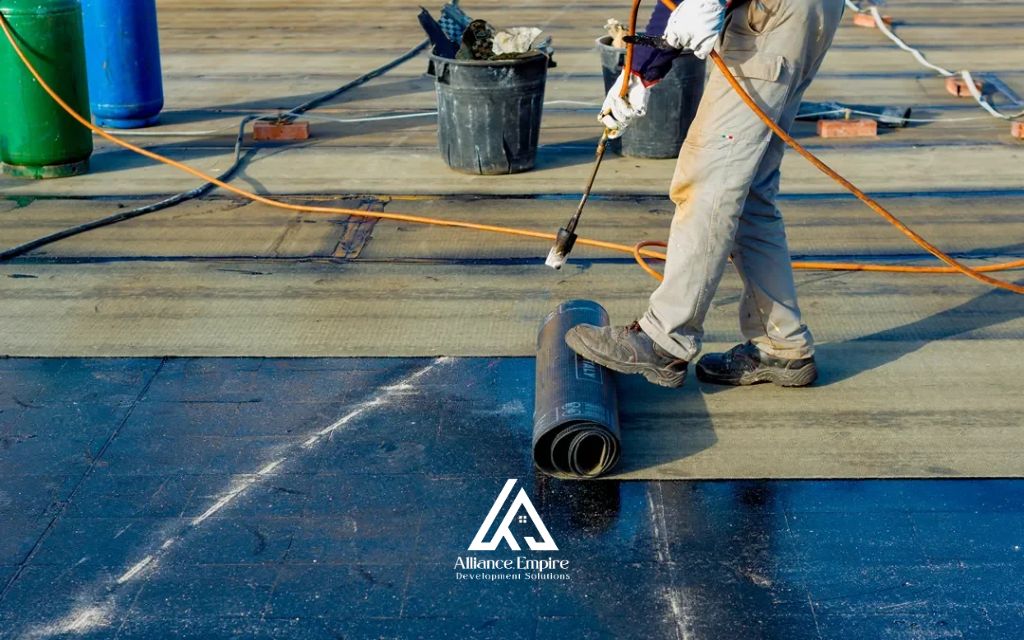
Repair involves cutting out damaged insulation, ensuring the roof deck is dry and sound, installing new insulation to match existing R-value and thickness, and re-sealing the membrane with proper overlap and adhesion. Contractors must carefully tie new insulation into the old to avoid creating thermal bridges or uneven surfaces that cause future ponding.
Cost, downtime, and warranty considerations all influence repair decisions. Small residential flat roof insulation types may complete repairs in a day or two with minimal disruption. Larger commercial buildings require staging, protection of occupied spaces below, and coordination with tenants. Alliance EDS works with Denver homeowners and property managers to assess whether targeted repairs deliver good value or whether widespread hidden damage makes full replacement the smarter long-term investment.
When full replacement or upgrade is smarter
Full flat roof insulation replacement or upgrade becomes the right choice when:
- Widespread wet insulation (affecting more than 30-40% of the roof area)
- Multiple prior patches and a history of recurring leaks despite repairs
- Roof membrane nearing end of life (15+ years old for EPDM, 20+ for TPO/PVC, 10-15 for modified bitumen)
- New energy code requirements for renovations or additions that trigger compliance upgrades
- Property sale or refinance where roof condition affects appraisal or buyer confidence
Replacing the entire insulation layer during a membrane replacement allows you to upgrade to higher R-values, install tapered systems that eliminate ponding, and add impact-resistant cover boards that protect against future hail. These improvements deliver measurable benefits:
- Lower utility bills from better thermal performance
- Extended membrane lifespan due to reduced thermal cycling and improved drainage
- Increased property value and marketability
- Better insurance resilience through Class 4 impact ratings and modern roofing assemblies
In Colorado’s hail corridor, upgrading insulation and membranes together during replacement often qualifies for insurance discounts on wind and hail coverage. The upfront investment pays back through energy savings, reduced maintenance, and fewer emergency leaks over the roof’s 20- to 30-year expected life.
Alliance EDS provides detailed cost-benefit analysis comparing repair versus replacement scenarios, helping Denver property owners make informed decisions aligned with their budget, building use, and long-term plans.
Why professional inspections beat DIY for flat roof insulation
Safety first:
Flat roofs become dangerously slick after rain, snow, or frost. Membranes lack the grip of steep shingle roofs, and hidden moisture, ponding water, or ice create fall hazards. Even single-story falls cause severe injuries.
What you cannot see from the ground:
- Saturated insulation revealed only through infrared scanning
- Separating seams that look intact but leak during storms
- Compression patterns showing where insulation has failed under weight
- Drainage problems and flashing failures invisible to untrained eyes
Denver expertise matters:
Alliance EDS evaluates membrane flat roof insulation types, insulation layers, drainage design, and storm history to determine when repairs make sense versus when you’re throwing money at a failing system. With 15+ years of local experience, we’ve diagnosed every combination of hail damage, ponding water, and insulation failure across Front Range residential and commercial roofs.
Insurance claim support:
Professional inspections provide photos, moisture readings, and written reports that establish damage scope and justify insulation replacement during storm claims, avoiding disputes with adjusters over necessary repairs.
Cost, timelines, and insurance in Denver
Typical cost ranges and factors
Flat roof insulation costs vary widely based on material choice, roof size, access difficulty, and whether you are repairing localized damage or replacing the entire assembly. As a general guide:
- Targeted insulation repair: Often ranges from a few hundred to a few thousand dollars depending on damaged area size and materials needed
- Full insulation replacement during roof re-cover or tear-off: Typically represents 20-35% of total project cost, with the balance covering membrane, labor, flashing, and disposal
- Material differences: EPS costs less per R-value than polyiso or XPS; mineral wool and spray foam command premium pricing for specialized performance
Several factors drive pricing:
| Cost factor | How it affects price |
| R-value target | Higher R-values require thicker or multi-layer insulation, increasing material and labor costs |
| Roof access | Difficult access (historic buildings, tight urban sites, rooftop equipment obstacles) raises labor time and crane/hoist expenses |
| Tapered vs flat systems | Tapered insulation systems cost more due to custom cutting and slope design but solve drainage problems permanently |
| Cover boards | Adding gypsum, cement fiber, or wood fiber cover boards increases material cost but improves hail resistance and membrane longevity |
| Removal and disposal | Tear-off projects require hauling away old insulation; disposal fees vary by material type and local landfill rates |
Alliance EDS offers free inspections and detailed estimates so Denver property owners understand exactly what work is needed, how material choices affect upfront cost and long-term value, and what payment or financing options are available. Transparent pricing without surprise add-ons builds trust and helps you budget confidently for necessary roof work.
Choosing higher-quality insulation and materials increases flat roof insulation types for your initial investment but reduces energy bills, minimizes future repairs, and extends the time between re-roofing projects. Over a 20-year ownership period, spending an extra few thousand dollars on insulation upgrades often saves tens of thousands in utility costs and avoided leak damage.
Project timelines and seasonal considerations
Flat roof insulation project timelines depend on roof size, complexity, and weather conditions:
- Small residential flat roofs (under 2,000 sq ft): Targeted repairs may take 1-2 days; full replacement typically completes in 3-5 days
- Mid-size commercial roofs (5,000-15,000 sq ft): Plan for 1-2 weeks, including staging, protection of interior spaces, and coordination with business operations
- Large commercial or multi-building projects: May span several weeks with phased work to minimize tenant disruption
Denver’s spring and summer storm seasons (April through August) bring the highest risk of hail damage, making pre-season inspections smart planning. Scheduling roof work in late summer or early fall allows contractors to complete projects before winter weather arrives, avoiding delays from snow or freezing temperatures that halt membrane installation. However, emergency repairs after hailstorms often happen year-round using temporary measures until permanent fixes can proceed in warmer months.
For occupied commercial buildings, Alliance EDS stages work to maintain business continuity. Retail shops, offices, and multi-family properties cannot simply close for roof work, so contractors section off areas, work around tenant schedules, and use dust barriers and noise controls to minimize impact. Clear communication about timelines and daily progress helps property managers keep tenants informed and satisfied.
How storm damage and insurance claims affect insulation work
Hail, wind, and heavy snow events frequently justify replacing damaged or saturated insulation as part of a legitimate insurance claim. When storms cause membrane bruising, torn seams, or crushed insulation, Colorado property insurance policies typically cover the cost to restore the roof to its pre-loss condition. This often includes insulation replacement in damaged areas or across the entire roof if an adjuster determines full replacement is necessary.
Proper documentation is critical for fair claim outcomes:
- Photos of hail impacts, membrane damage, and wet insulation
- Infrared scans showing moisture patterns beneath the membrane
- Core samples proving insulation saturation
- Contractor reports detailing scope of damage and recommended repairs
Insurance adjusters rely on this evidence to approve claims and establish appropriate settlement amounts. Homeowners and property managers who attempt DIY assessments or delay professional inspections risk having claims denied or underpaid due to insufficient proof of storm damage versus wear and tear.
Alliance EDS partners with Denver property owners throughout the claims process, providing inspection reports and estimates that support legitimate claims without exaggerating damage or recommending unnecessary work. We understand that hailstorms and leaks are stressful enough without adding confusion about insurance coverage or untrustworthy contractors pushing inflated repairs.
Honest guidance matters. Some roofing companies view storm events as opportunities to upsell full replacements when targeted repairs would suffice. Alliance EDS earned our reputation over 15+ years by telling customers the truth about their roofs, even when it means less revenue for us in the short term. That integrity builds long-term relationships and referrals that sustain our business far better than one-time storm chasing ever could.
FAQ about flat roof insulation types
What is the best flat roof insulation for Denver’s climate?
The best flat roof insulation depends on your building type and budget. Polyisocyanurate (polyiso) offers excellent R-value for most Denver roofs but loses some performance in extreme cold. EPS foam handles ponding water better and costs less, while mineral wool excels in fire resistance and noise control for urban buildings. Alliance EDS provides free inspections to recommend the right insulation type for your roof’s membrane, deck condition, and climate exposure.
How much does it cost to insulate a flat roof in Denver?
Targeted repairs for wet insulation typically cost a few hundred to a couple thousand dollars, while full insulation replacement during roof work represents 20-35% of total project cost. Higher R-values and premium materials increase upfront investment but deliver long-term energy savings. Alliance EDS provides free inspections and detailed estimates with no surprise fees so you can make informed decisions.
Will better flat roof insulation stop my leaks and ice dams?
Better insulation significantly reduces ice dams and leaks by maintaining consistent roof temperatures and improving drainage. However, insulation alone cannot solve all problems. Flashing details, membrane condition, and proper drainage must also be addressed for permanent solutions. Alliance EDS inspects all these factors to ensure insulation upgrades work together with membrane and flashing repairs.
Can I insulate my flat roof from the inside instead of replacing it?
Interior-only insulation traps moisture between layers, promoting mold, wood rot, and structural damage. Flat roofs need continuous insulation on the exterior side to prevent condensation and address membrane or drainage issues. Alliance EDS provides honest assessments of whether exterior insulation retrofits can improve your roof or if more comprehensive repairs are needed.
How often should a flat roof be inspected in Colorado?
Schedule professional inspections at least annually, ideally in late summer or early fall. Also inspect after major hail events, heavy snow, or severe windstorms. Denver’s hail corridor and freeze-thaw cycles create hidden problems that worsen rapidly if undetected. Alliance EDS offers inspection services that document roof condition and catch issues before they become emergency repairs.
5 Reasons to choose Alliance Empire Development Solutions
- 15+ years of Denver roofing experience across residential and commercial flat roof systems, giving us deep expertise in how Colorado’s climate affects insulation performance and membrane longevity
- Honest guidance over high-pressure sales because we believe in building long-term relationships by telling you the truth about your roof, even when repair makes more sense than replacement
- Local storm damage specialists who understand hail claims, insurance processes, and how to document damage properly so you receive fair compensation without unnecessary delays or disputes
- Comprehensive flat roof knowledge covering all insulation types, membrane systems, drainage solutions, and energy code requirements specific to Denver and Front Range building conditions
- Free inspections and detailed estimates that break down your options clearly, helping you make informed decisions about insulation upgrades, repairs, or full replacement based on your budget and building needs
Conclusion
Understanding flat roof insulation types empowers Denver property owners to make smart decisions about energy efficiency, storm resilience, and long-term roof performance. Whether you manage a commercial building downtown, own a residential flat roof in southwest Denver, or oversee multi-family properties across the Front Range, choosing the right insulation materials and knowing when to repair versus replace protects your investment and prevents costly emergency leaks. Colorado’s hail, heavy snow, freeze-thaw cycles, and intense UV exposure demand insulation solutions that go beyond generic recommendations, which is why professional evaluation tailored to your specific building and climate challenges matters so much.
Do not wait for the next hailstorm, ponding water emergency, or skyrocketing energy bill to address your flat roof insulation needs. Schedule a professional inspection today with Alliance Empire Development Solutions and discover exactly what your roof requires to perform efficiently and reliably for decades to come. Our team provides honest assessments, transparent pricing, and the local Denver expertise that turns roofing stress into confident, informed action.