Before a single piece of cladding goes up on a new building, or before a contractor installs hundreds of windows across a high-rise facade, smart project teams build a mock-up.
A construction mock-up is a physical model, a test section, or a full-scale replica of a building component built specifically to verify design intent, test performance, and confirm quality standards before the real work begins.
Whether you are a property owner approving exterior finishes, a developer managing a multi-story project, or a contractor trying to eliminate rework, understanding what a mock-up in construction is and how to use it effectively can save time, money, and significant headaches down the road.
This guide breaks down everything you need to know about construction mock-ups, including what they are, why they matter, what types exist and what tests they go through.
What is a mock-up in construction?
A mock-up in construction is a physical sample or scaled model of a building system, component, or assembly built before full-scale construction begins. The mock-up allows owners, architects, contractors, and subcontractors to evaluate how a material looks, how it performs, and how well it can be installed according to plan.
A building mock-up is not a rough sketch or a computer rendering. It is an actual, hands-on construction using the same materials, tools, workers, and methods that will be used on the real project.
For example, if a commercial building is going to have a specific type of metal panel facade, the contractor may build a 10-foot-by-10-foot section of that facade as a mock-up first. That section goes through visual inspection and performance tests before the project moves forward.
Mock-ups can range in size and scope. Some are small material samples reviewed at a job site or in a shop. Others are large, freestanding structures built next to the main building to replicate an entire wall assembly, complete with windows, flashing, insulation, and cladding. The purpose is always the same: verify it before you build it at scale.
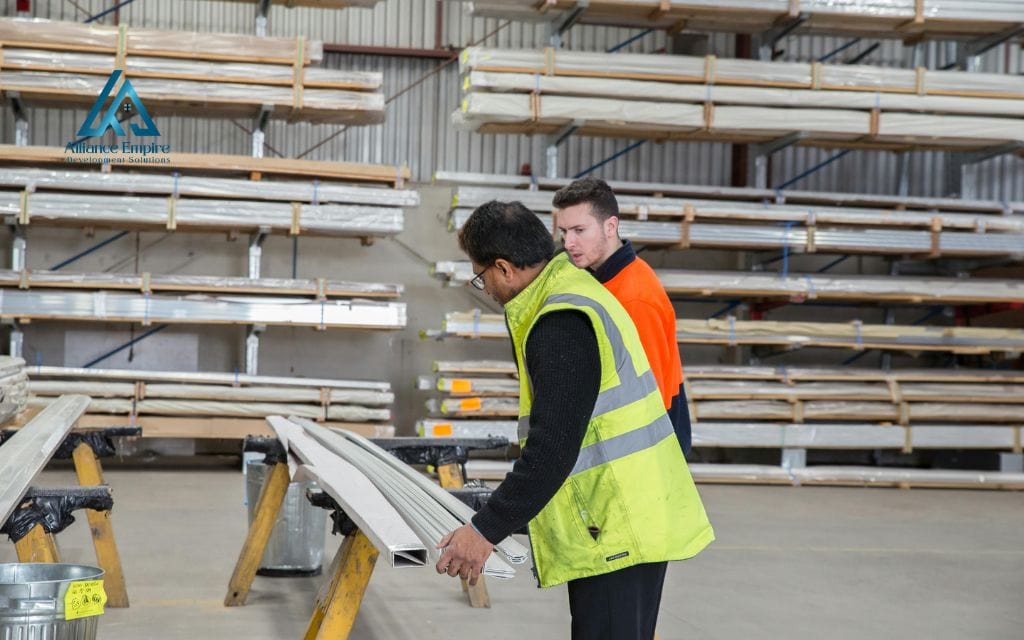
Why mock-ups matter in modern construction
Construction errors are expensive. A single failed window installation, or a cladding system that does not meet the design specifications can lead to thousands of dollars in rework, schedule delays, and disputes between owners and contractors. Mock-ups are one of the most effective tools available to catch these problems before they become costly mistakes.
Here is why mock-ups have become standard practice on many commercial and residential projects:
They reduce risk
A mock-up lets the entire project team identify problems in a controlled setting. If the window flashing detail does not work the way the architect drew it, or if the tile installer cannot achieve the grout joint width specified, you find out on the mock-up. You fix it there. You do not discover it after hundreds of units have been installed.
They improve quality control
Owners and architects use mock-ups to set a visible quality standard. Once the mock-up is approved, it serves as the benchmark for the rest of the project. Inspectors and project managers can physically compare installed work against the approved mock-up at any point during construction. This makes quality control conversations objective rather than subjective.
They validate workmanship
Not all contractors install materials the same way. A mock-up shows whether the subcontractor who will do the work actually understands how to install the system correctly. It evaluates not just whether the materials are right, but whether the crew can execute the work to the required standard.
They prevent change orders
Change orders are one of the biggest sources of budget overruns on construction projects. Many change orders happen because something that looked correct on paper did not work in practice. Mock-ups close that gap early, reducing the likelihood of mid-project design changes and the disputes that follow.
They build owner confidence
For owners who may not read construction drawings fluently, a physical mock-up is much easier to evaluate than a blueprint. Seeing the actual finished appearance of a facade panel, a storefront window system, or a roofing detail gives owners confidence before they commit to full installation. Approval of a mock-up creates shared understanding between all parties.
Types of construction mock-ups
Not all construction mock-ups serve the same purpose. The type of mock-up used on a project depends on the goals of the owner, the complexity of the system being built, and the requirements of the project specifications or building code.
Below are the main types you will encounter:
| Mock-Up Type | Primary Purpose | Common Applications |
| Aesthetic Mock-Up | Verify appearance and finish | Cladding, tile, paint, roofing materials |
| Performance Mock-Up | Test engineering performance | Curtain wall, window wall, roofing systems |
| Workmanship Mock-Up | Evaluate installer skill and technique | Flashing, waterproofing, specialty finishes |
| Prototype Mock-Up | Test multiple systems together | Complex envelope assemblies |
| Panel Mock-Up | Field test at actual project location | Masonry, tile, cladding, roofing |
Aesthetic mock-ups
An aesthetic mock-up, sometimes called a finish sample or appearance mock-up, is built to evaluate how a material looks. This type is common for exterior cladding, roofing materials, facade panels, tile, masonry, and paint finishes. The goal is color accuracy, texture, joint width, and overall appearance.
Performance mock-ups
A performance mock-up, sometimes called a building envelope mock-up or facade mock-up, is built to test whether a system performs according to its engineering specifications.
This is the most technically rigorous type of construction mock-up and is common for curtain wall systems, window wall systems, storefronts, roofing assemblies, and exterior insulation and finish systems (EIFS).
Performance mock-ups are tested under controlled laboratory or field conditions. The tests simulate real-world conditions such as wind, rain, and air pressure to confirm that the assembly will keep water out, resist air infiltration, and handle structural loads as designed.
Workmanship mock-ups
A workmanship mock-up focuses on the installer’s ability to execute a specific trade or task correctly. This type evaluates technique, process, and result rather than material performance. Workmanship mock-ups are common for complex details such as flashing, waterproofing membranes, roofing systems, and specialty finishes.
On many projects, the workmanship mock-up is reviewed by the architect, the owner’s representative, and the contractor together. The approved mock-up becomes the minimum acceptable standard for the rest of the installation.
Prototype mock-ups
A prototype mock-up is a full-scale, built-in-place test section that incorporates multiple building systems together. It might include a section of the structural frame, exterior sheathing, air and water barriers, insulation, cladding, and glazing, all installed in sequence. A prototype mock-up tests how the systems work together, not just how each one performs individually.
This type is most common on large, complex commercial or institutional projects where the building envelope involves custom-engineered assemblies or where multiple subcontractors must coordinate their work in a tight sequence.
Panel mock-ups
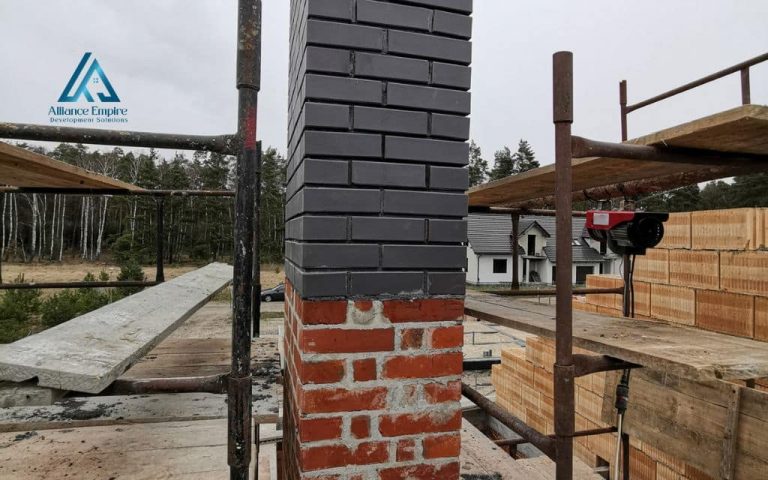
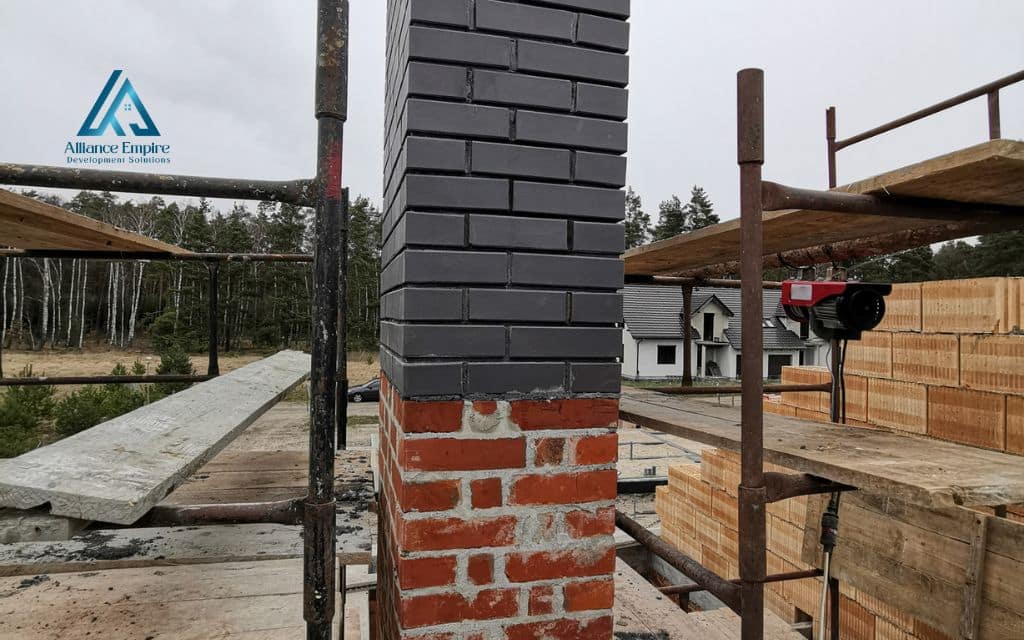
A panel mock-up, also called a field mock-up or site mock-up, is built directly on the actual building at a selected location, usually at a corner or in a lower accessible area. This approach uses real site conditions, actual workers, and the installed system to test appearance and workmanship before full installation proceeds.
Panel mock-ups are common in roofing, tile, masonry, and cladding work. Once approved, the installed panel may remain in place and become part of the finished building.
Common tests performed on construction mock-ups
Performance mock-ups go through a series of standardized tests to verify that a building system will perform correctly once installed at full scale.
These tests are especially critical for exterior envelope systems because failures in the building envelope, such as water infiltration or air leakage, lead to some of the most expensive and disruptive repair situations in construction.
The following are the most commonly used tests on construction mock-ups, particularly for curtain wall, window wall, roofing, and facade systems.
Air infiltration testing
Air infiltration testing measures how much air passes through a wall assembly or window system under a specified pressure difference. The standard test most commonly referenced in U.S. construction specifications is ASTM E283. The mock-up is pressurized, and the rate of air leakage is measured. This test confirms that the system meets the energy code requirements and that all joints, seals, and connections have been properly installed.
Water penetration testing
Water penetration testing evaluates whether the assembly keeps water out under realistic wind-driven rain conditions. The most common standard referenced is ASTM E331 (static pressure) or ASTM E547 (cyclic pressure).
Water is applied to the exterior face of the mock-up while pressure is applied to simulate wind. After the test, the interior is inspected for any signs of water penetration. Any leaks found during testing identify installation deficiencies that must be corrected before full installation proceeds.
Structural load testing
Structural load testing confirms that the assembly can withstand wind loads specified in the project’s engineering requirements. ASTM E330 is the standard most commonly used.
Both positive (outward) and negative (inward) pressures are applied to the mock-up, and the system is evaluated for deflection, permanent deformation, and failure. This test is especially important for curtain wall and window wall systems in high-wind zones.
Thermal performance testing
Thermal performance testing evaluates how well the assembly insulates against heat transfer. This is particularly relevant for energy-efficient building envelope systems where thermal bridging through frames, fasteners, or penetrations can significantly impact a building’s energy performance. Thermal imaging and U-value calculations are used alongside physical testing to validate thermal performance.
Seismic and dynamic testing
In seismic zones, some performance mock-ups are subjected to dynamic movement testing to confirm that the building envelope system can accommodate the racking and interstory drift that occurs during an earthquake without losing water tightness or structural integrity. This type of testing is common on high-rise buildings in California and other seismically active regions.
Impact and blast resistance testing
For certain project types, including government buildings, hospitals, and hurricane-zone construction, mock-ups may also be tested for impact resistance or blast resistance. These tests verify that the envelope system can withstand flying debris or pressure waves from an explosion without catastrophic failure.
When should you use a construction mock-up?
Mock-ups are not required on every project. A small residential remodel may not need a formal performance mock-up. However, there are several situations where building a mock-up is clearly worth the time and cost.
- The project involves a custom or first-time-use material or system that the contractor has not installed before
- The building specifications require mock-up testing, which is common in commercial projects with curtain wall, window wall, or roofing systems
- The building code in your jurisdiction requires performance testing for the facade or envelope system
- The project has complex multi-trade interfaces such as roofing, waterproofing, and cladding all meeting at the same detail
- The owner wants to visually approve the finished appearance before committing to full installation
- The project is located in a high-wind, hurricane, or seismic zone where performance testing is especially critical
- The budget for rework is limited and the cost of a mock-up is clearly less than the cost of a potential installation error at scale
In general, the larger and more complex the project, and the more performance-critical the building system, the stronger the case for investing in a mock-up.
Conclusion
A mock-up in construction is one of the most practical investments a project team can make. Whether it is a simple aesthetic sample reviewed on a job site or a full-scale performance mock-up tested in a laboratory, the purpose is the same: verify before you build, not after.
Mock-ups reduce risk, improve quality control, validate workmanship, prevent expensive change orders, and give owners the confidence to move forward with full installation. They are especially critical for roofing systems, curtain walls, window walls, and other building envelope assemblies where performance failures lead to water intrusion and structural damage.
If you are planning a commercial construction project, a significant renovation, or any scope of work that involves a complex building envelope system, talk to your architect and contractor early about mock-up requirements.
About Alliance Empire Development Solutions (Alliance EDS)
At Alliance EDS, we are a Denver-based roofing and construction company committed to delivering quality workmanship on every project, from residential roofing replacements to full commercial building envelope systems.
We understand that getting the details right before installation begins is what separates a smooth project from a costly one. That is why we support and recommend mock-up processes for complex roofing and construction scopes where performance and appearance standards are non-negotiable.
Whether you are a property owner, developer, or facility manager in the Denver metro area looking for a contractor who takes quality control seriously, we are here to help.
Contact Alliance EDS today at (720) 484-8181 to discuss your project and get a free consultation.
Frequently asked questions (FAQs)
What is a mock-up in construction?
A mock-up in construction is a full or partial physical model of a building component or system, built before full-scale installation begins. It is constructed using the same materials, methods, and workers that will be used on the actual project. The purpose is to test design intent, verify appearance, evaluate performance, and confirm workmanship before the work is repeated across the entire building.
Why are mock-ups important?
Mock-ups are important because they reduce risk, improve quality, and prevent costly mistakes. They allow owners and contractors to identify installation errors, material compatibility problems, and design details that do not work as planned before these issues are replicated at scale. An approved mock-up also creates a clear quality benchmark that the rest of the installation must meet, making quality control throughout the project more objective and consistent.
Are mock-ups required by code?
Mock-ups are not universally required by building code for every project type, but they are frequently required by project specifications, especially for facade systems, curtain walls, window walls, and certain roofing assemblies. Some state codes and local jurisdictions require performance testing for specific building envelope systems, which effectively mandates mock-up construction and testing.
How much does a construction mock-up cost?
The cost of a construction mock-up ranges from a few hundred dollars for a simple material sample to several hundred thousand dollars for a full prototype mock-up of a complex building envelope system. A typical commercial performance mock-up for a curtain wall or roofing system generally falls in the range of $15,000 to $75,000, depending on size, complexity, and testing requirements.