
Warehouse construction contractor Denver businesses trust
A warehouse is more than just storage space. It directly affects operational efficiency, logistics, and long-term business growth. Whether you are building from the ground up, expanding an existing footprint, or converting a facility to support new distribution needs, every decision made in the planning stage shapes how well your operation performs for years ahead.
Smart warehouse construction planning helps businesses improve:
- Inventory flow and throughput capacity
- Distribution efficiency and order fulfillment speed
- Scalability to support future growth
- Operating costs through efficient layout and systems design
This guide covers everything business decision-makers need to know before breaking ground.
What is warehouse construction?
Warehouse construction is the process of designing, building, renovating, or expanding industrial storage and distribution facilities to support business operations. Unlike standard commercial construction, warehouse projects are purpose-built to handle the specific demands of product storage, inventory management, and logistics movement at scale.
These facilities range from straightforward bulk storage buildings to highly automated distribution centers with robotic picking systems, climate-controlled environments, and complex loading dock configurations.
The scope of any warehouse construction project depends on the operational requirements of the business it is built to serve.
Types of warehouse construction projects
The right construction type depends on the products being stored, the operational systems required, budget constraints, and long-term growth plans. Below are the primary warehouse construction types used across the industry.
General warehouses are standard storage and distribution facilities designed for a broad range of inventory types. These buildings feature large open floor plans, standard clear heights, and conventional loading dock configurations.
They are well-suited for businesses that need reliable, flexible storage without specialized environmental controls or automation infrastructure.
Automated warehouses are purpose-designed facilities built to support robotics, conveyor systems, and automated storage and retrieval systems (AS/RS).
These buildings require more intensive upfront planning, including reinforced floor slabs capable of handling heavy automated equipment, increased electrical capacity, and advanced data infrastructure. Automated facilities deliver significant long-term gains in throughput efficiency and labor cost reduction for operations with high order volumes.
Climate-controlled warehouses maintain precise temperature and humidity conditions for products that are sensitive to environmental changes.
Industries that commonly depend on this type of construction include:
- Food and beverage storage and distribution
- Pharmaceutical and medical supply chains
- Electronics and sensitive components manufacturing
Key design considerations for climate-controlled facilities include HVAC system sizing and zoning, high-performance insulation in walls and roofing assemblies, vapor barriers, and energy-efficient building envelopes to manage long-term operating costs.
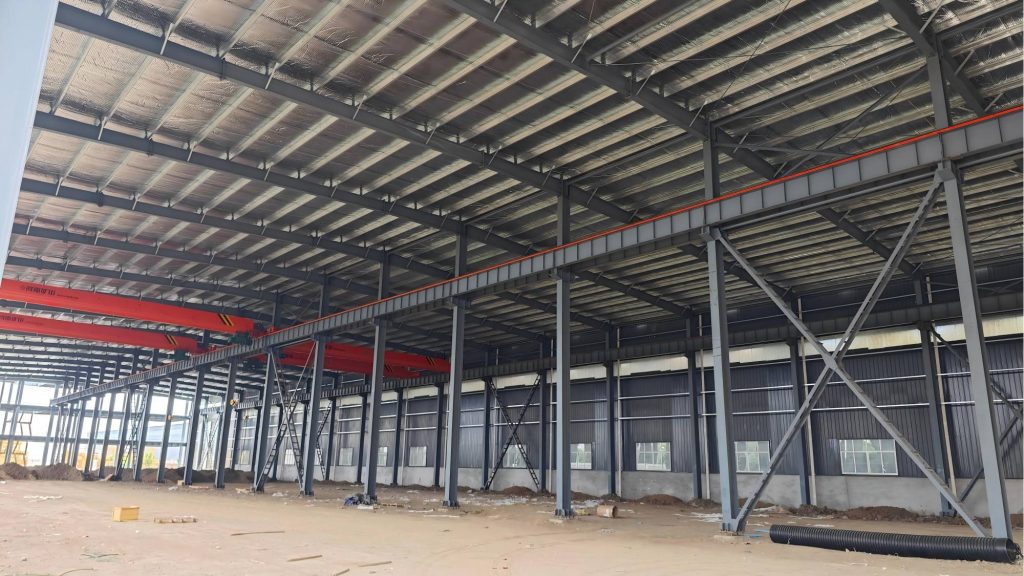
Steel frame construction uses structural steel columns, beams, and bracing systems to create the building’s skeleton.
This method is widely used for warehouse facilities because it delivers high structural durability, supports large clear-span interiors without interior columns interrupting storage layouts, and allows for faster construction timelines compared to some alternative methods.
Steel frame buildings are also highly adaptable for future expansion.
Pre-engineered metal buildings are factory-fabricated structural systems manufactured to specification and assembled on-site. PEMBs offer a cost-effective approach for many warehouse projects because the components are precision-manufactured in a controlled environment, reducing material waste and on-site labor time. They also support flexible expansion by allowing additional bays to be added as business needs grow.
Tilt-up construction involves casting large concrete wall panels horizontally on the job site and then tilting them into a vertical position using cranes.
This method is commonly used for mid-to-large warehouse and industrial facilities because it delivers strong structural performance, natural fire resistance, and long-term durability with lower ongoing maintenance requirements.
Tilt-up buildings have a proven track record in logistics, manufacturing, and distribution environments.
Wood frame construction remains a practical option for smaller warehouse projects where lower upfront material costs and simpler construction processes are priorities. This method is best suited for single-story facilities with moderate storage loads and is used for light-duty storage, agricultural buildings, or smaller regional distribution operations.
Fabric structures use tensioned fabric systems stretched over steel frames to create lightweight, weather-protected storage spaces. These buildings are notable for fast installation timelines and lower construction costs compared to permanent structures, making them a practical choice for temporary or semi-permanent storage needs.
Common applications include:
- Agricultural equipment and crop storage
- Heavy equipment staging and storage
- Temporary logistics operations during facility transitions
What makes warehouse construction different?
Warehouse construction differs from standard commercial building projects in several fundamental ways. Understanding these differences helps owners and project teams make better planning and design decisions from the start.
Designing for operational efficiency
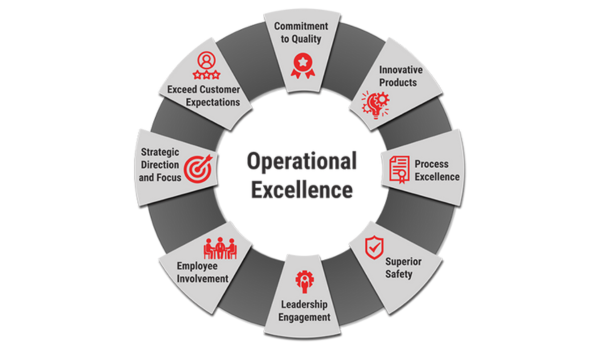
In commercial construction, design priorities center on occupant comfort, interior aesthetics, and public-facing spaces. In warehouse construction, design priorities center on how efficiently products can move through the building. Every square foot of floor space, every door placement, and every structural decision affects throughput, labor productivity, and inventory accuracy. Common operational design priorities in warehouse construction include: Dock placement and truck court depth to support efficient vehicle staging and loading. Clear height optimization to maximize vertical storage density with racking systems. Column spacing and floor plan layout to minimize obstructions in picking and staging areas. Racking system integration planned into the structural and floor slab design.
Integrating industrial infrastructure and automation
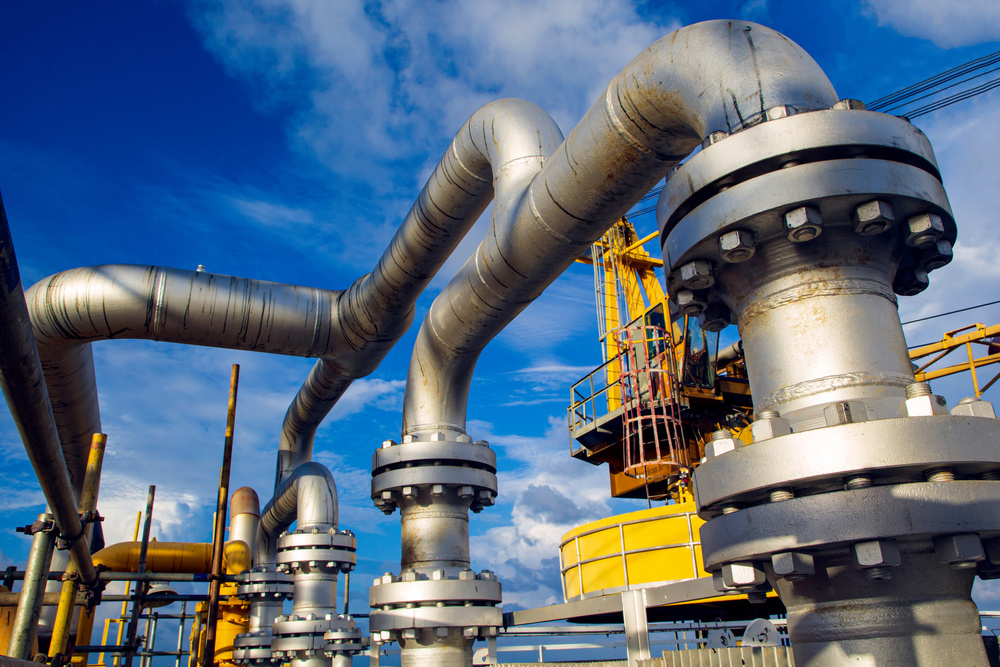
Modern warehouse construction increasingly requires integration of industrial systems that go well beyond standard commercial building infrastructure. Conveyor systems, robotic picking equipment, and automated storage and retrieval systems all place specific demands on structural floor capacity, electrical power distribution, and data and networking infrastructure. Planning for these systems during the design phase is far more cost-effective than retrofitting after construction is complete.
Site selection, zoning, and transportation access
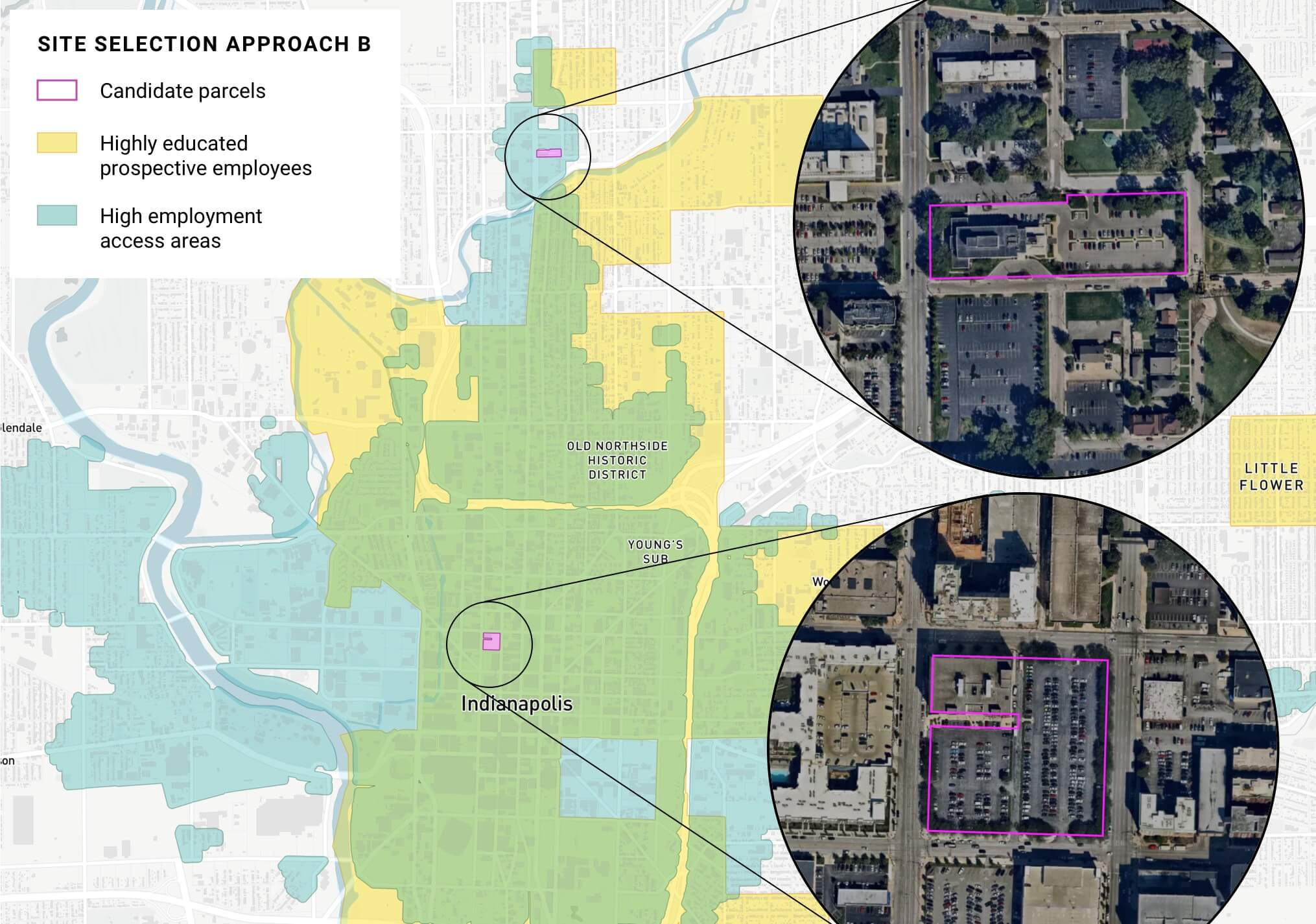
Warehouse projects are highly sensitive to location. A facility with excellent internal design can still underperform if it is poorly situated relative to transportation networks.
Key site selection factors include:
Direct access to major highways and interstate corridors
Proximity to rail lines or port facilities for freight-intensive operations
Adequate truck turning radius and traffic flow on site and at access points
Zoning compliance for industrial and distribution land use
Differences between warehouse construction vs commercial construction
The table below outlines the key differences between warehouse construction and standard commercial construction projects:
| Warehouse Construction | Commercial Construction |
|---|---|
| Focused on storage, logistics, and distribution operations | Focused on offices, retail, hospitality, and public-facing spaces |
| Prioritizes operational efficiency and product flow | Prioritizes customer experience and occupant comfort |
| Requires large open floor plans and high clear heights | Often includes segmented interior layouts and finished spaces |
| Heavy emphasis on loading docks, truck access, and circulation | Greater focus on aesthetics, accessibility, and public traffic flow |
| Frequently integrates automation and industrial systems | More focused on office infrastructure, HVAC comfort, and interior finishes |
| Structural systems designed for heavy storage loads and equipment | Structural systems designed for occupant usage and mixed functions |
| Typically located near highways, rail lines, or logistics hubs | Commonly located in business districts, retail areas, or urban developments |
Why choose Alliance EDS for warehouse construction
Alliance Empire Development Solutions (Alliance EDS) brings integrated design-build expertise to every warehouse project, combining architectural design, engineering, and construction management under a single coordinated team.
This approach eliminates the communication gaps that commonly arise when separate design and construction firms are involved, helping projects stay on schedule and within budget.
Key strengths Alliance EDS delivers for warehouse clients include:
Deep experience in industrial and logistics facility construction across the Denver metro region and beyond
Integrated design-build project coordination that reduces delays and aligns design decisions with real construction costs
Operationally focused design that prioritizes throughput efficiency, dock performance, and long-term scalability
Transparent cost management with clear budget tracking throughout all project phases
Committed communication from initial planning through final project handover
Warehouse Project Gallery
Browse our warehouse projects focused on durability, scalability, and operational efficiency.
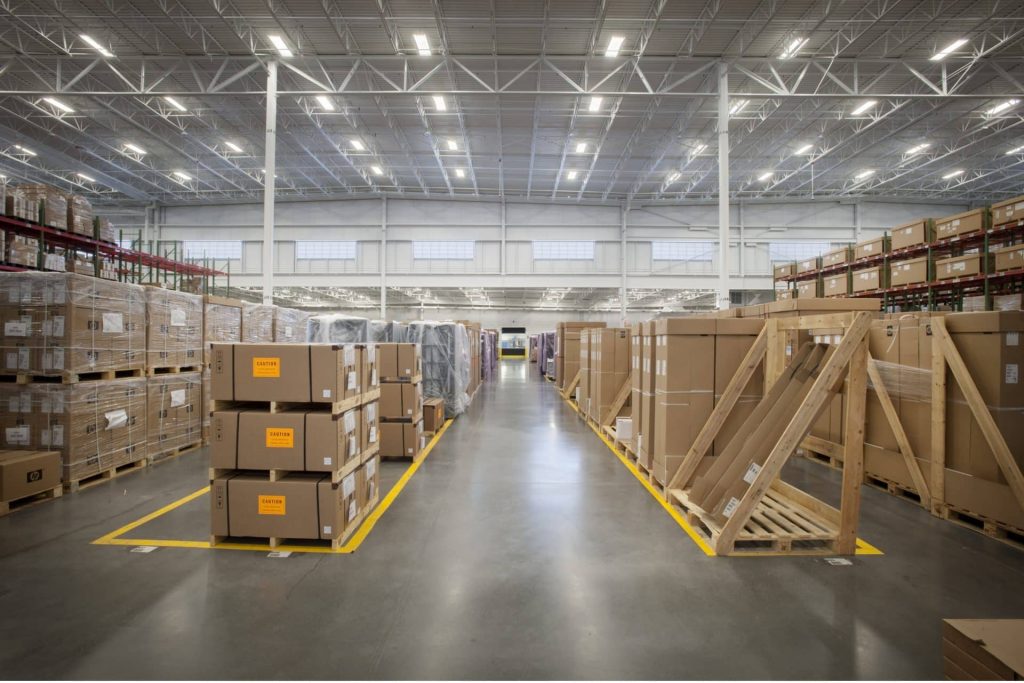
Alliance EDS — Warehouse Development
Alliance EDS warehouse
development process
Alliance EDS follows a structured six-phase development process designed to deliver warehouse facilities that are operationally ready, built on schedule, and aligned with client business goals.
Planning and facility design
Every project begins with a detailed discovery process to define the operational requirements the facility needs to meet. This phase establishes storage requirements, product types, inventory volume targets, workflow goals, throughput expectations, budget parameters, timeline targets, and key stakeholder priorities.
01 / 02
Project discovery and operational planning
Every project begins with a detailed discovery process to define the operational requirements the facility needs to meet. This phase establishes storage requirements, product types, inventory volume targets, workflow goals and throughput expectations, budget parameters and project timeline targets, and key stakeholder priorities for the facility.
02 / 02
Warehouse design and engineering
With operational requirements defined, the design team develops the building layout and structural systems. This phase coordinates building footprint and floor plan configuration, dock placement, truck court layout, access road design, clear height optimization, and structural, mechanical, electrical, and plumbing system planning.
Site preparation and foundation work
Before construction begins, the site is prepared to receive the building and the foundation is engineered to support industrial loads and warehouse operations.
01 / 02
Site development and earthwork
Before construction begins, the site is prepared to receive the building. Site preparation activities include land clearing and demolition of existing structures if required, grading and drainage design to protect the building from water intrusion, and utility coordination for water, sewer, power, and communications.
02 / 02
Foundation construction
Warehouse foundations are engineered specifically for industrial loads. Concrete slabs, footings, and structural foundations are designed and constructed to support heavy forklift and material handling equipment, high-density racking systems with significant point loads, and industrial traffic patterns with repeated heavy vehicle use.
Structural and exterior construction
The primary structural system is erected and the exterior envelope is completed to create a weather-tight shell for the facility.
01 / 02
Structural framework installation
The primary structural system is erected during this phase. Alliance EDS installs steel framing, PEMB systems, or tilt-up concrete construction based on the project type and design specifications, ensuring structural integrity and alignment with the approved engineering plans.
02 / 02
Exterior building envelope
Once the structure is in place, the exterior building envelope is completed, including roofing systems selected for durability and energy performance, exterior wall panels and cladding systems, and insulation and weather protection systems to meet energy code requirements.
Building systems and infrastructure installation
Core mechanical, electrical, plumbing, automation, and technology systems are installed and coordinated for operational performance.
01 / 02
MEP systems
Building systems are installed and coordinated during this phase, including HVAC systems sized for the facility's occupancy and operational requirements, electrical distribution panels, branch circuits, lighting systems, and fire protection and suppression systems.
02 / 02
Industrial and technology infrastructure
For facilities requiring automation or advanced operational systems, this phase installs automation support systems including conduit runs and equipment support structures, data and networking infrastructure for warehouse management systems, and security systems and access control infrastructure.
Interior build-out and operational equipment
Interior spaces and warehouse equipment are completed to support both operational workflows and administrative functions.
01 / 02
Interior construction and finishing
Interior spaces are completed to support both operational and administrative functions, including office areas and employee break rooms, restroom facilities and employee support spaces, and safety features including floor markings, barriers, and emergency systems.
02 / 02
Warehouse equipment installation
Operational equipment is installed and configured, including racking systems and storage infrastructure, conveyor systems and automated equipment where applicable, and dock equipment including dock levelers, dock seals, and truck restraints.
Final testing, inspections, and operational readiness
The final phase verifies system performance, completes inspections, and prepares the facility for active operations and project handover.
01 / 02
System testing and quality control
Before turnover, all building systems and equipment are tested and verified through final inspections with local building authorities for code compliance, mechanical, electrical, and fire protection system testing and commissioning, and equipment testing and operational verification.
02 / 02
Commissioning and project handover
The final phase prepares the facility for active operations through occupancy documentation and certificate of occupancy coordination, staff readiness support and operational walkthroughs, and final project turnover with as-built documentation and warranty information.
Our projects in warehouse construction
1235 S. Broadway Blvd, Unit 11
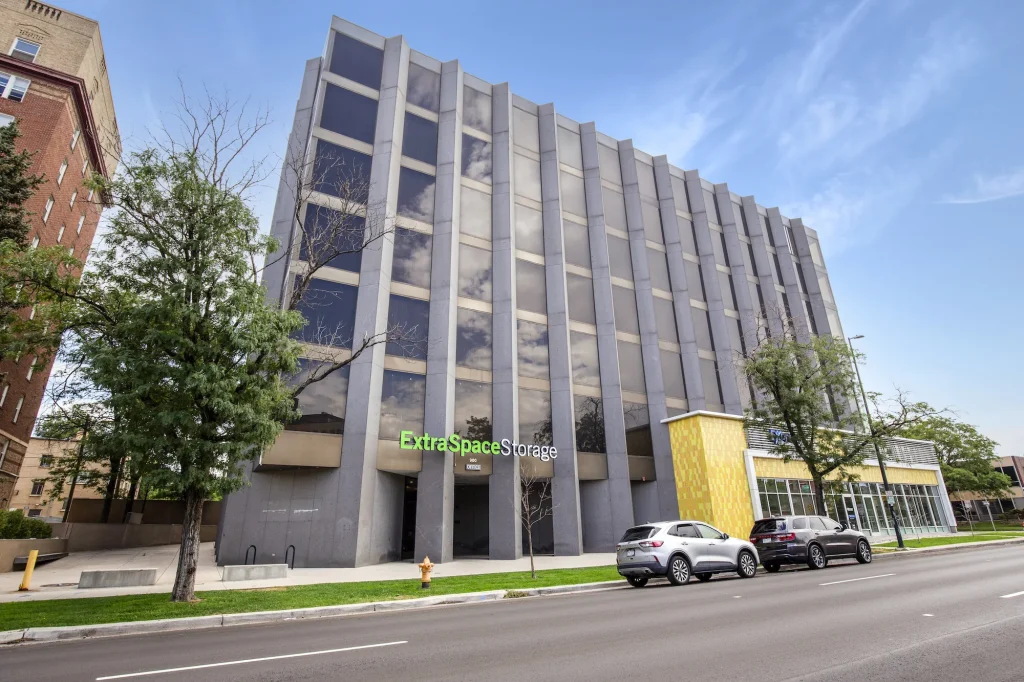
United Storage is a storage unit facility completed by Alliance EDS in 2024, located in Denver, Colorado. The project delivered a functional, well-structured storage space designed to meet the operational demands of modern self-storage users in one of Denver’s established commercial corridors.
Alliance EDS managed the construction process from site coordination through final build-out, ensuring the facility was delivered on schedule and built to code. The result is a durable, accessible storage unit that serves both individual and business clients requiring reliable, secure storage solutions in the Denver metro area.
Conclusion
Successful warehouse construction requires more than selecting a building type and setting a budget. It demands smart planning, operationally focused design, and a construction partner who understands the specific demands of industrial and logistics facilities.
From site selection through final commissioning, every phase of a warehouse project affects how efficiently the facility will perform for years ahead. Working with an experienced design-build team from the start reduces the risk of costly redesigns, schedule delays, and operational compromises that can result from misaligned planning.
Contact Alliance EDS to schedule a warehouse construction consultation or request a project feasibility review. Whether you are planning a new distribution center, expanding an existing facility, or evaluating a ground-up build, our team is ready to help you move from concept to operational facility.
Frequently asked questions (FAQs)
How much does warehouse construction cost?
Warehouse construction costs range from $50 to $250 or more per square foot, depending on the building type, structural system, mechanical complexity, geographic location, and current material costs. Basic steel frame or PEMB warehouses tend to fall on the lower end, while climate-controlled, automated, or tilt-up concrete facilities carry higher per-square-foot costs.
What is the best delivery method for warehouse construction?
Design-build is widely regarded as the most efficient delivery method for warehouse construction because it integrates design and construction under a single contract and team. This approach reduces the coordination risk between separate design and construction firms, shortens the overall project timeline, and aligns design decisions with real-world construction costs from the outset. For industrial and logistics facilities where schedule and budget certainty matter, design-build consistently outperforms the traditional design-bid-build model.
What is the cost of constructing a warehouse?
The total cost to construct a warehouse depends on size, building type, location, and operational requirements. For a general estimate, warehouse construction typically falls between $50 and $150 per square foot for standard facilities and $150 to $250 or more per square foot for specialized or automated buildings. These figures exclude land acquisition, site development, and operational equipment costs, which should be budgeted separately.
How much does a 50,000 square foot warehouse cost?
A 50,000 square foot warehouse project generally ranges from approximately $2.5 million to $7.5 million or more in construction costs, depending on building type, structural system, geographic location, and scope of interior build-out. Climate-controlled or highly automated facilities at this size can exceed this range. A detailed project feasibility review with a qualified design-build contractor provides the most accurate cost estimate for a specific project.
How much does it cost to build a 15,000 sq ft warehouse?
A 15,000 square foot warehouse project typically falls in the range of $750,000 to $2.25 million in construction costs for a standard facility. Smaller warehouses can achieve some cost efficiency with simpler structural systems such as wood frame or PEMB construction. However, per-square-foot costs on smaller projects are often higher than those on larger facilities because fixed costs for site work, utilities, and engineering are spread across less total square footage.