Trusted office construction services for Denver businesses
Office construction is far more than walls and furniture. A successful project requires thorough planning, permit approvals, skilled build-out execution, careful coordination between trades, and thoughtful integration of technology and workflow design.
When any of those elements breaks down, the result is cost overruns, delays, and spaces that do not actually support the way your team works.
This guide is written for business owners, office managers, startup founders, operations leaders, and commercial decision-makers who need guidance before starting a project.
What is office construction?
Office construction refers to the process of building, renovating, or customizing office spaces for business use. That definition covers a wide range of project types, from constructing a new multi-story commercial building to finishing out a single floor in a leased building to upgrading an existing workspace with modern systems and layouts.
What sets office construction apart from residential or industrial construction is the focus on productivity, compliance, and occupant experience. Every decision, from layout to lighting to HVAC zoning, affects how efficiently employees work, how well the space meets code requirements, and how the business is perceived by clients and partners.
Types of office construction projects
Not all office construction projects are the same. Understanding which type applies to your situation helps you set realistic expectations for cost, timeline, and scope.
Ground-up office development means constructing a new commercial building from the foundation up. This is the most complex and capital-intensive type of office construction project. It involves site selection, civil engineering, architectural design, structural systems, full mechanical and electrical installation, exterior envelope construction, and interior fit-out.
Ground-up projects are typically pursued by businesses purchasing land for a permanent headquarters or by developers building speculative commercial office space.
Because ground-up projects carry the highest cost and longest timelines, they require detailed pre-construction planning, a strong design-build team, and careful management of permitting, inspections, and contractor coordination from start to finish.
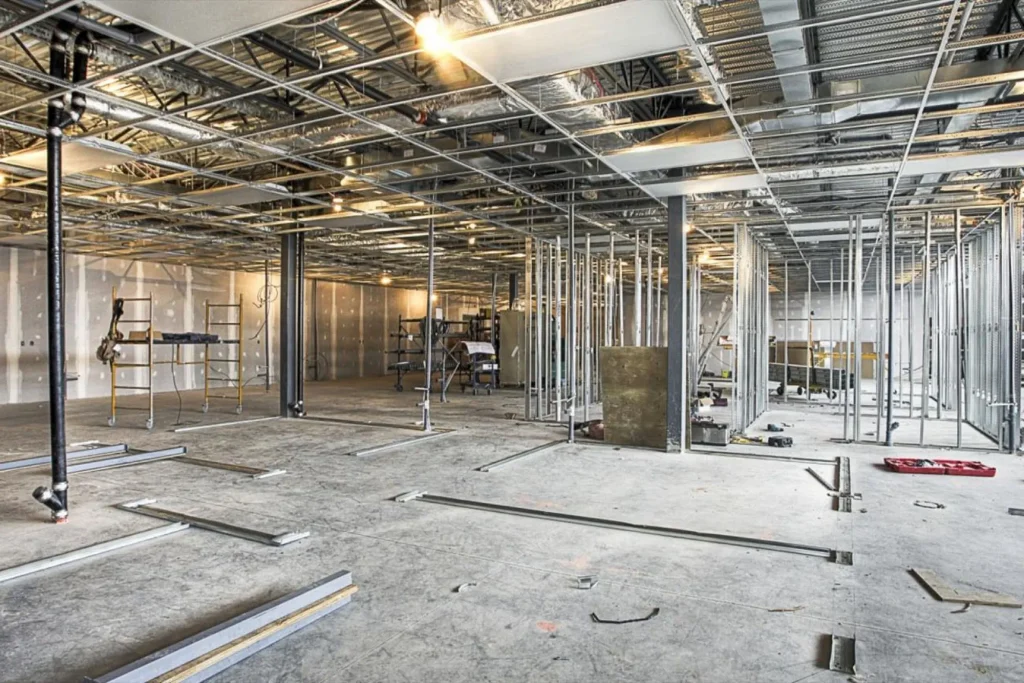
An office build-out involves converting an unfinished or raw interior commercial space into a fully functional office environment.
Landlords frequently deliver commercial suites in a shell condition, meaning the space has structural systems in place but lacks partitions, flooring, ceilings, lighting, and finished mechanical systems. The tenant or their contractor then completes the interior to suit the business’s operational needs.
Common build-out elements include:
- Interior walls and partitions to define offices, conference rooms, and open work areas
- Flooring and ceiling finishes such as carpet, LVT, suspended tile ceilings, or exposed concrete
- Electrical systems including panel upgrades, circuits, outlets, and lighting fixtures
- HVAC distribution, zoning, and controls to condition the finished space
- Plumbing rough-in and fixture installation for break rooms and restrooms
- Data cabling, network infrastructure, and AV systems
Build-out costs vary significantly based on the condition of the base space, the complexity of the layout, and the finish quality specified by the tenant.
Tenant improvements are modifications made to a leased office space to customize it for the tenant’s specific use.
While build-out is the broader process of finishing a raw space, TI work often refers to upgrades or changes within an already partially finished space, such as reconfiguring an existing floor plan, replacing flooring and ceilings, or upgrading mechanical systems.
What is a TI allowance? A tenant improvement allowance (TI allowance) is a landlord-provided budget that helps cover the cost of customizing the leased space. Landlords offer TI allowances as part of lease negotiations to attract and retain tenants.
The allowance is typically expressed as a dollar amount per square foot, such as $40 per square foot. The tenant uses this money toward qualifying construction costs, and if the total project cost exceeds the allowance, the tenant covers the difference.
Office renovations and remodeling projects focus on upgrading existing occupied or previously occupied office spaces.
The goals include improving functionality for current workflows, updating aesthetics to reflect a modern brand or culture, and improving employee productivity and comfort. Renovations can range from cosmetic upgrades such as new paint, lighting, and flooring to comprehensive structural changes that reconfigure floor plans and replace aging mechanical systems.
Common drivers of office renovation include lease renewals, company growth or downsizing, changes in how teams work, outdated infrastructure, or the need to meet current building codes and accessibility requirements.
As businesses grow, they often need to add workspace or redesign their existing layouts to accommodate larger teams, new departments, or evolved ways of working.
Office expansions may involve leasing additional adjacent space and combining it with the existing suite, or constructing additions to an owned building. Reconfigurations typically involve demolishing existing partitions, replanning the layout, and rebuilding to support open collaboration areas, private focus rooms, or hybrid work configurations.
Both expansion and reconfiguration projects require close coordination to minimize disruption to ongoing business operations during construction.
Why office building construction is different
Office construction is distinct from other commercial construction categories because the end user is a working team whose productivity, health, and collaboration depend directly on the quality of the built environment. Three areas illustrate this clearly.

Designing spaces for productivity and collaboration
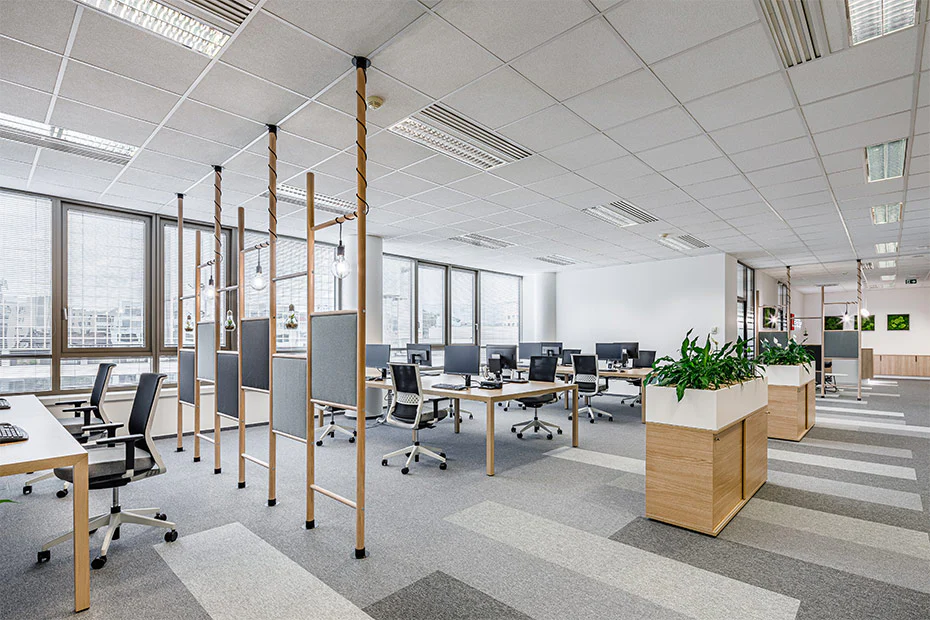
Modern office construction is no longer just about fitting as many desks as possible into a given footprint. Today, high-performing office spaces are designed to support a range of work modes, from focused individual work to team collaboration to informal social interaction. Common considerations include: Open workspaces that encourage communication and team visibility Dedicated meeting rooms and huddle spaces sized for different group sizes Hybrid work layouts that account for remote employees joining calls and in-person teams working simultaneously Employee wellness features such as natural light access, ergonomic environments, and quiet zones for focused work
Integrating modern infrastructure and workplace technology
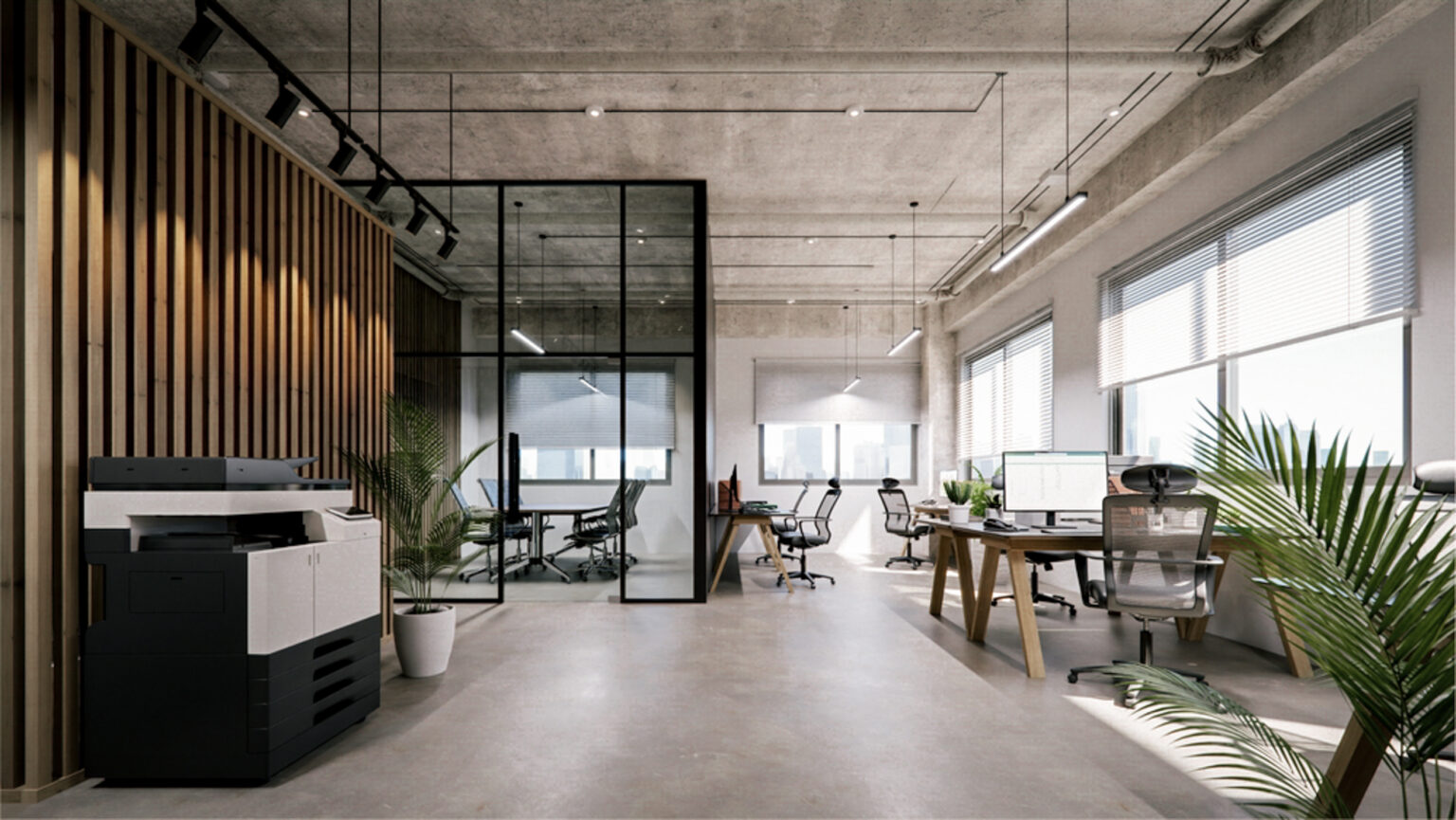
Office projects today require far more sophisticated infrastructure than office buildings of previous decades. A well-executed office construction project must integrate: High-speed networking infrastructure including structured cabling, fiber runs, and wireless access point placement Smart office technology such as automated conference room booking systems, occupancy sensors, and digital signage Security and access control systems including keycard readers, cameras, and visitor management HVAC and energy management systems that allow zone-level control and support energy efficiency goals These systems must be planned during the design phase, not added as afterthoughts. Coordinating the rough-in and installation of technology infrastructure with the overall construction schedule prevents costly rework and delays.
Managing zoning, codes, and environmental requirements
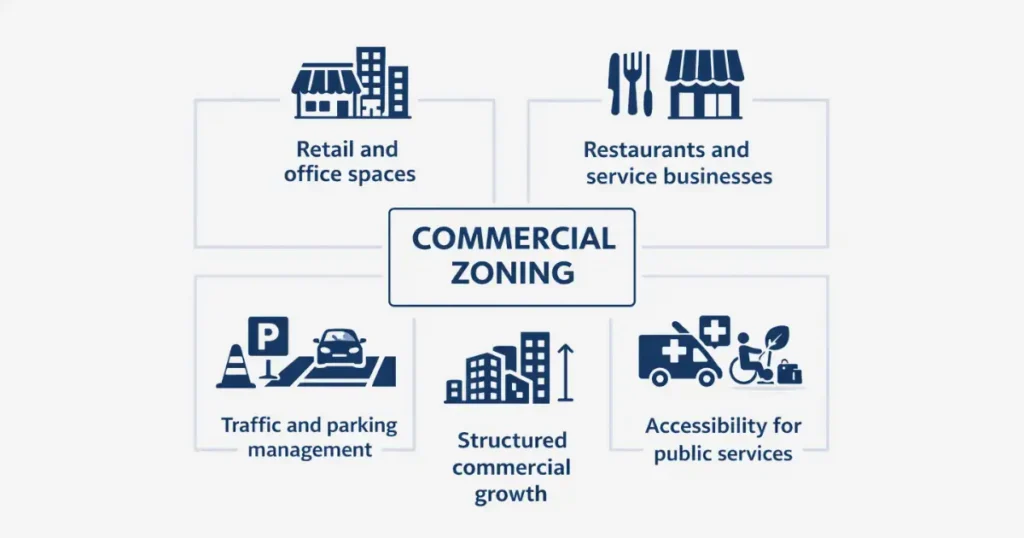
Office construction must comply with a layered set of regulations that vary by municipality and building type. Failure to properly manage compliance is one of the most common sources of project delays and unexpected costs. Key regulatory areas include: Local zoning laws that govern permitted uses, setbacks, parking requirements, and building height Building codes covering structural, mechanical, electrical, and plumbing standards ADA accessibility standards requiring accessible entrances, restrooms, paths of travel, and workspaces Fire and life safety regulations covering sprinkler systems, egress paths, exit signage, and fire-rated assemblies Working with an experienced office construction team that understands local permitting processes is essential to keeping your project on schedule.
Modern trends in office construction
The way businesses use office space has changed significantly, and the construction industry has adapted. Understanding current trends helps you make smarter design and investment decisions for your project.
Flexible & Hybrid Workspaces
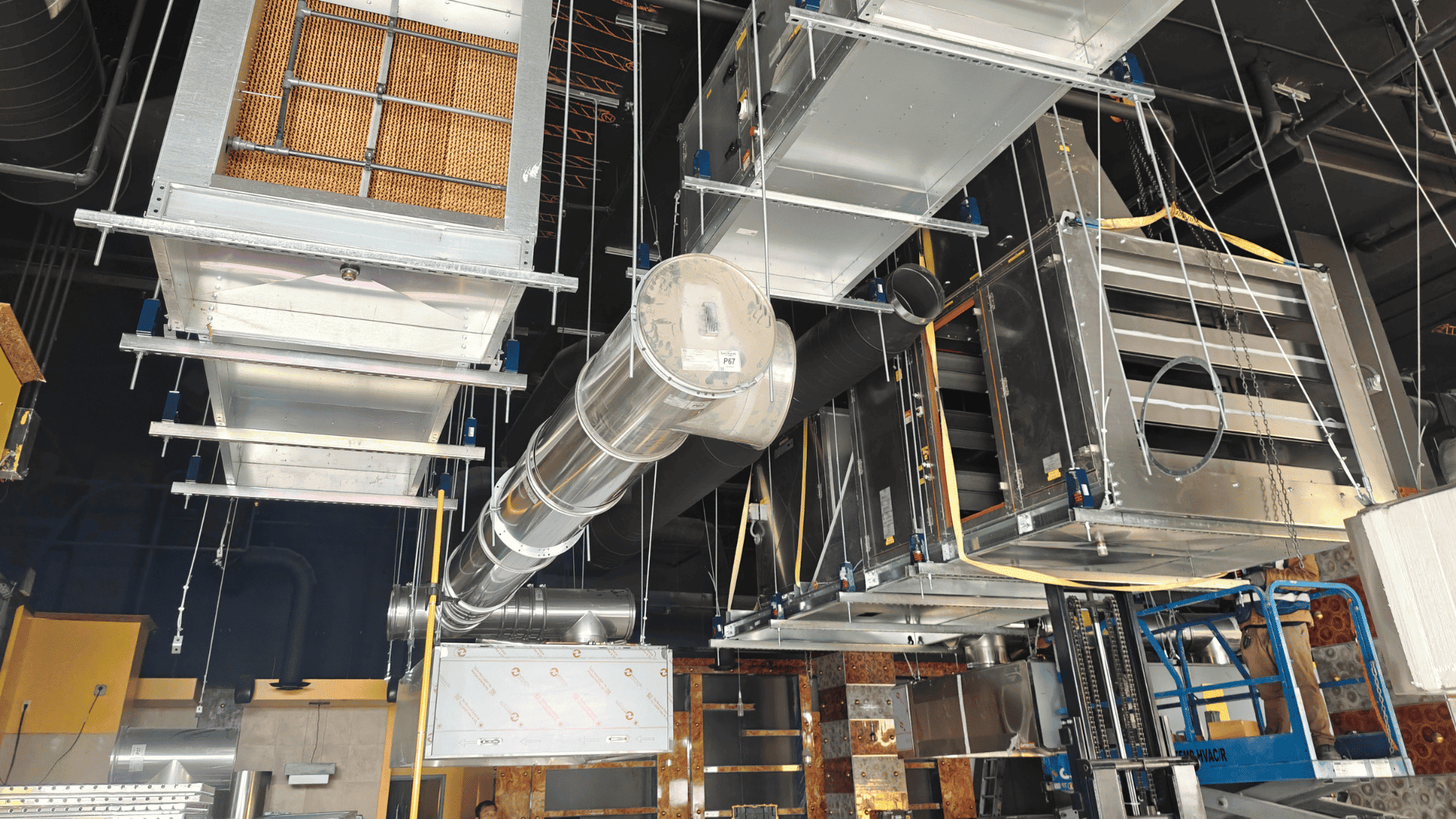
More businesses are designing office spaces around flexibility rather than fixed assigned seating. Adaptable layouts feature movable partitions, modular furniture systems, and multipurpose spaces that can transition from collaboration areas to individual workstations to training rooms as needed.
Sustainable Office Design
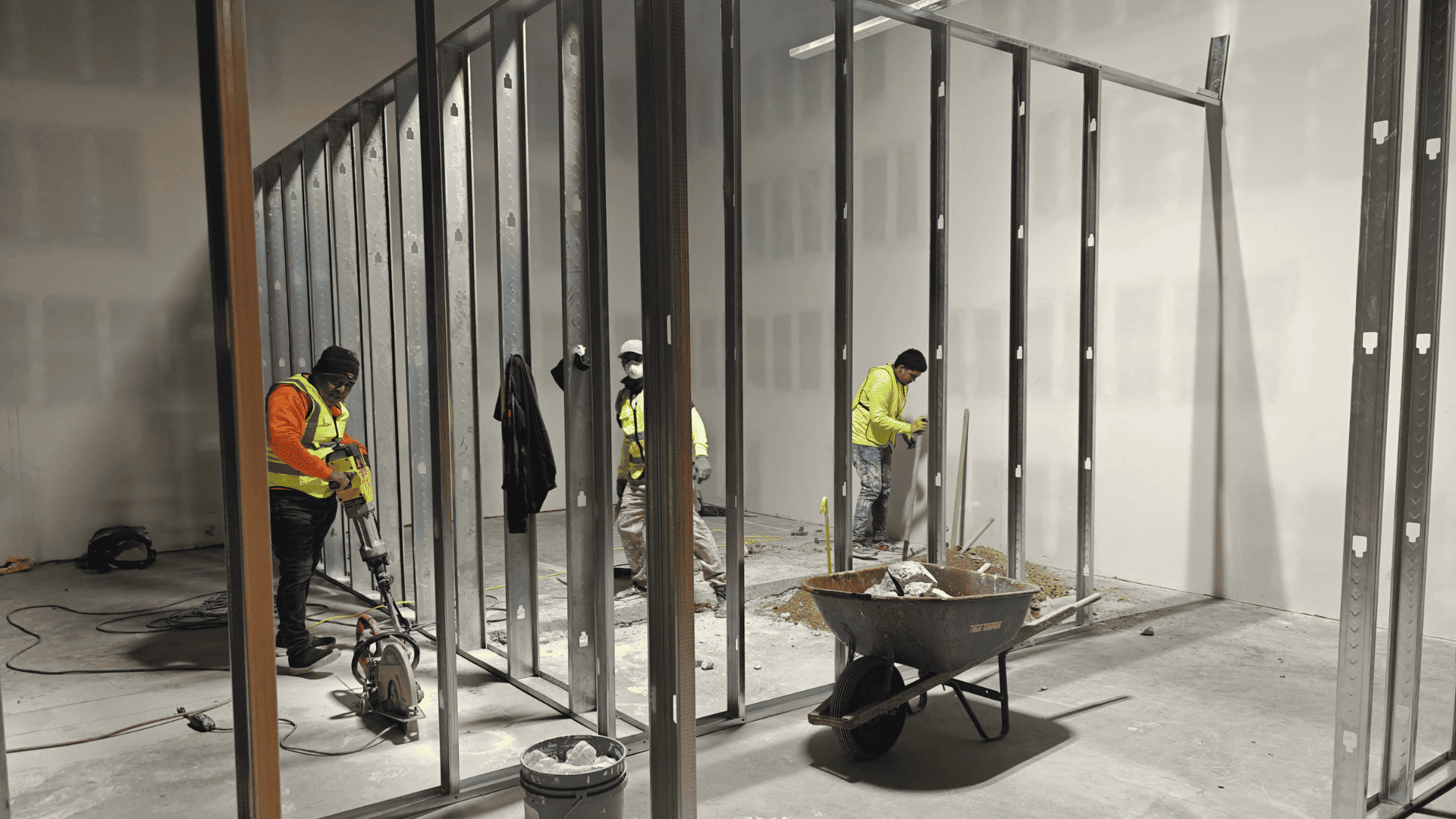
Sustainability is increasingly a baseline expectation rather than a premium feature in office construction. Energy-efficient HVAC systems, LED lighting with occupancy controls, high-performance building envelopes, and low-VOC materials all contribute to lower operating costs and healthier indoor environments.
Smart Office Technology
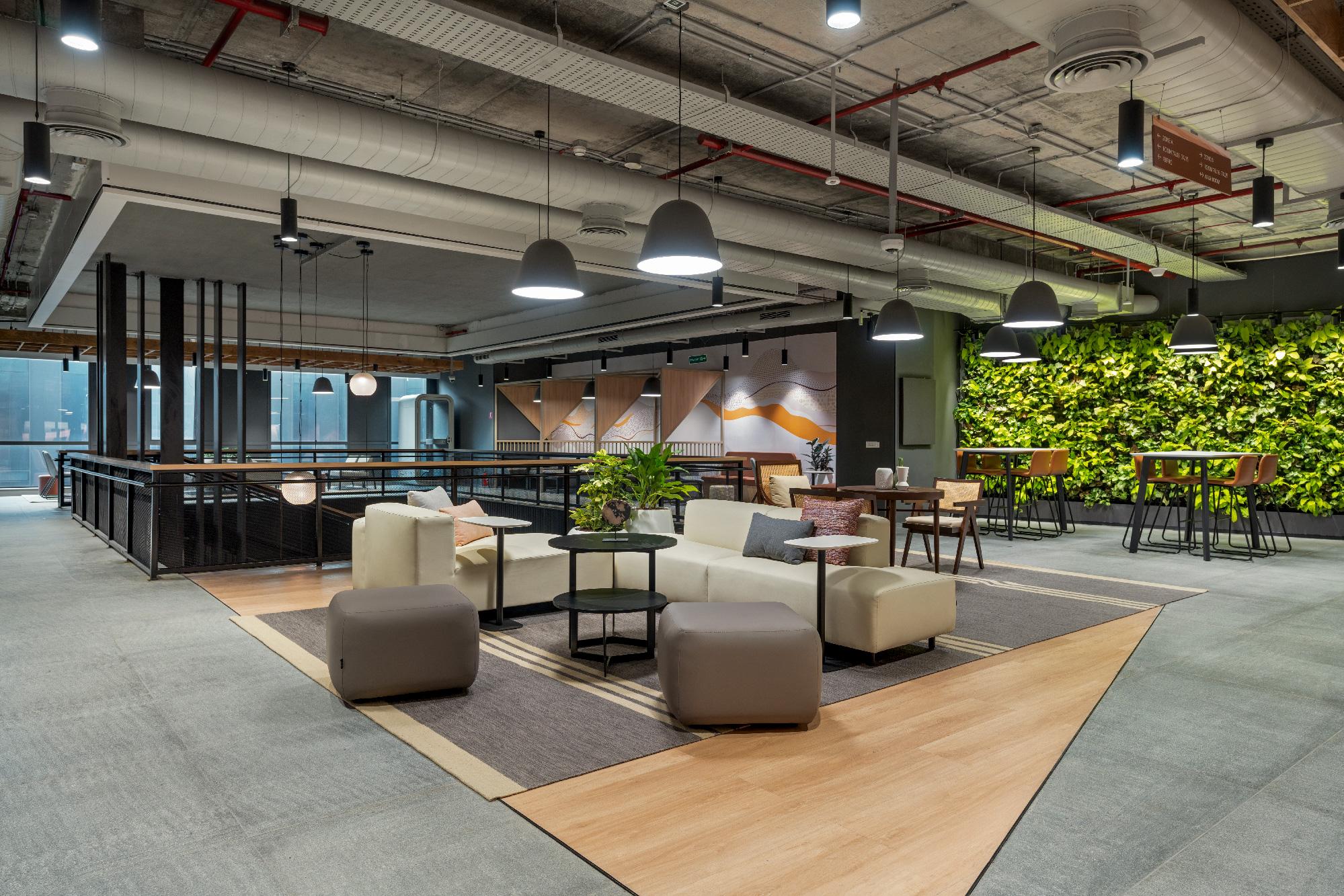
Smart office systems automate routine functions and generate data that helps businesses manage their space more efficiently. Automated lighting that adjusts based on occupancy and natural light levels, access control systems that log entry and exit, and meeting room platforms that show real-time availability are now standard features.
Wellness-Focused Design
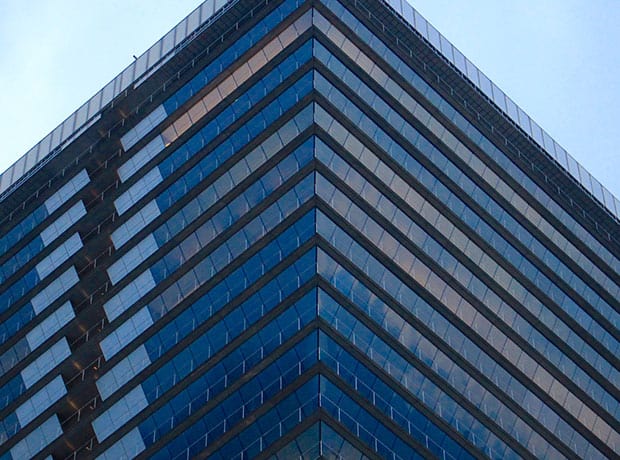
Employee well-being has moved from a peripheral concern to a central design priority. Modern office construction incorporates:
- Natural lighting strategies that maximize daylight exposure for seated workers
- Acoustic comfort solutions including sound-masking systems, acoustic ceiling panels, and properly isolated conference rooms
- Collaborative spaces that support informal interaction and reduce the isolation that can occur in over-partitioned environments
Why choose Alliance EDS for office construction
Choosing the right construction partner is one of the most consequential decisions in any office construction project.
Alliance Empire Development Solutions (Alliance EDS) brings integrated design-build expertise to every engagement, meaning the design and construction phases are managed by a single coordinated team rather than handed off between disconnected firms. This reduces communication gaps, keeps scope aligned with budget, and accelerates project delivery.
Alliance EDS differentiates itself through:
Transparent communication and scheduling so clients always know where their project stands
Efficient project coordination that minimizes disruption to ongoing business operations
Flexible solutions built around each client's growth trajectory and workspace goals
Quality craftsmanship and reliable delivery that meets both functional and aesthetic standards
From the initial consultation through final occupancy, Alliance EDS manages every phase of the office construction process with accountability and precision.
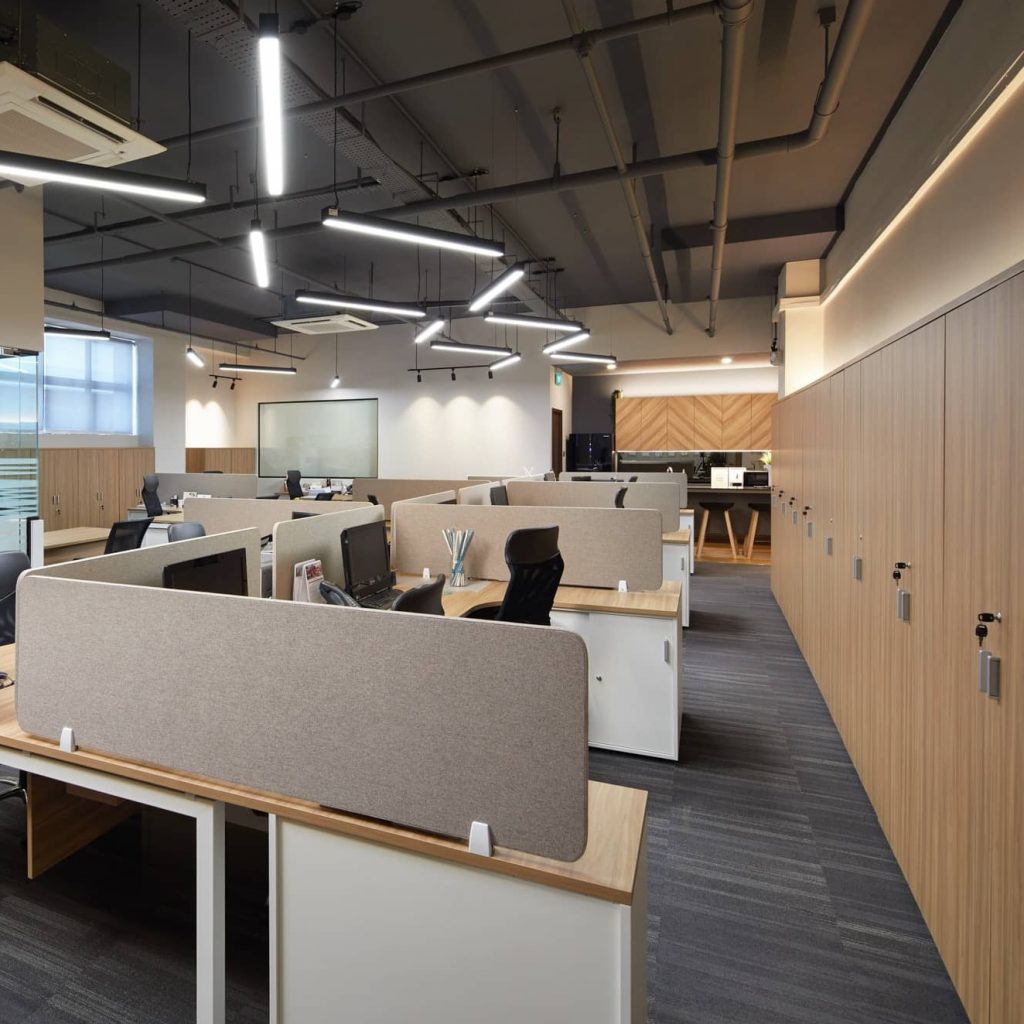
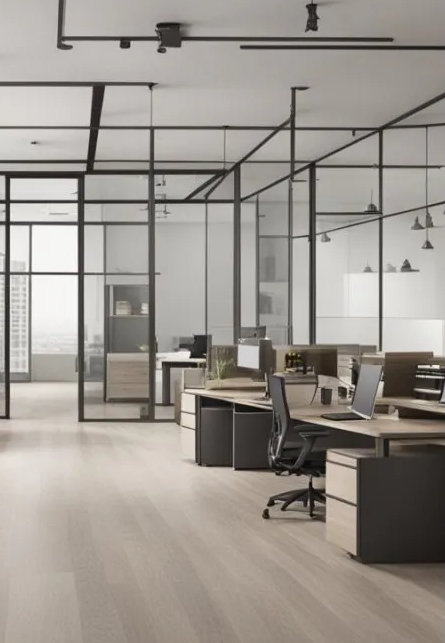
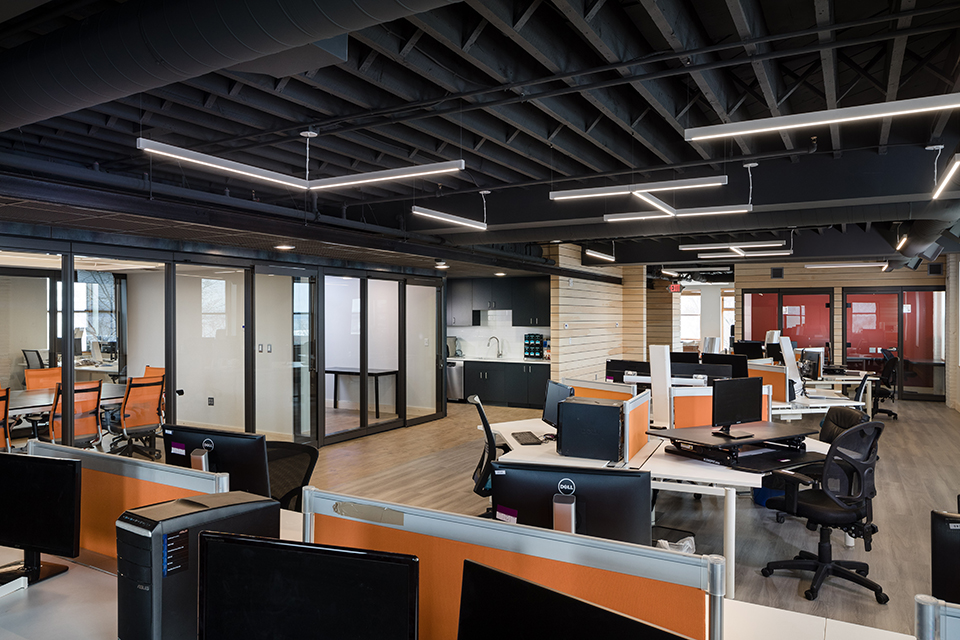
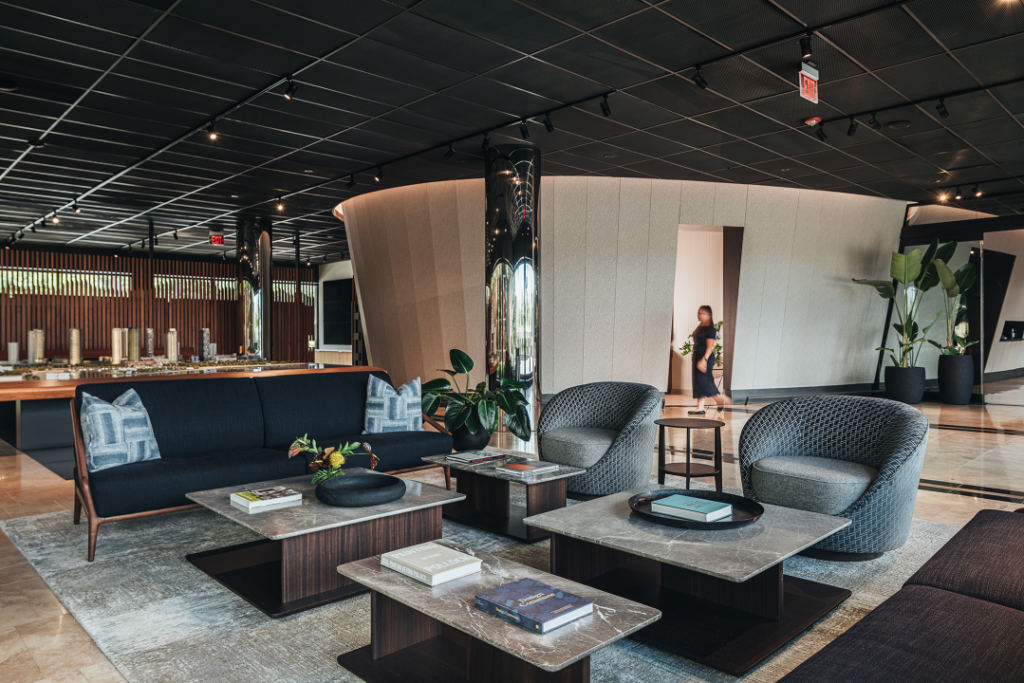
Office Project Gallery
Discover modern office spaces designed to support productivity and professional environments.
Alliance EDS — Office Construction
Alliance EDS office
construction management process
Every successful project follows a defined sequence. Three phases, each with specific deliverables to keep your project on schedule, on budget, and aligned with your goals.
Planning & Preconstruction
The process begins with defining the business goals, workspace requirements, and project constraints that will guide every subsequent decision. This includes identifying how many people will occupy the space, what types of work they perform, what adjacency relationships matter, and what the budget and scheduling expectations are. Getting this foundation right prevents scope creep and misalignment downstream.
01 / 04
Project planning
The process begins with defining the business goals, workspace requirements, and project constraints that will guide every subsequent decision. This includes identifying how many people will occupy the space, what types of work they perform, what adjacency relationships matter, and what the budget and scheduling expectations are. Getting this foundation right prevents scope creep and misalignment downstream.
02 / 04
Design development
With the project goals established, the team moves into layout planning, workflow optimization, and architectural and engineering design. This phase translates business requirements into a buildable floor plan with specified finishes, mechanical systems, and technology infrastructure. Close collaboration between the client and the design team ensures the finished space will actually support the way the business operates.
03 / 04
Permits & approvals
Alliance EDS manages the full permitting process, including building permit applications, code compliance documentation, and any required landlord or municipal approvals. Permitting timelines vary by jurisdiction and project scope, and early engagement with the permitting authority prevents delays that can cascade through the construction schedule.
04 / 04
Preconstruction prep
Before a single wall goes up, the team finalizes cost estimates, procurement schedules, and construction sequencing and logistics. This phase ensures that materials are ordered ahead of need, subcontractors are scheduled in the right sequence, and the construction process can proceed without preventable interruptions.
Construction & Implementation
Active build phase with coordinated subcontractors, daily site management, and integrated systems installation.
01 / 02
Construction execution
With permits in hand and materials staged, construction begins. Alliance EDS coordinates subcontractors, manages daily scheduling, and maintains on-site quality control throughout the construction phase. Regular communication with the client keeps them informed of progress and any decisions that require input.
02 / 02
Technology & infrastructure
During construction, the team installs and integrates all building systems including electrical systems, HVAC, network cabling, and smart office technology. These systems are installed in coordination with the construction sequence to avoid conflicts and rework.
Post-Construction & Turnover
Final inspections, system commissioning, client walkthrough, and ongoing support as your business evolves.
01 / 02
Final inspections & occupancy
As construction wraps up, the team completes punch lists to address any items that need correction or finishing, conducts system testing to verify that all mechanical, electrical, and technology systems operate as designed, and performs final walkthroughs with the client to confirm the space meets expectations before occupancy.
02 / 02
After-build support
Alliance EDS provides ongoing support after the building is turned over. This includes assistance with adjustments, repairs, and maintenance coordination as the client settles into the new space. As the business evolves, Alliance EDS is available to support future office modifications, expansions, or reconfigurations.
Our projects in office construction
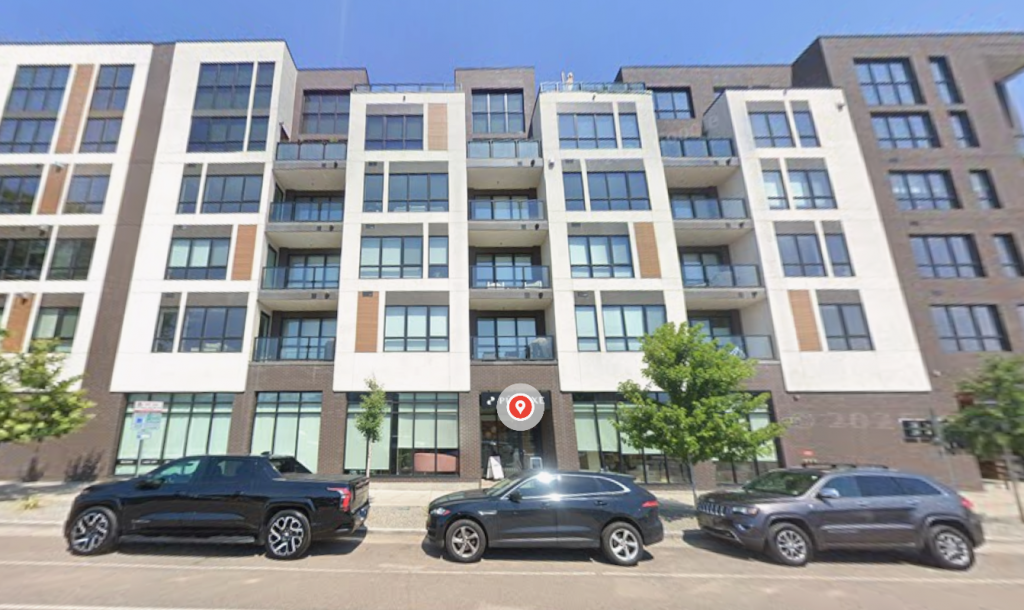
1735 Central Street, Unit 100, Denver, CO 80211
Slate Real Estate Advisors needed a polished, professional office environment that matched the standard of their advisory services. Alliance EDS completed the full office construction build-out at 1735 Central Street in Denver’s LoHi neighborhood, delivering a workspace designed for both client-facing interactions and internal team collaboration. The project was completed on schedule, providing Slate Real Estate Advisors with a finished office ready for immediate occupancy.
1117 Cherokee Street, Denver, CO 80204 | 2020
955 Bannock St, Denver, CO 80204 | 2021
Alliance EDS partnered with Alpine Investment across two consecutive office construction projects in Denver’s Baker and Capitol Hill neighborhoods. The first project was completed in 2020, delivering a functional and professional office environment tailored to Alpine Investment’s operational needs. Building on that success, Alliance EDS was brought back in 2021 to complete a second office construction project, reinforcing the trust and working relationship established in the prior engagement.
Conclusion
Office construction projects succeed when planning, communication, and execution work together from day one. The businesses that get the best outcomes are the ones that enter the process with clear goals, realistic budgeting, and experienced project partners who can translate a vision into a functional, code-compliant workspace on schedule.
Whether you are planning a ground-up development, finishing out a new lease, or renovating your current space, the decisions you make at the beginning of the process determine how smoothly everything goes once construction starts.
Contact Alliance EDS to schedule an office construction consultation or request a project estimate. Our team is ready to help you move from planning to occupancy with clarity and confidence.
Frequently asked questions (FAQs)
What is the difference between a build-out and tenant improvement?
A build-out refers to the overall process of converting a raw or unfinished commercial space into a functional office environment. A tenant improvement (TI) is a broader term for any modification made to a leased commercial space to customize it for the tenant’s specific needs. In practice, a TI project may include a full build-out of an unfinished space or targeted upgrades to an already-finished space.
What is the difference between office construction and data center construction?
Office construction creates work environments for people, with focus on layout, natural light, acoustics, and business infrastructure. Data center construction houses IT equipment at scale, requiring specialized power distribution, redundant cooling, raised flooring, and strict security systems. The 2 project types have very different structural, mechanical, and electrical requirements and are never built to the same specifications.
How long does office construction take?
Timelines vary by project scope. A standard tenant improvement or build-out typically takes 8 to 16 weeks from permit approval to occupancy. Larger renovations or multi-floor projects may take 4 to 9 months. Ground-up office construction generally runs 12 to 24 months or more. The earlier you engage a contractor, the sooner planning and permitting can begin.