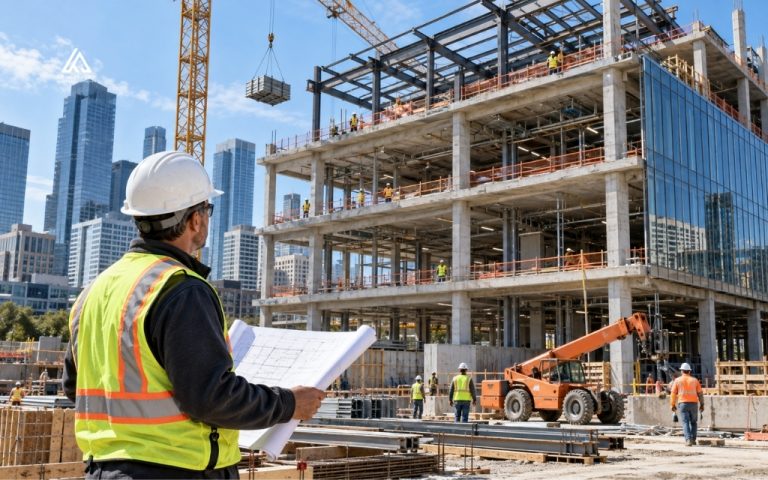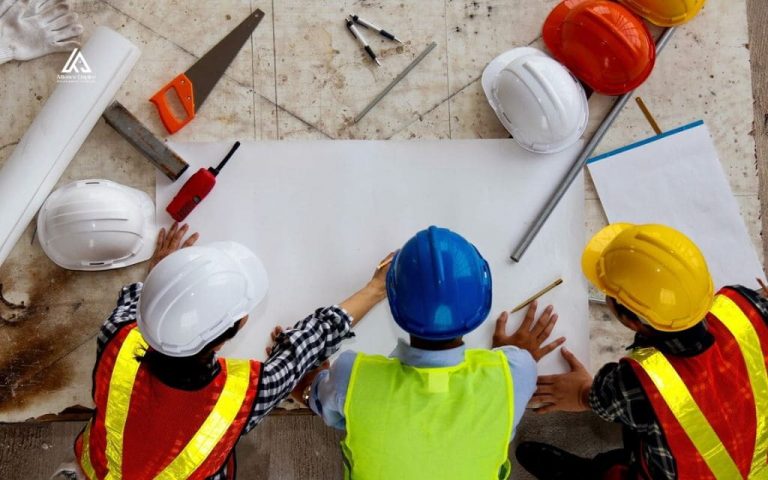

If you are planning a construction project, you have probably come across the term design-build construction. But what exactly does it mean, and why does it matter to you as a project owner?
In simple terms, design-build construction is a project delivery method where a single company handles both the design and the construction of your project under one contract. Instead of hiring an architect separately and then going out to bid for a contractor, you work with one unified team from start to finish. The result is a simpler, faster, and more streamlined experience for the owner.
In this guide, you will learn:
- How the design-build process works, step by step
- How design-build compares to traditional construction methods
- When design-build is the right choice for your project
- How to find and select the right design-build contractor
What is design-build construction?
Design-build is a project delivery method in which one entity is responsible for both the design and the construction of a project under a single contract with the owner. This stands in direct contrast to the traditional approach, where the design team and the construction team are hired separately and often work independently of each other.
At the heart of the design-build model are 2 defining principles:
- One contract: The owner signs a single design-build contract that covers both design and construction services.
- Single point of responsibility: The design-build team owns the entire outcome – no finger-pointing between designers and builders when problems arise.
This unified approach is what makes design-build construction so appealing to project owners who want clarity, accountability, and efficiency from the moment the project kicks off.
Types of design-build projects
The design-build model is flexible and widely used across multiple sectors. Understanding the types of projects that benefit from this delivery method can help you determine whether it is the right fit for your specific needs.
Residential design-build projects
Residential design-build projects are among the most common applications of this delivery method. Homeowners use design-build for:
- Custom homes built from the ground up
- Home additions, such as extra bedrooms or garage expansions
- Full kitchen or bathroom remodels
Because the design and construction team work together from day one, homeowners avoid the disconnect that often occurs when an architect designs a home without fully considering how the contractor will build it or at what cost.
Commercial design-build projects
Commercial developers and business owners frequently turn to design-build for:
- Office buildings and professional spaces
- Retail stores and shopping centers
- Warehouses and distribution centers
Speed and cost predictability are especially valuable in commercial construction, where every week of delay can affect business operations and revenue.
Public sector design-build projects
Government agencies and public institutions increasingly use the design-build project delivery method for:
- Schools and universities
- Government facilities and courthouses
- Roads, bridges, and public infrastructure
Public entities benefit from design-build because it simplifies contractor oversight, consolidates accountability, and often accelerates project completion – an important factor when public services depend on the facility being operational.
How design-build construction works
While every project is unique, the design and build process generally follows 6 core phases. The key distinction from traditional construction is that design and construction phases often overlap, which reduces the total project timeline significantly.
Step 1: Project planning & consultation
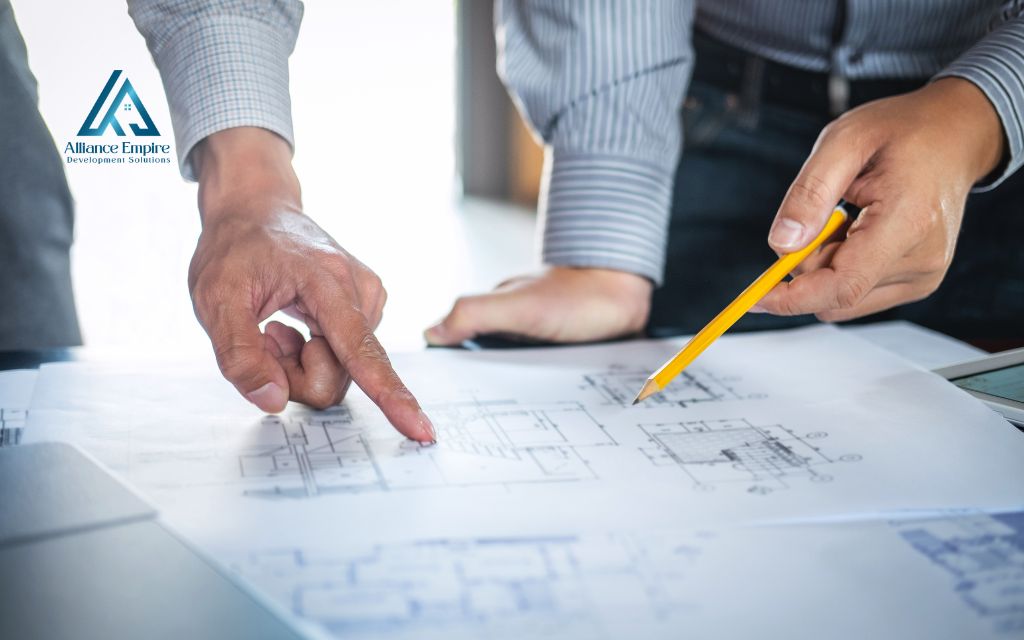
Every design-build project begins with a planning and consultation phase. During this step, the owner works directly with the design-build contractor to define the project’s goals, scope, intended use, and budget.
This early alignment is critical because it establishes a shared vision before any design work begins. Unlike the traditional model, there is no risk of a design being completed and then handed off to a contractor who finds it unaffordable.
Step 2: Concept design
Once the owner’s goals are clear, the design team develops initial concept layouts, spatial plans, and visual ideas. At this stage, the focus is on exploring possibilities and getting alignment on the general direction of the project. The owner reviews these early concepts and provides feedback before more detailed work begins.
Step 3: Design development
With the concept approved, the architects and engineers move into design development. This phase produces detailed drawings, engineering plans, material specifications, and other technical documents.
In a design-build project, the construction team is already involved at this stage, meaning constructability and real-world build conditions are considered while the design is still being finalized.
Step 4: Cost estimation & value engineering
Before construction begins, the design-build team produces a detailed cost estimate based on the developed design. If the estimate exceeds the owner’s budget, value engineering takes place. This is a collaborative process where the team identifies alternative materials, methods, or design adjustments that preserve the project’s core goals while bringing costs in line.
Step 5: Construction phase
Once designs are finalized and budgets are confirmed, the construction phase begins. In many design-build projects, construction can start on early phases while detailed design work on later phases is still being completed.
This overlapping of phases is one of the primary reasons design-build construction delivers projects faster than the traditional method. The construction team, subcontractors, and project managers all operate under the same unified leadership, keeping communication tight and decision-making fast.
Step 6: Final inspection & handover
When construction is complete, the design-build team conducts a thorough final inspection to ensure every element of the build meets the design specifications, building codes, and the owner’s expectations.
Once approved, the project is officially handed over to the owner. Because the same team that designed the building also built it, there is rarely ambiguity about whether something was built to spec.
Benefits of design-build construction
The design-build construction process offers substantial advantages for owners across residential, commercial, and public-sector projects. Here are the five most impactful benefits:
Single point of accountability
In traditional construction, disputes between the designer and the contractor are common. Who is responsible when a design detail is difficult to build? Who pays when a specification turns out to be impractical?
In design-build, these questions have a simple answer: the design-build contractor. One team is responsible for every aspect of the project. If something goes wrong, there is no question about accountability.
Faster project delivery
Because design and construction phases overlap, design-build projects are typically completed faster than traditionally delivered projects. Owners do not have to wait for 100% of the design to be finalized before breaking ground.
Studies from the Design-Build Institute of America (DBIA) have consistently found that design-build projects are delivered significantly faster than design-bid-build projects of comparable scope.
Better cost control
Design-build builds cost awareness into the design process from day one. Because the contractor is involved during design, the team can flag budget concerns in real time and adjust the design accordingly. This prevents the costly scenario of completing an entire design only to discover the project is far over budget. Owners benefit from earlier, more reliable cost certainty.
Improved collaboration
In the design-build model, architects, engineers, and builders work side by side from the beginning. This integrated collaboration produces smarter design decisions, fewer construction conflicts, and better overall project outcomes. When the team designing the building is the same team building it, they naturally make design choices that are efficient to construct.
Fewer disputes
Because the design and construction teams share a single contract and a single chain of command, the adversarial dynamic that sometimes exists between architects and contractors in traditional projects simply does not apply. Fewer disputes means fewer delays, less legal risk, and a more pleasant experience for the owner throughout the project.
Who is involved in design-build construction?
Understanding who plays a role in a design-build project helps owners know who they are working with and what each party is responsible for.
- Owner / client: The project owner defines the goals, budget, and vision, and ultimately approves major decisions throughout the design-build process.
- Design-build contractor: The lead entity that holds the design-build contract and coordinates all design and construction activities. This is the owner’s primary point of contact.
- Architects & engineers: Design professionals who develop the architectural plans, structural calculations, and engineering specifications. In design-build, they are part of the same team as the contractor.
- Subcontractors: Specialty tradespeople, such as electricians, plumbers, HVAC technicians, and roofers, who are hired by the design-build contractor to complete specific scopes of work.
- Project managers / supervisors: Professionals within the design-build firm who oversee day-to-day construction activities, coordinate with subcontractors, manage schedules, and keep the project on budget.
The basics of a construction tradition: Design-bid-build
To fully understand what design-build offers, it helps to first understand the traditional construction model it is often compared against: design-bid-build.
Design-bid-build is the conventional project delivery method that has been used in the US construction industry for generations. In this model, the design and construction phases are separate, sequential processes managed under separate contracts:
- The owner hires an architect or designer to develop a complete set of plans and specifications.
- Once the design is fully complete, the owner takes those plans out to bid, meaning multiple contractors compete by submitting price proposals.
- The owner selects a contractor (typically the lowest bidder) and awards a construction contract.
- The contractor builds the project based on the architect’s completed design.
The core limitation of design-bid-build is that design and construction are entirely separate and sequential. The architect who designed the building has no financial stake in making it easy or cost-effective to build. The contractor who builds it had no input during the design phase.
This structural separation often leads to misunderstandings, design errors, cost overruns, and conflicts between the two parties.
How does design-build differ from traditional models?
Now that both models are defined, here is a direct side-by-side comparison:
| Feature | Design-Build | Design-Bid-Build |
| Contracts | One unified contract | Multiple separate contracts |
| Responsibility | Single entity accountable for everything | Split between designer and contractor |
| Timeline | Faster | Slower |
| Cost Control | Built into the design phase from day one | Addressed later, after design is complete |
| Communication | Streamlined within one team | Fragmented across separate parties |
| Owner Involvement | One point of contact throughout | Must manage multiple vendors |
| Dispute Risk | Lower | Higher |
The key takeaway is this: design-build is simpler, faster, and more collaborative for the owner.
Design-bid-build offers more control over selecting individual vendors, but at the cost of more complexity, slower delivery, and a higher risk of disputes. For most owners, design-build reduces the management burden significantly.
When should you use design-build?
Design-build is not necessarily the right choice for every construction project, but it is the ideal choice for many. Here are the scenarios where the design-build model consistently outperforms traditional approaches:
- Fast-track projects: When your timeline is tight and you cannot afford to wait through the lengthy design-bid-build cycle, design-build is the clear choice. Overlapping design and construction phases can shave weeks or even months off your project schedule.
- First-time project owners: If you have never managed a construction project before, design-build significantly reduces the complexity. Instead of coordinating between multiple separate firms, you work with one team that handles everything.
- Projects requiring budget control: When cost predictability is a priority, the design-build approach’s built-in value engineering and early cost estimation give owners a much clearer financial picture before breaking ground.
- Complex builds requiring coordination: Projects involving multiple building systems, unusual site conditions, or complex structural requirements benefit greatly from having architects and builders collaborate in real time rather than working in separate silos.
How to get started using design-build
Ready to explore the design-build approach for your project? Here is a practical step-by-step guide to help you get started on the right foot.
Define your project goals
Before reaching out to any firm, take time to clearly articulate your vision. What is the purpose of the building? What is your realistic budget range? What is your target completion date? What are your must-have features versus nice-to-haves? Having clear answers to these questions will make your conversations with design-build firms far more productive.
Research design-build firms
Look for firms with proven experience in your type of project – residential, commercial, or public sector. Review their portfolio, check for appropriate licensing and insurance, and read online reviews or ask for client references. Local knowledge is a plus, as design-build contractors familiar with your area’s building codes and permitting process can save you time.
Request consultations
Schedule initial consultations with two or three design-build firms. Use these meetings to evaluate how well each team listens, whether they ask the right questions, and how clearly they communicate. A good design-build contractor will make you feel heard and will be transparent about their process and pricing.
Review proposals
After the consultations, firms will typically submit detailed proposals outlining the project scope, preliminary design ideas, estimated timeline, and pricing structure. Compare these carefully, not just on price, but on the completeness of the scope, the clarity of the cost breakdown, and the firm’s overall approach.
Sign a design-build contract
Once you have selected the right partner, you will sign a single design-build contract that covers both the design and construction phases. Make sure the contract clearly defines the scope of work, payment schedule, milestones, change order procedures, and warranty terms before you sign.
How to choose the right design-build contractor
Selecting the right design-build contractor is one of the most important decisions you will make for your project. Here is what to evaluate and what to ask.
- Licensed and insured: Always verify that the design-build contractor holds a valid contractor’s license in your state and carries appropriate liability insurance and workers’ compensation coverage.
- Proven experience: Look for a firm with a track record of successfully completed projects similar to yours. An experienced design-build team will anticipate challenges before they become problems.
- Strong communication: Effective communication is the backbone of a successful design-build project. Choose a contractor who is responsive, transparent, and explains things clearly without drowning you in technical jargon.
- Portfolio of similar projects: Review completed projects that match your scope and style. A contractor who has built many custom homes may not be the best fit for a commercial warehouse, and vice versa.
Key questions to ask:
- How do you manage costs throughout the design and build process? At what point do you provide a fixed-price guarantee?
- Who specifically handles the design portion of the project? Is the architect in-house or a third party?
- What is your typical process for handling changes after the design is finalized?
- Can I speak to past clients as references?
Conclusion
Design-build construction simplifies the entire building process by combining design and construction into one streamlined, accountable partnership. Whether you are a homeowner building a custom home, a developer delivering a commercial property, or a public administrator overseeing a facility project, the design-build model offers a smarter path forward.
If you are ready to take the next step, contact an experienced design-build contractor to discuss your project goals and find out whether the design-build approach is the right fit for you.
Work with a trusted design-build contractor in Denver
At Alliance Empire Development Solutions (Alliance EDS), we bring years of hands-on experience in roofing and construction to every project we take on across the Denver metro area. As a full-service contractor, we guide our clients through every stage of the construction process with the same commitment to quality, transparency, and craftsmanship that has defined our reputation throughout Colorado.
Ready to get started? Contact Alliance EDS today for a free consultation and discover how our team can deliver the results your project deserves.
Frequently asked questions (FAQs)
What is design-build construction?
Design-build construction is a project delivery method in which a single entity is responsible for both the architectural design and physical construction of a project under one contract. The owner deals with 1 team rather than managing separate architect and contractor relationships.
Is design-build faster?
Yes. Design-build projects are consistently delivered faster than design-bid-build projects. Because design and construction phases can overlap, the overall project schedule is compressed. Research from the Design-Build Institute of America has found that design-build can reduce total project delivery time by up to 33% compared to traditional methods.
Is design-build better than traditional methods?
For most owners, design-build offers significant advantages over traditional design-bid-build: faster delivery, better cost control, single-point accountability, and reduced disputes. However, design-bid-build may be preferred in situations where the owner wants to separately select and oversee their own architect, or where public procurement rules require competitive bidding.
What is a design-build contract?
A design-build contract is a single legal agreement between the project owner and the design-build entity that covers both the design and construction phases of a project. It defines the project scope, pricing structure, payment schedule, milestones, change order process, and warranty terms. Unlike traditional projects, which require separate contracts with the designer and contractor, a design-build contract consolidates all services under one agreement.
What are the 5 phases of the design-build process?
While the exact terminology may vary by firm, the five core phases of the design-build process are: (1) Project planning and consultation, where goals, scope, and budget are defined; (2) Concept design, where initial ideas and layouts are developed; (3) Design development, where detailed drawings and specifications are created; (4) Cost estimation and value engineering, where the project is aligned with the owner’s budget; and (5) Construction and handover, where the project is built and delivered.
What is a disadvantage of design-build?
One notable disadvantage of the design-build model is that the owner has less independent oversight of the design process. Because the contractor and designer are the same entity, there is no separate architect acting in the owner’s interest to review the construction for compliance. Owners who want a fully independent design perspective may prefer to hire their own architect separately.
What not to tell your contractor?
When working with a design-build contractor, avoid revealing your absolute maximum budget upfront, as this may anchor pricing unnecessarily high. Similarly, do not suggest that you are in an extreme rush to complete the project, as urgency can reduce your negotiating leverage. Be honest about your needs and constraints, but focus your early conversations on your project goals and desired outcomes rather than financial ceilings or hard deadlines before you have had the chance to review a formal proposal.