
Construction sites today look different than they did even 5 years ago. Labor shortages keep crews stretched thin, material and equipment costs keep climbing, project schedules keep slipping, and clients keep demanding faster turnarounds without sacrificing safety.
These pressures are not going away, and they are exactly why automation in construction has moved from a “nice to have” experiment to a core part of how modern builders operate.
Construction automation uses software, robotics, AI, and connected technologies to perform or assist with tasks that crews used to complete entirely by hand, from layout and surveying to bricklaying, scheduling, and quality inspection.
What is automation in construction?
Automation in construction refers to the use of digital technologies, robotics, artificial intelligence (AI), and automated systems to improve how buildings and infrastructure are designed, planned, constructed, and maintained. Rather than replacing the construction process altogether, it changes how the work gets done.
At its core, automation helps construction teams work faster, safer, and more accurately while reducing manual effort and repetitive tasks. A drone that maps a site in 20 minutes instead of a 2-day manual survey, or software that flags a scheduling conflict before it becomes a costly delay, are both examples of automation in construction doing exactly what it is meant to do: removing friction from the build process.
Why automation in construction matters today
Addressing labor shortages
When fewer skilled workers are available, automated equipment and software can extend the capacity of the crew that is on-site. A smaller team supported by automation can often complete the same scope of work that once required a much larger workforce.
Improving productivity
Automated scheduling, equipment, and reporting tools cut down on the administrative and physical bottlenecks that used to slow projects down, letting teams move from task to task with less downtime.
Reducing human error
Manual measurements, manual takeoffs, and manual data entry are all sources of costly mistakes. Automation in the construction industry reduces these errors by handling calculations and documentation with consistent, repeatable accuracy.
Enhancing worker safety
Tasks that are dangerous, repetitive, or physically taxing, like demolition, hazardous inspections, or heavy material handling, are handled or supported by machines, which keeps workers further from harm’s way.
Increasing project predictability
AI-driven scheduling and real-time site data give project managers a clearer, more current picture of where a job actually stands, which makes it easier to predict delays before they happen instead of reacting to them after the fact.
Supporting sustainable construction practices
Many automated systems, from 3D printing to optimized material planning, reduce waste, which supports more sustainable building practices alongside the efficiency gains.
Key technologies driving construction automation
Artificial intelligence (AI)
Artificial intelligence in construction refers to computer systems built to analyze large volumes of project data and identify patterns, then use those patterns to make predictions or recommendations without requiring a person to work through every calculation manually.
These systems are typically trained on historical information such as past schedules, cost records, labor productivity rates, and site conditions, which allows them to flag a likely delay or cost overrun well before it actually happens, based on the same early warning signs that preceded similar issues on past projects.
Many AI tools used in construction can also process photos and video captured on-site, automatically checking completed work against design documents or scanning for safety hazards without requiring a person to manually review every image.
Building information modeling (BIM)
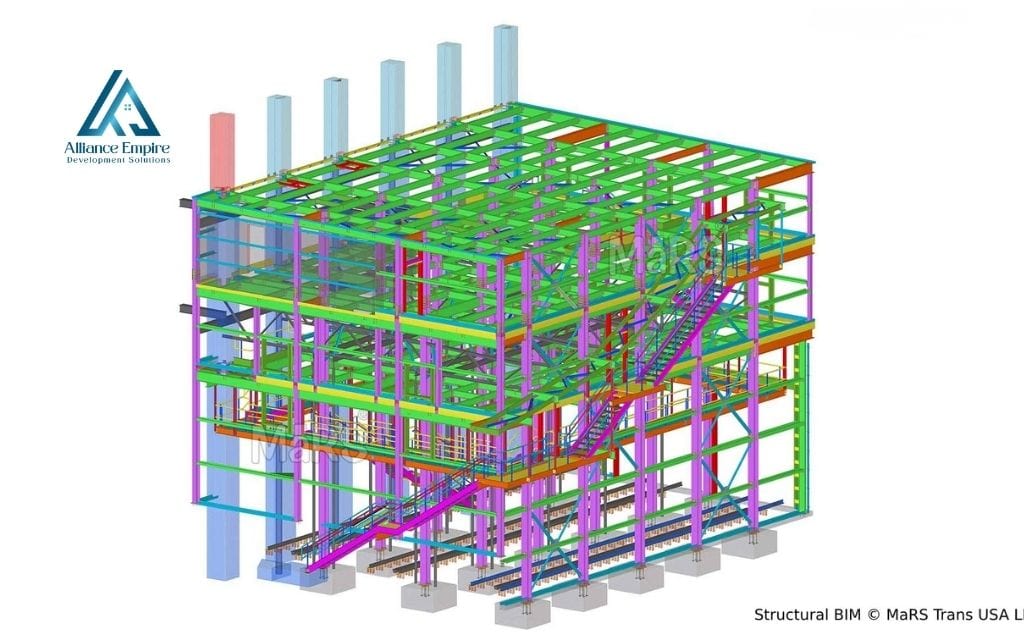
Building Information Modeling (BIM) is a digital representation of a construction project that functions as a detailed, three-dimensional alternative to traditional architectural drawings and blueprints. Rather than existing as a flat, static drawing, a BIM model is computer-generated and embedded with construction-specific data for every element it contains, including materials, dimensions, quantities, and design-specific performance characteristics.
Because every discipline works from this same shared model, a change made by one designer is reflected throughout the entire model, which helps project teams identify and resolve conflicts between building systems during the planning stage rather than discovering them on-site.
Robotics
Construction robots are physical machines designed to carry out a specific, often repetitive task with little or no direct human operation, typically guided by pre-programmed instructions, GPS coordinates, or onboard sensors.
A bricklaying robot, for example, may be mounted on a track system and programmed to follow a set path across a slab, laying each course of brick at a consistent pace and spacing that would be difficult for a person to sustain over an entire shift.
Similarly, a rebar-tying robot uses a robotic arm to secure rebar intersections at set intervals, while demolition robots are remotely operated to dismantle structures in a controlled, repeatable sequence, often in areas considered too unstable for a crew to enter directly.
Drones
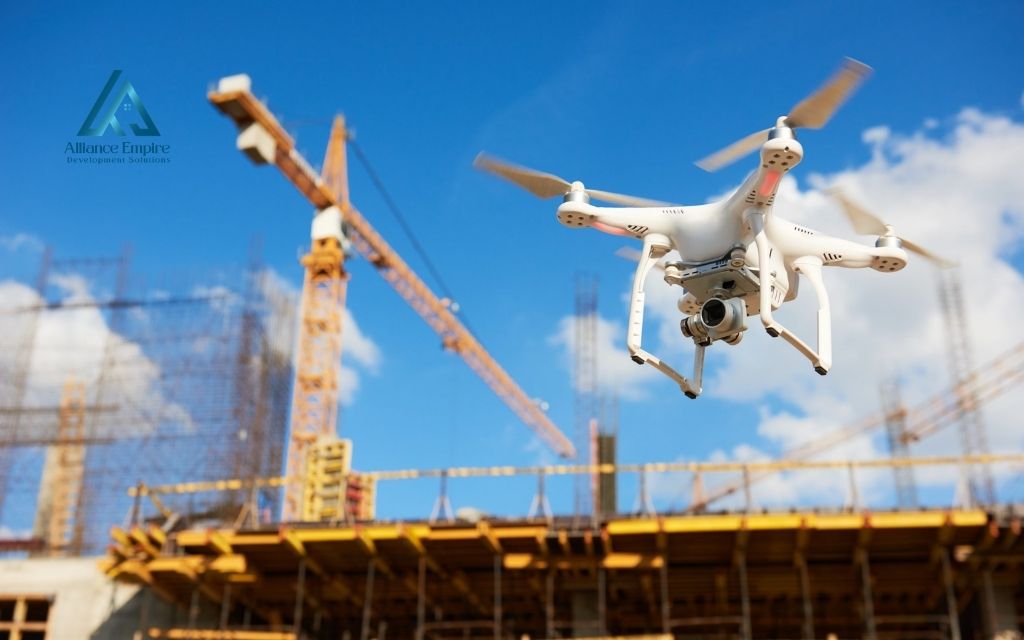
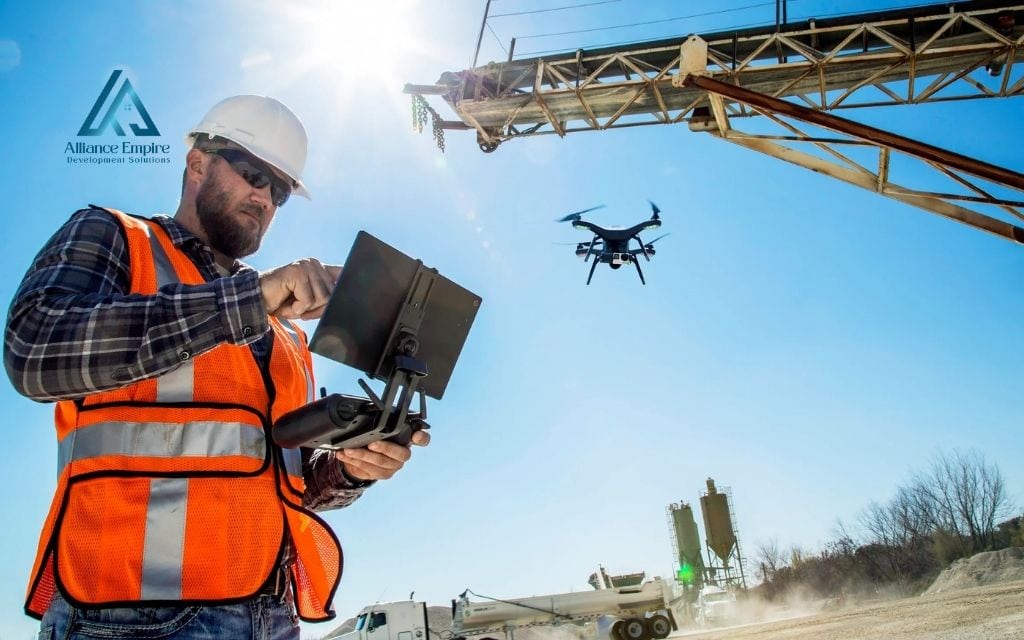
Drones, also known as unmanned aerial vehicles (UAVs), are remotely piloted or autonomously flown aircraft equipped with high-resolution cameras, sensors, or LiDAR scanning equipment.
On a construction site, a drone can fly a pre-programmed route over the property to capture aerial imagery and geospatial data, which specialized software then stitches together into 3D site models, topographic maps, or progress comparisons against the original design.
This gives project teams a way to review an entire site from above in a fraction of the time a manual survey would take, and to confirm that work is progressing as intended without walking the full site on foot.
Internet of things (IoT)
The Internet of Things (IoT) refers to a network of small, connected sensors and devices that collect data and transmit it, typically over a wireless network, to a centralized software platform.
A sensor mounted on an excavator, for instance, can track engine hours, fuel consumption, and vibration levels, while a wearable IoT device on a worker can monitor location and movement to flag a fall or detect when someone has entered a restricted zone.
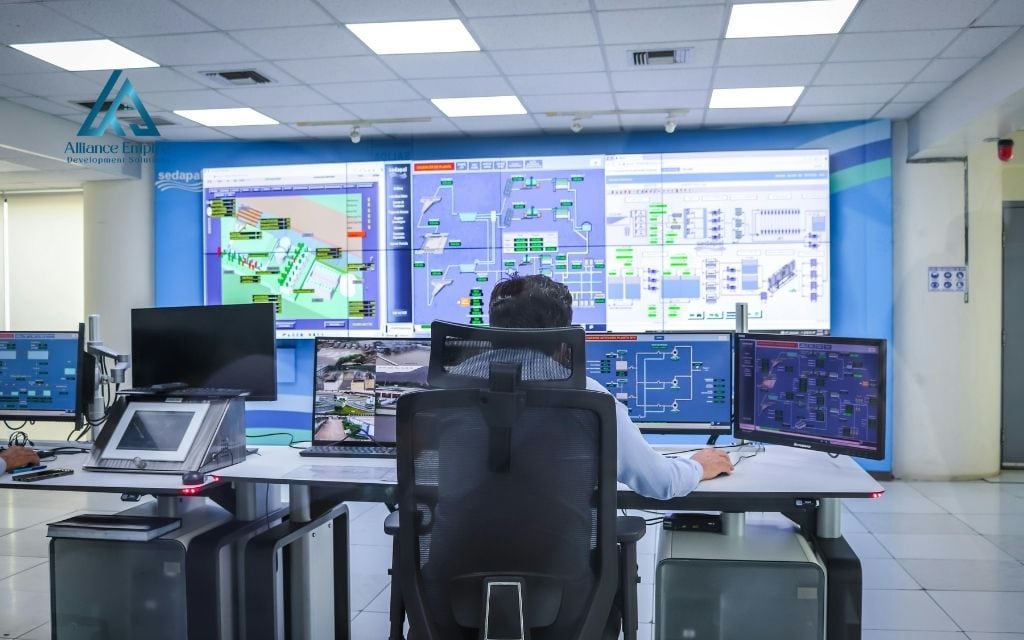
Because this data streams back to a dashboard in real time, site managers and equipment owners can see what is happening across a project as it happens rather than waiting for an end-of-day report.
Machine learning and data analytics
Machine learning is a branch of artificial intelligence in which a system improves its own accuracy over time as it processes more data, rather than operating from a single fixed set of programmed rules.
In simple terms, the more past projects a scheduling tool learns from, the better it gets at predicting delays, and the more job data a resource-planning tool sees, the better it gets at estimating labor and material needs.
Data analytics works hand in hand with machine learning by taking all the information generated on a job site, such as productivity logs and sensor readings, and turning it into clear, easy-to-read trends that project teams can actually use.
On-site construction automation
On-site construction automation covers systems deployed directly in the field that handle a specific physical task with reduced manual input, often combining sensors, software, and connected equipment that work together.
A self-leveling laser or GPS-guided layout tool, for example, can mark grade elevations or building lines automatically, removing the need for a crew member to check measurements manually at each point.
By automating these routine but essential tasks, on-site automation reduces the manual labor needed for work that would otherwise consume a significant portion of a crew’s day.
Autonomous and semiautonomous construction equipment
Autonomous and semiautonomous construction equipment uses GPS positioning, onboard sensors, and a pre-loaded digital site plan to move and operate with little or no direct steering from a human operator.
Semiautonomous equipment typically still requires an operator present to manage or oversee the machine’s work, while fully autonomous equipment can complete repetitive tasks such as earthmoving or grading with minimal supervision, which frees operators to manage multiple machines or focus on other tasks elsewhere on-site.
This category includes GPS-guided grading equipment, autonomous excavators, robotic loaders, and semiautonomous heavy machinery.
3D printing
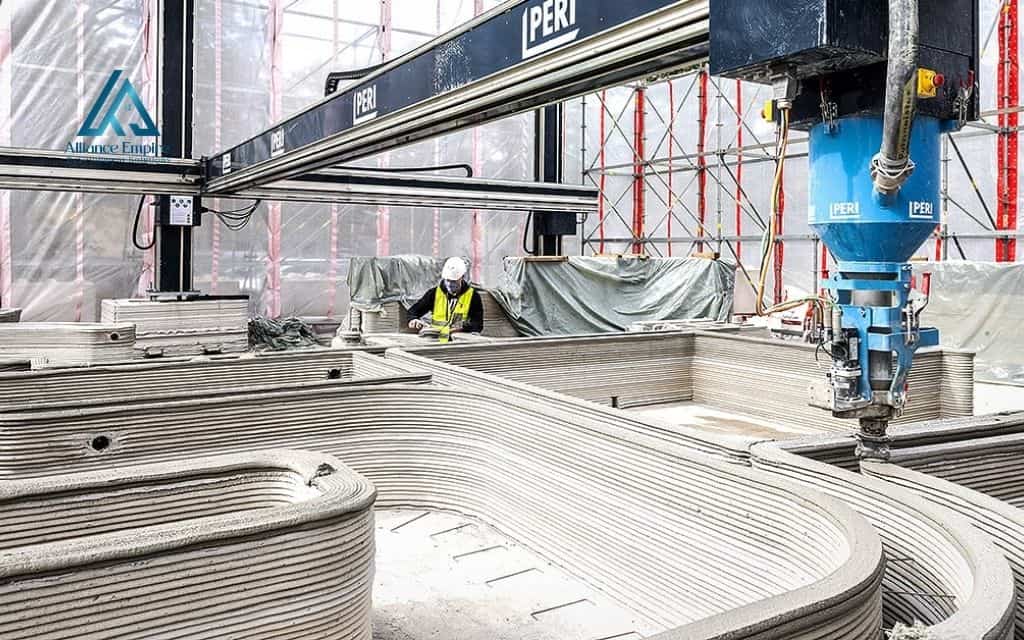
Construction 3D printing works by feeding a digital design file into a large-format printer, which then deposits material, typically a specialized concrete mix, layer by layer to build up walls or structural components directly from the model, without traditional formwork.
Because the printer follows the digital file precisely, it tends to use only the material needed for each layer. Large-scale 3D printers are now used to create building components or full structural elements, often with significantly less material waste and faster production timelines than traditional methods.
Self-healing concrete
Self-healing concrete is a building material mixed with additives, such as certain types of bacteria, microcapsules, or fibers, that remain dormant within the concrete until a small crack forms and allows moisture or air to reach them. Once triggered, these additives produce a mineral compound or other filling agent that seals the crack from within, often before it has a chance to widen into a larger structural problem.
Virtual and augmented reality (VR/AR)
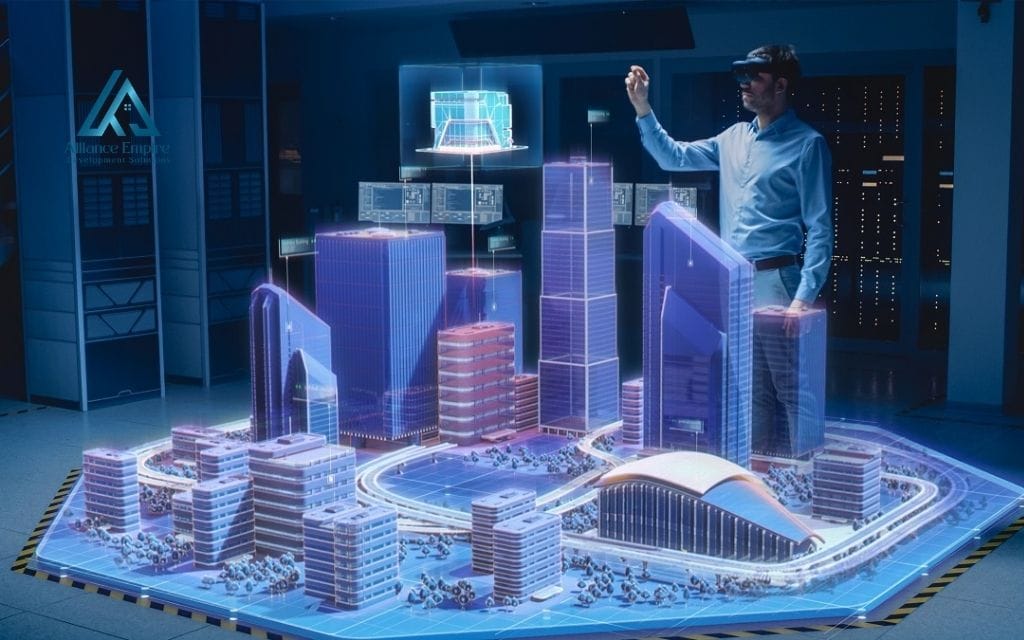
Virtual reality (VR) immerses a user in a fully digital, three-dimensional environment, while augmented reality (AR) overlays digital information directly onto the real, physical job site through a tablet, phone, or smart glasses.
Using VR, a client or project team can walk through a digital model of a building before a single wall has been framed, which helps them catch design issues or request changes. Using AR, a worker standing in an actual room can see where a pipe run or electrical conduit is meant to go according to the BIM model, which helps reduce installation errors and rework.
Both technologies are also used for safety training, allowing workers to practice responding to hazardous scenarios in a controlled, risk-free environment before encountering them on a real site.
Applications of automation in construction
Automated project planning and scheduling
Automated scheduling software takes project details – task lists, durations, dependencies between tasks, and available resources – and uses that information to generate an optimized schedule, rather than requiring a project manager to map out every task by hand.
Examples include:
- Automated schedule generation
- Critical path analysis
- Resource planning
Automated quantity takeoffs and estimating
Estimating software reads directly from a digital plan set or BIM model and automatically counts and measures the materials shown, rather than requiring an estimator to manually measure each item on a printed drawing. Because the software pulls these quantities straight from the model, a change to the design is reflected in the takeoff right away instead of requiring a full manual recount.
Benefits include:
- Faster estimates
- Improved accuracy
- Reduced manual calculations
Automated equipment and machinery
On active job sites, automated equipment uses the GPS positioning and onboard sensors described earlier to carry out repetitive earthmoving and grading work with minimal direct operator input.
Examples include:
- Autonomous excavators
- GPS-guided grading equipment
- Automated earthmoving systems
Automated site monitoring
Site monitoring tools combine drone imagery, fixed cameras, and AI-powered analysis software to track how a project is progressing against its schedule, without requiring a manager to be physically present on-site every day. As new images or scans come in, the software automatically compares the current state of the site to the design model and flags any areas that appear behind schedule or different from what was planned. Examples include:
- Drone inspections
- AI-powered progress tracking
- Remote site management
Automated quality control
Automated quality control typically relies on reality capture technology to record the exact as-built conditions of a space, which software then compares directly against the original BIM model. Any deviation is automatically flagged for review, which catches issues earlier than a manual walk-through inspection might.
Examples include:
- Digital inspections
- AI-driven defect detection
- Reality capture technologies
Automated safety management
Automated safety systems rely on the same wearable devices and IoT sensors described earlier, fitted to workers and equipment, to continuously track location, movement, and proximity to known hazards.
If a sensor detects that a worker has entered a restricted zone, come too close to moving equipment, or experienced a fall, the system can send an immediate alert to supervisors, allowing a faster response.
Examples include:
- Wearable safety devices
- Real-time hazard detection
- Worker location monitoring
Off-site construction and prefabrication automation
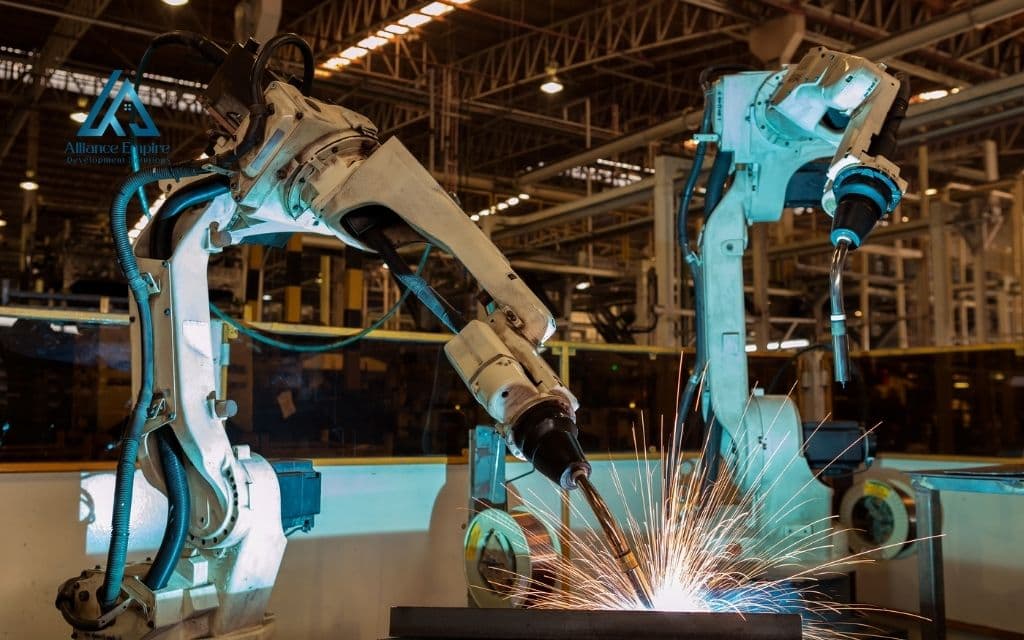
Off-site construction means building components are manufactured in a controlled factory environment, then transported to the job site to be assembled, rather than built entirely in the field from start to finish. Because production happens indoors with consistent equipment and conditions, factories can rely on repeatable, automated methods, making off-site construction one of the most automation-friendly segments of the industry.
Types of automated off-site construction:
- Modular construction: Complete building modules built off-site and assembled on location
- Prefabricated components: Individual elements manufactured ahead of time for faster on-site assembly
- Panelized construction: Wall, floor, or roof panels built off-site and shipped ready to install
- Volumetric construction: Fully finished three-dimensional building units, often including interior finishes, built before delivery
Challenges of construction automation
Automated construction is not without real obstacles, and an honest look at automation in construction has to include them:
- High initial investment costs for equipment, software, and training
- Technology adoption barriers, especially for firms used to traditional workflows
- Workforce training requirements to bring crews up to speed on new tools
- Integration with existing processes, since new systems still need to work alongside legacy methods
- Data security and privacy concerns as more project data moves into connected, cloud-based systems
The future of automation in construction
Looking ahead, several trends are expected to shape where automation and construction intersect next:
- AI-assisted decision making across planning, scheduling, and risk management
- Fully connected smart jobsites where equipment, sensors, and software share data continuously
- Autonomous construction equipment taking on a larger share of repetitive site tasks
- Advanced construction robotics moving beyond pilot projects into standard practice
- Digital twins and predictive analytics giving teams a live digital model of a project throughout its lifecycle
- Increased adoption of modular construction as off-site methods continue to mature
What industry experts expect
Industry experts generally point to 3 broader shifts: more integrated workflows that connect design, scheduling, and field execution; greater use of real-time project data to guide decisions; and increased collaboration between human crews and automated or robotic systems, rather than one replacing the other.
Conclusion
Construction automation is no longer a future concept, it is already transforming how projects are designed, managed, and built. From AI and robotics to BIM and modular construction, automation is helping the industry address labor shortages, improve safety, and increase productivity.
Explore how Alliance EDS leverages modern construction technologies to deliver smarter, safer, and more efficient project outcomes.
Frequently asked questions (FAQs)
How is automation used in construction?
Automation is used across nearly every phase of a project, from AI-driven scheduling and BIM-based design coordination to drone site surveys, robotic bricklaying, and automated quality inspections. It supports both the planning side of a project and the physical, on-site work itself.
What is an example of building automation?
A common example is an autonomous or GPS-guided piece of grading equipment that completes earthmoving work with minimal operator input, or a drone that automatically captures progress photos and feeds them into a project management platform.
What are the top 5 automation tools?
While the right tools depend on the project, the most common categories are BIM software, AI-powered scheduling platforms, drone survey systems, autonomous or semiautonomous heavy equipment, and reality-capture or AI-driven quality inspection tools.
Will automation replace construction workers?
Most industry experts see automation as a way to extend the capacity of existing crews rather than eliminate them outright. Automation tends to take over repetitive, dangerous, or time-consuming tasks, while skilled workers remain essential for judgment-based, hands-on work.
What are the benefits of automated construction?
Key benefits include improved productivity, reduced human error, stronger worker safety, more predictable project timelines, and support for more sustainable, lower-waste building practices.
How does BIM support construction automation?
BIM gives project teams a shared digital model that automates design coordination, clash detection, and quantity takeoffs, reducing the manual cross-checking that used to be required between trades and disciplines.
Is automation suitable for small construction companies?
Yes, though adoption often starts smaller. Many small and mid-sized firms begin with lower-cost tools like drone surveys or scheduling software before investing in larger equipment or robotics, scaling automation as budgets and project complexity grow.