
If you have come across the term MEPFS in a construction document or job posting and were not sure what it meant, you are in the right place. Before going further, it is worth noting something: in American construction and engineering, you will more commonly encounter the MEP or MEPFP rather than MEPFS.
The terminology varies by company, region, and project type. So if you are familiar with MEP but new to MEPFS, you are not missing anything, MEPFS simply uses a broader label that includes the Sanitary component explicitly.
These systems are not optional extras. They control the temperature and air quality inside a building, keep the lights on, supply clean water, remove waste, and protect occupants from fire.
Whether you are a homeowner brushing up on terminology, this article will walk you through the MEPFS meaning in construction, what each system covers, how the term is used in real projects, and why it matters for every build.
What is MEPFS meaning in construction?
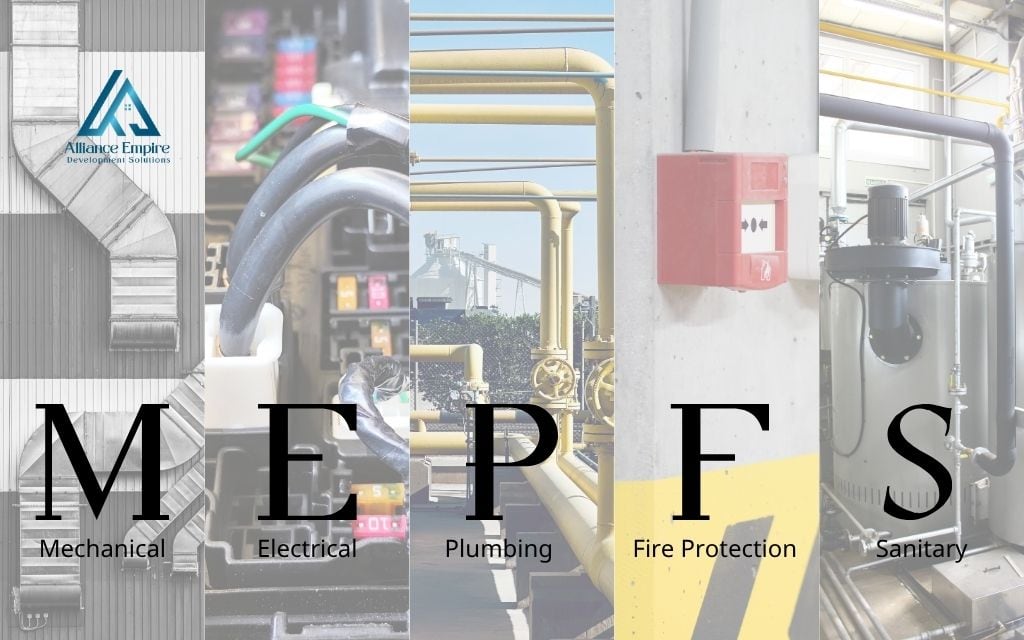
MEPFS is an acronym used in the construction and engineering industry to describe five interconnected building systems that must be planned, designed, coordinated, and installed in every structure, from a single-family home to a large commercial facility.
Full form:
- M = Mechanical
- E = Electrical
- P = Plumbing
- F = Fire Protection
- S = Sanitary
MEPFS refers to the core building systems that make a structure livable, operational, and safe. Without these systems working properly, a building is essentially just an empty shell. MEPFS works as a unified framework – each system must be coordinated with the others to avoid conflicts, meet building codes, and deliver a finished building that performs as intended.
MEPFS vs. MEP vs. MEPFP: Key differences
One of the most common points of confusion around MEPFS is how it relates to other acronyms you will encounter in the construction industry. The following table breaks down the key differences clearly.
| Term | Meaning | Common Usage |
| MEP | Mechanical, Electrical, Plumbing | Most common in the U.S. |
| MEPF | MEP + Fire Protection | Used in some projects |
| MEPFP | MEP + Fire Protection (explicit) | Common in U.S. industry |
| MEPFS | MEP + Fire Protection + Sanitary | Less common; broader scope |
The term MEPFS is used most commonly in international construction markets and in some specialty engineering contexts in the United States.
In standard U.S. practice, MEP covers the first 3 systems (Mechanical, Electrical, Plumbing), and Fire Protection is often added separately as MEPF or MEPFP. Sanitary systems may be folded into the Plumbing category or called out separately depending on the scope of the project.
Breakdown of each MEPFS component
Each letter in MEPFS represents a distinct category of building systems. Here is a clear breakdown of what each one covers and why it matters on a construction project.
Mechanical (M)
The Mechanical component covers everything related to air movement and climate control inside a building. This primarily means HVAC systems – Heating, Ventilation, and Air Conditioning.
What it includes:
- Heating systems such as furnaces, boilers, and heat pumps
- Ventilation systems including ductwork, air handlers, and exhaust fans
- Air conditioning systems for cooling and humidity control
- Air distribution networks throughout the building
The mechanical system directly controls indoor comfort and air quality. A poorly designed or installed HVAC system leads to uncomfortable temperatures, poor air circulation, high energy bills, and potential health issues from inadequate ventilation. On larger projects, mechanical systems also include chillers, cooling towers, and building automation controls.
Electrical (E)
The Electrical component encompasses all systems that supply and manage electrical power throughout a building.
What it includes:
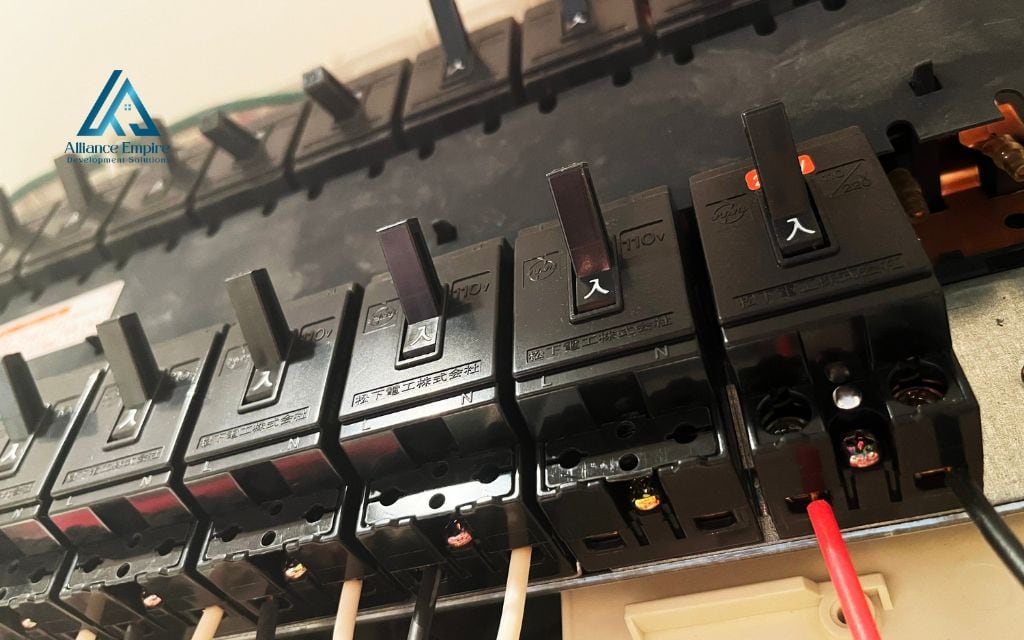
- Power supply systems: service entry, main panels, and distribution boards
- Branch wiring to outlets, switches, and equipment
- Interior and exterior lighting systems
- Low-voltage systems such as data cabling, telecommunications, and security
- Backup power sources including generators and uninterruptible power supplies (UPS)
The electrical system is what keeps a building functional and operational. Without a properly designed and installed electrical system, nothing else works.
Electrical design must also comply with the National Electrical Code (NEC) in the United States, making proper installation a legal requirement as well as a practical one.
Plumbing (P)
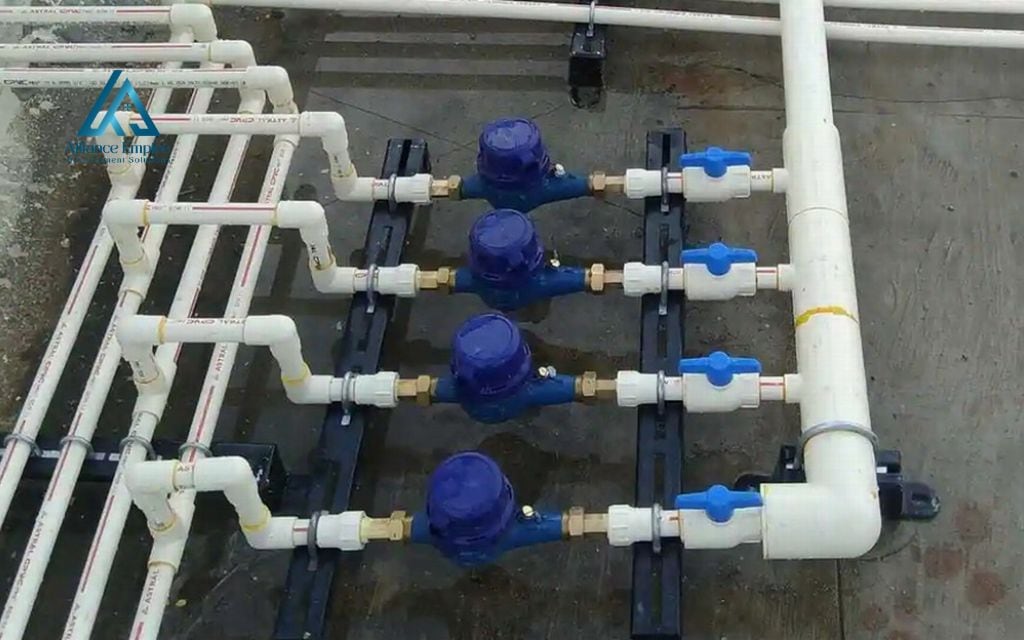
The Plumbing component covers all systems that supply water to a building and remove liquid waste from it.
What it includes:
- Domestic cold and hot water supply lines
- Drainage systems that remove used water from fixtures
- Fixtures such as sinks, toilets, showers, bathtubs, and faucets
- Water heaters, tanks, and booster pumps
- Roof drainage and stormwater management in some project scopes
Plumbing ensures that clean water is available where it is needed and that wastewater is safely removed. Faulty plumbing can lead to water damage, mold growth, and sanitation issues.
In U.S. construction, plumbing work must comply with the International Plumbing Code (IPC) or the Uniform Plumbing Code (UPC), depending on the jurisdiction.
Fire Protection (F)
The Fire Protection component includes all systems designed to detect, suppress, and control fires within a building.
What it includes:
- Fire alarm systems including smoke detectors, heat detectors, and manual pull stations
- Automatic sprinkler systems that activate when fire or heat is detected
- Special fire suppression systems for data centers, commercial kitchens, and similar spaces
- Fire standpipe systems for use by firefighters
- Emergency notification and mass communication systems
Fire protection is critical for life safety and building code compliance. In the United States, fire protection systems are governed by National Fire Protection Association (NFPA) standards, most notably NFPA 13 for sprinkler systems. No commercial building can receive a certificate of occupancy without compliant fire protection systems in place.
Sanitary (S)
The Sanitary component addresses the systems responsible for managing wastewater and sewage at a building or site level. In some U.S. project descriptions, this scope is folded into the Plumbing category, but MEPFS calls it out as a distinct discipline.
What it includes:
- Sanitary drainage piping that carries wastewater from plumbing fixtures to the sewer
- Vent stacks and soil pipes
- Grease traps and interceptors in commercial kitchens
- Septic systems in areas without municipal sewer access
- Site utility connections to municipal or private wastewater treatment systems
The sanitary system is what maintains health standards and proper sanitation in and around a building. Without an effective sanitary drainage network, buildings face sewage backups, foul odors, regulatory violations, and serious public health risks.
Separating Sanitary from standard Plumbing in the MEPFS acronym reflects the added complexity of large-scale wastewater management, especially in commercial, industrial, and multi-unit residential projects.
Why MEPFS systems are important in construction
MEPFS systems are central to the success of any construction project. Here are 5 reasons why they matter from the first day of design through the final day of occupancy.
Comfort
The mechanical and electrical systems determine whether the people inside a building are comfortable. Temperature control, proper ventilation, adequate lighting, and consistent power supply all depend on well-designed MEPFS systems. A building that is too hot, too cold, poorly lit, or prone to power interruptions fails at one of its most basic purposes.
Safety
Fire protection systems save lives. A properly designed and installed sprinkler system can suppress a fire before it spreads. A functioning fire alarm gives occupants the time they need to evacuate safely. In many U.S. jurisdictions, missing or non-compliant fire protection systems can result in a building being shut down or denied occupancy entirely.
Functionality
Power, water, drainage, and sanitation are non-negotiable in any occupied building. MEPFS systems are what transform a structural shell into a space where people can actually live, work, or conduct business. Without them, the building simply does not function.
Code compliance
Every MEPFS discipline is governed by national and local building codes in the United States. Mechanical systems must meet ASHRAE standards
- Electrical must comply with the NEC
- Plumbing follows the IPC or UPC
- Fire protection systems are regulated by NFPA codes
- Sanitary systems must meet local health and environmental regulations
Failing to meet these requirements can delay a project, trigger costly rework, or expose the building owner to legal liability.
Cost efficiency
Investing in proper MEPFS design upfront significantly reduces long-term maintenance costs. Systems that are correctly sized, cleanly installed, and well-coordinated require less emergency repair, use energy more efficiently, and have longer service lives. Poor design, by contrast, leads to early equipment failures, high utility bills, and expensive retrofits down the road.
MEPFS drawings and coordination
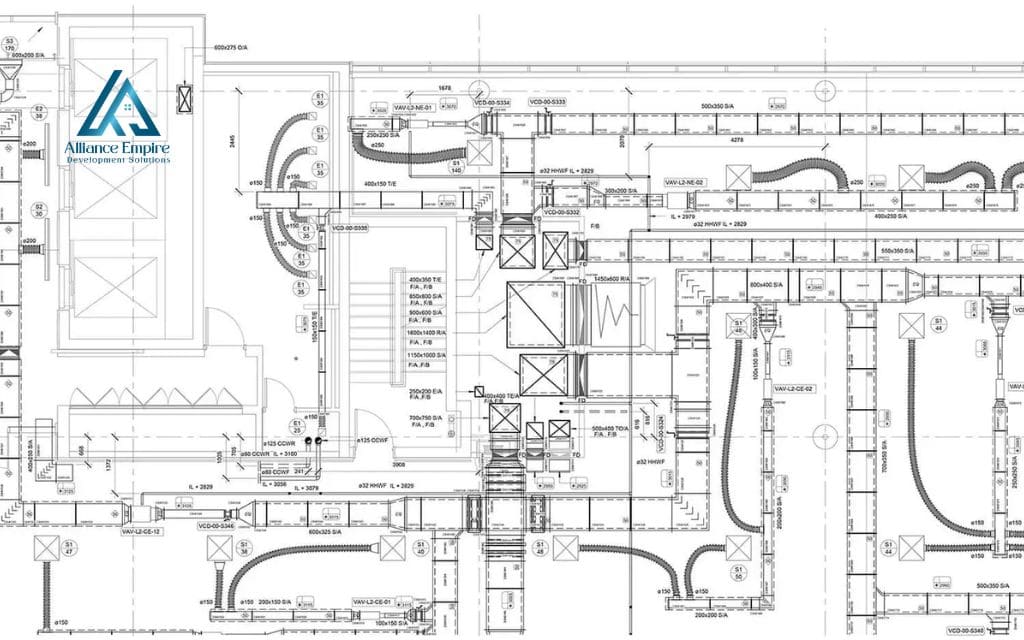
MEPFS drawings are detailed technical plans that show how each building system is designed, routed, and installed within a structure. They are produced by engineers and designers throughout the project lifecycle and used by contractors, fabricators, and inspectors during construction.
What MEPFS drawings typically show:
- The layout and routing of mechanical, electrical, plumbing, fire protection, and sanitary systems
- Connections between systems and the structural elements of the building
- Equipment locations including air handling units, electrical panels, and fire suppression equipment
- Pipe and duct sizes, elevations, and clearance requirements
5 main types of MEPFS drawings
There are 5 main types of MEPFS drawings produced over the course of a project, each serving a different purpose.
Concept / schematic drawings
These are high-level drawings produced during the early planning stages of a project. They show the basic design intent for each system where major equipment will be located, how systems will generally be routed, and how each discipline will integrate with the overall building layout. Schematic drawings are not detailed enough for construction but are essential for early decision-making and owner approvals.
Design development drawings
Design development drawings build on the schematic set with significantly more detail. They include system sizing, equipment specifications, pipe and duct routing, and coordination between the different MEPFS disciplines. These drawings are used to refine the design, confirm code compliance, and prepare for the construction document phase.
Shop drawings
Shop drawings are produced by contractors or fabricators, not by the design engineers. They translate the engineer’s design into specific installation instructions that reflect the materials, equipment, and methods the contractor will actually use on the job. Shop drawings must be reviewed and approved by the engineer of record before installation begins.
Coordination drawings (clash detection)
Coordination drawings combine all MEPFS systems into a single composite set to identify conflicts between them, for example, where a duct run crosses a structural beam, or where a plumbing line conflicts with an electrical conduit.
This process is performed using BIM (Building Information Modeling) software, which allows teams to detect and resolve clashes in 3D before construction begins. Proper coordination prevents costly rework and schedule delays.
As-built drawings
As-built drawings are produced after construction is complete. They reflect the actual installed conditions of all MEPFS systems, documenting any changes made during construction from the original design. As-built drawings are critical for building owners and facilities managers because they serve as the definitive reference for future maintenance, repairs, renovations, and system upgrades.
Common challenges in MEPFS systems
MEPFS projects are complex by nature. Multiple trades must work in the same spaces, often at the same time, following tight schedules and strict code requirements. The following are the most common challenges that arise during MEPFS design and construction.
Poor coordination between trades
When mechanical, electrical, plumbing, fire protection, and sanitary contractors work from separate drawings without cross-referencing each other’s work, conflicts are almost inevitable. Pipes, ducts, conduits, and structural elements can clash in the ceiling plenum or within wall cavities, causing expensive rework and schedule delays once the problem is discovered on-site.
Design conflicts
Even at the design stage, conflicts can arise between MEPFS disciplines. For example, the mechanical engineer may route ductwork through a space designated as a structural beam zone, or the electrical team may plan a panel location that conflicts with plumbing access requirements. These issues must be identified and resolved before construction begins.
Installation errors
Even well-coordinated designs can suffer from installation errors in the field. Incorrect pipe slopes, wrong wire gauges, improperly supported ductwork, or sprinkler heads installed at the wrong height can all affect system performance and code compliance. These errors are typically discovered during inspections and require rework.
High maintenance costs
Buildings with poorly designed or installed MEPFS systems tend to carry significantly higher long-term maintenance costs. Equipment that is undersized, oversized, or improperly installed wears out faster, consumes more energy, and requires more frequent service calls. These costs are largely avoidable with proper upfront planning.
Solution
The industry’s most effective answer to MEPFS coordination challenges is BIM. BIM platforms allow all MEPFS disciplines to model their systems in a shared 3D environment, automatically identifying clashes, optimizing routing, and producing coordinated drawings that the entire project team can rely on. Combined with thorough planning and clear communication between trades, BIM significantly reduces the risk of costly errors during construction.
Conclusion
MEPFS represents the essential systems that make buildings livable, operational, and safe. While the acronym itself may be less familiar to U.S. readers than MEP or MEPFP, the concept behind it is exactly the same: these are the core building systems that every structure depends on, and getting them right is one of the most important parts of any construction project.
Whether you are planning a new build, managing an existing facility, or simply trying to understand a term you saw in a construction document, the key takeaway is clear: MEPFS systems control comfort, ensure safety, enable functionality, satisfy code requirements, and determine long-term operating costs. They deserve careful attention from the earliest stages of design through the final day of construction.
Next step: Consult with a qualified MEP engineer or licensed contractor to ensure your building systems are properly designed, coordinated, and installed from the start. Getting MEPFS right early saves significant time and money down the road.
About Alliance Empire Development Solutions (Alliance EDS)
At Alliance EDS, we specialize in delivering construction services that bring every building system – mechanical, electrical, plumbing, fire protection, and sanitary – together seamlessly. Based in Denver, Colorado, our experienced team ensures your project meets code, stays on schedule, and is built to last.
Have a project in mind? Contact Alliance EDS today and let’s build something right.
Frequently asked questions (FAQs)
Is MEPFS the same as MEP?
Not exactly. MEP stands for Mechanical, Electrical, and Plumbing – the 3 most fundamental building systems. MEPFS expands this to include Fire Protection (F) and Sanitary (S) systems as well. MEPFS is more commonly used in international projects or when a project requires explicit separation of sanitary systems from standard plumbing scope.
What is MEPFP?
MEPFP stands for Mechanical, Electrical, Plumbing, and Fire Protection. It is the U.S. industry’s most common way of expanding MEP to include fire protection systems. Unlike MEPFS, MEPFP does not include a separate Sanitary designation. In most U.S. projects, sanitary drainage is handled within the Plumbing scope.
Which is better: MEP or HVAC?
HVAC is actually one component within MEP. HVAC (Heating, Ventilation, and Air Conditioning) falls under the Mechanical (M) category in the MEP acronym. MEP is the broader framework that covers Mechanical, Electrical, and Plumbing systems as a group. When someone says “MEP engineer” or “MEP contractor,” they mean a professional who works across all three disciplines, not just HVAC.
Where is MEPFS commonly used?
MEPFS is used most frequently in international construction markets, particularly in Southeast Asia, the Middle East, and parts of Europe where the term has gained broader adoption. In the United States, MEP and MEPFP are the dominant terms.
What is an MEPF engineer?
An MEPF engineer is a licensed professional who specializes in the design and coordination of Mechanical, Electrical, Plumbing, and Fire Protection systems for buildings. Depending on the firm, an MEPF engineer may focus on one of these disciplines or work across all four. Their work involves designing systems, producing construction documents, coordinating with structural and architectural teams, and ensuring that all systems meet applicable building codes and client requirements.