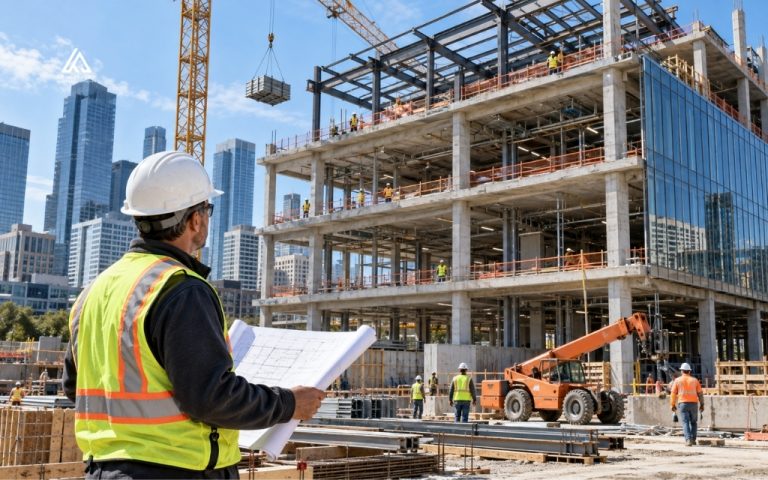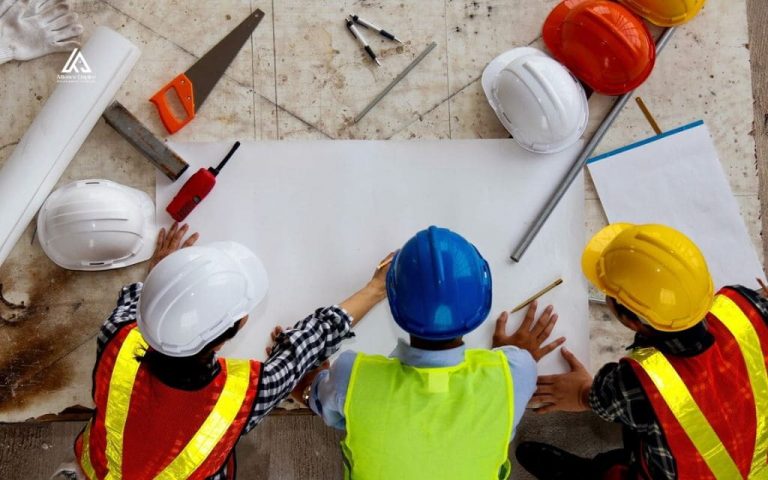

If you are planning a construction project and trying to decide on the right project delivery method, you have likely come across both design-build and progressive design-build.
At first glance, the two may seem interchangeable. Both combine design and construction under a single team. Both streamline the traditional process of hiring a designer and a contractor separately. But they differ significantly in how pricing is developed, how much flexibility you have, and how deeply you are involved throughout the project.
This guide breaks it all down. You will understand:
- What progressive design-build is and how it works
- What sets it apart from traditional design-build
- The key benefits it offers project owners
- How to determine which method is the right fit for your project
Key terms you should know
Before diving in, here are four terms that appear throughout this article. Understanding them upfront will make everything easier to follow.
- GMP (Guaranteed Maximum Price): The maximum dollar amount the owner agrees to pay for the project. Any costs that go over the GMP are absorbed by the design-builder, not the owner.
- QBS (Qualifications-Based Selection): A procurement method where the owner selects a design-build team based on experience, capability, and qualifications rather than lowest price alone.
- Off-Ramp: A contractual provision that gives the owner the option to exit the project after the preconstruction phase, before committing to full construction. This is a defining feature of progressive design-build.
- CMAR (Construction Manager at Risk): A project delivery method where a construction manager provides preconstruction services and manages construction under a separate contract, typically with a GMP. It shares some traits with progressive design-build but involves distinct design and construction contracts.
What is progressive design-build?
Progressive design-build (PDB) is a two-phase project delivery method in which an owner selects a design-build team early in the process, then collaborates with that team to develop the design and establish pricing before committing to full construction.
Unlike traditional design-build, where pricing is often set early based on limited design information, progressive design-build delays final cost commitment until the design is sufficiently developed. This gives owners far more confidence in the budget before construction begins.
Progressive design-build is widely used in complex public and private projects, including transportation infrastructure, institutional facilities, and large-scale commercial construction, where budget certainty, owner involvement, and adaptability are critical.
Features of progressive design-build
What makes progressive design-build different from other delivery methods is not just the two-phase structure but the principles built into how those phases operate.
Here are the defining features:
Two-phase structure (Preconstruction and construction)
The project is divided into a preconstruction phase, where design and cost are developed collaboratively, and a construction phase, where execution begins after the owner approves the GMP. This separation gives owners a clear decision point before major financial commitment.
Early team selection through QBS
Rather than choosing a contractor based solely on the lowest bid, progressive design-build uses Qualifications-Based Selection. The owner evaluates teams on experience, approach, and capability. This ensures the right team is in place from the start, not just the cheapest one.
Open-book pricing
Cost development is transparent throughout the preconstruction phase. The owner can see how estimates are built, where contingencies sit, and how design decisions affect the budget. There are no hidden markups or surprise figures at the end.
Owner off-ramp
Before committing to construction, the owner retains the right to exit the process if the design or GMP does not meet their expectations. This built-in off-ramp significantly reduces owner risk compared to traditional delivery methods.
High collaboration across all stakeholders
Designers, builders, and owners work as an integrated team throughout the preconstruction phase. This ongoing communication reduces miscommunication, limits design conflicts, and keeps the project aligned with owner goals from day one.
Progressive design-build vs. Design-build: Key differences
Both progressive design-build and traditional design-build assign design and construction to a single team. But beyond that shared foundation, the two methods operate quite differently. Here is a direct comparison:
| Feature | Design-Build | Progressive Design-Build |
| Pricing | Set early, often fixed before design is complete | Developed collaboratively with the owner over time |
| Owner Involvement | Moderate – owner approves, team executes | High – owner participates throughout preconstruction |
| Flexibility | Limited once contract is signed | High – scope and design can evolve during preconstruction |
| Risk Allocation | More risk shifted to contractor | Risk shared between owner and design-builder |
| Process Structure | Linear – design leads to construction | Iterative – design, pricing, and feedback loop together |
| Team Selection | Often price-based | Qualifications-based (QBS) |
| Owner Exit Option | Not typically available | Off-ramp clause before construction commitment |
The practical takeaway is straightforward: design-build is the better choice when speed and simplicity are the top priorities. Progressive design-build is the stronger fit when flexibility, budget confidence, and deep owner involvement matter more than fast-tracking.

Benefits of progressive design-build
Progressive design-build offers a range of advantages that make it an increasingly preferred delivery method for complex projects. Here are the seven core benefits:
Reduced owner risk
One of the most significant advantages of progressive design-build is how it limits financial exposure for the owner. Because the GMP is not finalized until the design is well-developed, the owner is not locked into a price based on incomplete or speculative information.
The off-ramp provision adds another layer of protection, giving owners a legitimate exit option before construction begins if the numbers do not align with their expectations.
Cost certainty through transparent pricing
Open-book pricing means the owner sees exactly how costs are calculated throughout preconstruction. Estimates are built collaboratively, contingencies are visible, and design decisions are evaluated against budget impact in real time. By the time a GMP is established, the owner has a high degree of confidence in what the project will actually cost.
Faster project delivery
Because design and construction activities overlap rather than run sequentially, progressive design-build can significantly compress the overall project timeline. Early procurement, early team engagement, and concurrent workflows reduce the delays that are common in traditional design-bid-build delivery.
Single point of contact and accountability
Like traditional design-build, progressive design-build places full responsibility for design and construction under one team. The owner deals with a single point of contact rather than managing a separate designer and contractor. This reduces administrative burden and eliminates the finger-pointing that can occur when design and construction are handled by separate parties.
Strong collaboration and communication
The preconstruction phase in progressive design-build functions as a structured period of collaboration. Designers, contractors, and the owner work together from the beginning, which reduces misalignment, catches problems early, and keeps all parties working toward the same outcome. This level of coordination is not typical in traditional delivery methods.
Flexibility to make changes
Because major design decisions are still being developed during the preconstruction phase, owners have a real opportunity to make adjustments without triggering costly change orders.
Scope refinements, value engineering decisions, and design modifications can all happen before the construction contract is finalized. This is one of the defining advantages of progressive design-build over its traditional counterpart.
Better value through value engineering
With the entire design-build team engaged from day one, value engineering is a continuous activity rather than an afterthought. Contractors can provide real-time feedback on constructability, material costs, and schedule impact as the design evolves.
This helps the owner get the best possible outcome within their budget rather than simply accepting a design that was produced without construction input.
How the progressive design-build process works
Progressive design-build unfolds in two clearly defined phases. Understanding what happens in each phase helps owners set realistic expectations and engage throughout the process.
Phase 1: Preconstruction
The preconstruction phase is where most of the collaboration, risk alignment, and decision-making happens. It typically includes:
- Team selection through QBS: The owner evaluates and selects a design-build team based on qualifications, relevant experience, and their proposed approach.
- Design development: The selected team works with the owner to develop the project design, progressing from early concepts through design milestones (commonly referred to as 30%, 60%, and 90% design stages). The owner provides input and feedback at each stage.
- Cost estimation and open-book pricing: As the design evolves, the team continuously refines cost estimates. These estimates are shared transparently so the owner can see how design choices affect the budget.
- Risk alignment: The team identifies and allocates project risks, including site conditions, schedule variables, and material cost exposure. Both parties agree on how these risks will be handled before construction begins.
- GMP development: Once the design has reached sufficient maturity, the design-builder proposes a Guaranteed Maximum Price. The owner reviews this figure in the context of the full design documentation.
Phase 2: Construction
The construction phase begins only after the owner approves the GMP and formally commits to proceed. This phase includes:
- Owner approval to proceed: The owner confirms agreement with the final GMP and scope. If the GMP or design does not meet expectations, the off-ramp clause allows the owner to exit without proceeding to construction.
- Full project execution: With pricing confirmed and design complete, the design-build team moves into construction. The single-team structure continues to support communication and accountability through project completion.
The critical distinction is that the owner does not commit to construction until design and pricing are fully aligned. This is what separates progressive design-build from traditional design-build, where the owner often commits earlier and with less design information in hand.
How to get started with progressive design-build
If progressive design-build sounds like the right fit for your project, here is a practical step-by-step approach to getting started:
- Define your project goals: Before engaging any teams, clarify your budget range, target timeline, and core project requirements. Having clear answers to these questions will help you evaluate design-build teams more effectively and give the selected team a solid foundation to work from.
- Select a qualified team through QBS: Issue a request for qualifications (RFQ) and evaluate respondents on their experience with similar projects, their preconstruction approach, and the strength of their design-construction integration. Prioritize capability over price at this stage.
- Begin the collaboration phase: Work with the team through the preconstruction phase. Participate in design reviews, engage with cost estimates as they develop, and communicate your priorities clearly. This phase sets the tone for the entire project.
- Approve the GMP and proceed: Once you are satisfied with the design and confident in the GMP, formally approve it and authorize the construction phase. If the proposal does not meet your expectations at this stage, the off-ramp clause gives you the option to pause or exit without major penalty.
Conclusion
Both design-build and progressive design-build represent significant improvements over traditional design-bid-build delivery. They reduce fragmentation, improve communication, and give project owners a simpler, more accountable experience. But they serve different needs.
Design-build is the right choice when your project is well-defined, your timeline is tight, and you are comfortable accepting pricing based on early design information. It is a proven method for delivering straightforward projects efficiently.
Progressive design-build is the right choice when your project is complex, your budget requires careful development, or you want meaningful input throughout the process. Its two-phase structure, open-book pricing, and built-in off-ramp make it the stronger option for owners who prioritize flexibility and cost certainty over speed alone.
Work with a design-build contractor you can trust in Denver
At Alliance Empire Development Solutions (Alliance EDS), we understand that choosing the right project delivery method is one of the most important decisions you will make.
As a full-service roofing and construction contractor serving the Denver metro area, we bring years of hands-on experience, open communication, and a collaborative approach to every project we take on – the same principles that define progressive design-build at its best.
Ready to explore whether progressive design-build is the right fit for your next project?
Contact Alliance EDS today for a free consultation and let our team help you make the right call from the start.
Frequently asked questions (FAQs)
What is progressive design-build?
Progressive design-build is a two-phase delivery method where an owner selects a design-build team based on qualifications, then collaborates with that team to develop the design and establish a Guaranteed Maximum Price before committing to construction. It emphasizes open-book pricing, owner involvement, and flexibility throughout the preconstruction phase.
What is a progressive design-build contract?
A progressive design-build contract is a two-part agreement that covers both the preconstruction phase and the construction phase. The owner and design-builder begin working under Phase 1 terms focused on design development and cost alignment. Construction proceeds only after the owner approves the GMP, at which point Phase 2 terms take effect.
How is progressive design-build different from design-build?
Traditional design-build sets pricing early, often before the design is fully developed. Progressive design-build delays final cost commitment until the design has matured, giving the owner more confidence in the budget. It also involves deeper owner participation throughout preconstruction and includes a formal off-ramp that allows the owner to exit before construction if needed.
What is GMP in progressive design-build?
GMP stands for Guaranteed Maximum Price. It is the maximum amount the owner agrees to pay for the project. In progressive design-build, the GMP is established collaboratively during preconstruction, after the design has been developed to a level of detail that supports confident cost estimation. If construction costs exceed the GMP, the design-builder absorbs the difference.
What is the difference between design-bid-build (DBB) and design-build (DB)?
In design-bid-build, design and construction are handled by separate parties under separate contracts. The owner hires a designer, receives a completed design, then puts the project out to competitive bid. Construction begins only after a contractor is selected. In design-build, a single team is responsible for both design and construction under one contract. This eliminates the gap between designer and contractor, reduces disputes over design intent, and typically shortens the overall project schedule.
What is 30%, 60%, and 90% design in progressive design-build?
These percentages refer to the stages of design development during the preconstruction phase. At 30% design, the project scope and basic layout are defined but many details remain unresolved. At 60% design, major systems and specifications are established and cost estimates become more reliable. At 90% design, the drawings and specifications are nearly complete and the GMP can be finalized with confidence. In progressive design-build, the owner participates in reviews at each stage and provides feedback before the next phase begins.
Who uses progressive design-build?
Progressive design-build is commonly used by public agencies managing transportation, infrastructure, or institutional projects where budget accountability and owner oversight are critical. It is also increasingly adopted by private developers and commercial building owners who want cost transparency and meaningful input into design decisions without taking on the full risk of traditional procurement.