
Pull planning is a collaborative scheduling method that begins with a fixed milestone and works backward to identify every task, handoff, and decision required to reach it. Rather than one person dictating steps forward from day one, the team pulls the plan into place by asking what has to happen right before the milestone, then the step before that.
This guide breaks down what pull planning is, how a pull planning session runs from start to finish, and how it fits alongside other scheduling methods used on a job. Contractors, superintendents, project managers, and trade partners can use it as a reference for planning their next phase with more confidence and less rework.
What is pull planning in construction?
At its core, pull planning treats a project milestone as the starting point rather than the finish line. The facilitator and trade partners work backward from that date, mapping out the sequence of tasks, durations, and handoffs needed to reach it on time.
The people who join a pull planning session are usually the ones who will perform the work, such as foremen, superintendents, and trade partners. Their firsthand knowledge of durations, sequencing, and site conditions makes the resulting schedule more realistic than a plan built without their input.
Pull planning did not start as a general scheduling trend. It grew out of lean construction and the Last Planner System, a production planning approach built on reliable commitments and continuous improvement. Later sections explain how these ideas connect, but the short version is that pull planning turns scheduling into a team activity instead of a one-way handoff.
As a construction pull planning method, it depends heavily on trade input and realistic commitments rather than assumptions made away from the field.
Benefits and limitations of pull planning
Benefits for the project team
Teams that adopt pull planning consistently report a handful of recurring benefits:
- Better buy-in, because participants build the plan themselves and are more likely to honor commitments they helped create
- More accurate durations, since the estimates come from people who do the work rather than a scheduler working from historical averages
- Earlier visibility into conflicts, so trade handoffs and shared work areas get resolved before they cause downtime
- Stronger communication between crews, which makes it easier to solve problems once construction is underway
Limitations to plan around
Pull planning has limitations that teams should plan around instead of being surprised by them mid-project.
- Time-intensive to prepare and run, since it needs facilitator time, meeting space, and the availability of key trade representatives
- Only as strong as the milestone it targets, so a poorly defined milestone leads to a poorly sequenced plan
- Requires consistent participation, because a trade that skips sessions creates blind spots that surface later as unresolved constraints
- Does not replace overall project scheduling, since pull planning covers a phase or segment rather than the entire project timeline
Pull planning vs. push planning
How push planning works
Push planning is a defining part of the critical path method, or CPM. The scheduler or project manager identifies key tasks and dependencies, then pushes that sequence out to the team as the plan to follow.
This approach can be fast to produce, since it depends on one person or a small group rather than a full session with every trade. It tends to be rigid, though, and gives crews limited insight into how their work connects to the tasks around it.
How pull planning works
Pull planning flips the direction of the question. Instead of asking what happens next, the team asks what has to happen immediately before the next milestone, then works backward from there.
This reverses the planning direction and brings trade partners into the process, which tends to surface inefficiencies and potential delays earlier than a push schedule would.
How pull planning and CPM work together
Pull planning does not replace CPM scheduling. CPM sets the overall project logic, milestones, and critical path across the full duration of a job, while pull planning builds a detailed, field-driven sequence for a specific phase within that master schedule.
Many teams treat CPM as the framework and pull planning as the zoomed-in view. The milestone used in a pull planning session usually comes directly from dates already established in the master schedule, and the detail the session produces later feeds into shorter-term lookahead and weekly work plans.
Core principles behind an effective pull planning session
Backward planning
Backward planning replaces the forward question, what happens next, with a backward one: what needs to happen right before this can start. Teams stay focused on the milestone and can proactively define the steps that lead up to it.
This reverse approach is effective at reducing inefficiencies and surfacing the need for contingencies well before work begins, rather than discovering them once a trade is already on-site.
Collaboration
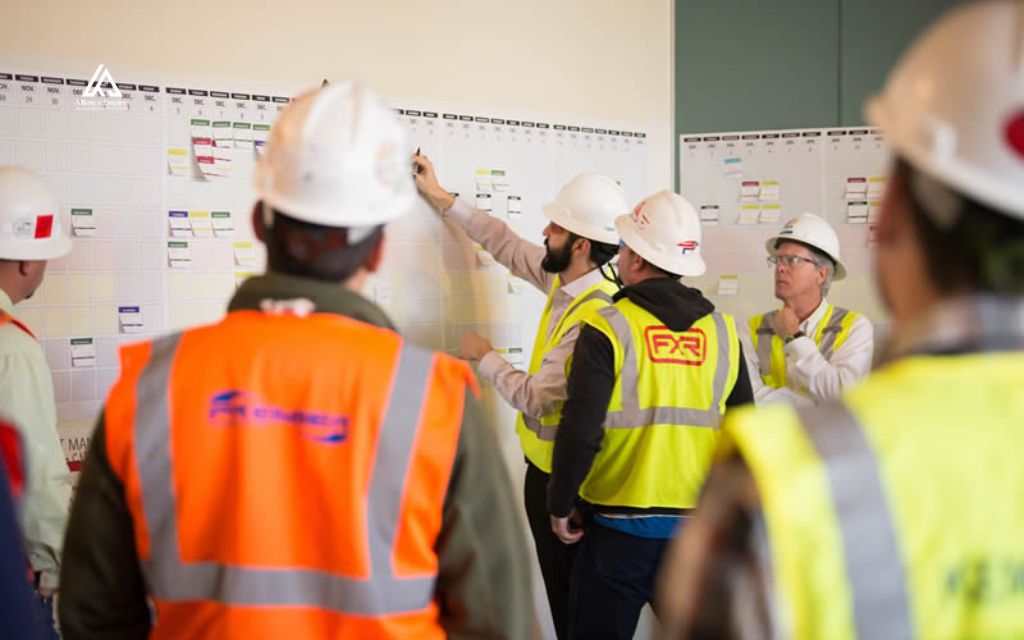
Pull planning depends on getting at least one representative from each affected trade into the room, whether that room is physical or virtual. Including their input directly improves the quality of the plan.
Collaboration also changes the dynamic of the meeting itself. Participants start to see how their work connects to everyone else’s, which tends to increase engagement and willingness to help solve conflicts as they come up.
Commitment-based planning
Pull planning both requires and builds accountability. Getting people into the same room only helps if they make realistic commitments they intend to keep.
Because participants build relationships during the session, they are more likely to hold each other accountable once work starts. If drywall finishes late, the painting crew already knows who to talk to and how the delay affects their own schedule.
Continuous improvement
Bringing the same group together at the start of every phase creates a natural checkpoint for reflection. Teams can discuss what worked in the last pull planning session and what did not, then apply those lessons to the next one.
Over multiple phases, this habit tends to sharpen estimating accuracy and tighten coordination between trades that work together repeatedly.
Reliable handoffs between trades
Much of the value in pull planning comes down to handoffs, the moments when one trade finishes an area and another takes over. Pull planning sessions force the team to name these handoffs explicitly rather than leaving them implied.
Clear handoffs reduce the chance that a crew shows up to a space that is not actually ready for them, which is one of the most common sources of downtime on a job site.
Getting ready for a pull planning session
Bring in the right participants
Pull planning sessions need at least one representative from each team working on the affected phase. This can include the general contractor, superintendents, foremen, subcontractors, designers, and safety supervisors.
Sending a short email with the date, time, and location is usually enough to invite the right participants and set expectations for what the session will cover.
Define a focused scope for the session
Scope matters as much as attendance. Sessions covering an entire project can get unwieldy fast, so most facilitators define a clear phase, such as the building enclosure or the interior finish sequence, before sending invitations.
Each participant should understand the scope of work expected from their trade ahead of time, which keeps the session focused and reduces confusion once planning starts.
Book the session early
Ideally, a pull planning session happens a month or two before a phase begins, giving trade partners time to staff up, order materials, and adjust their own schedules.
When timing is tighter, holding the session even a few days before work starts still helps. The point is to invest time upfront rather than losing more of it later to rework and miscommunication.
Choose a space that fits the work
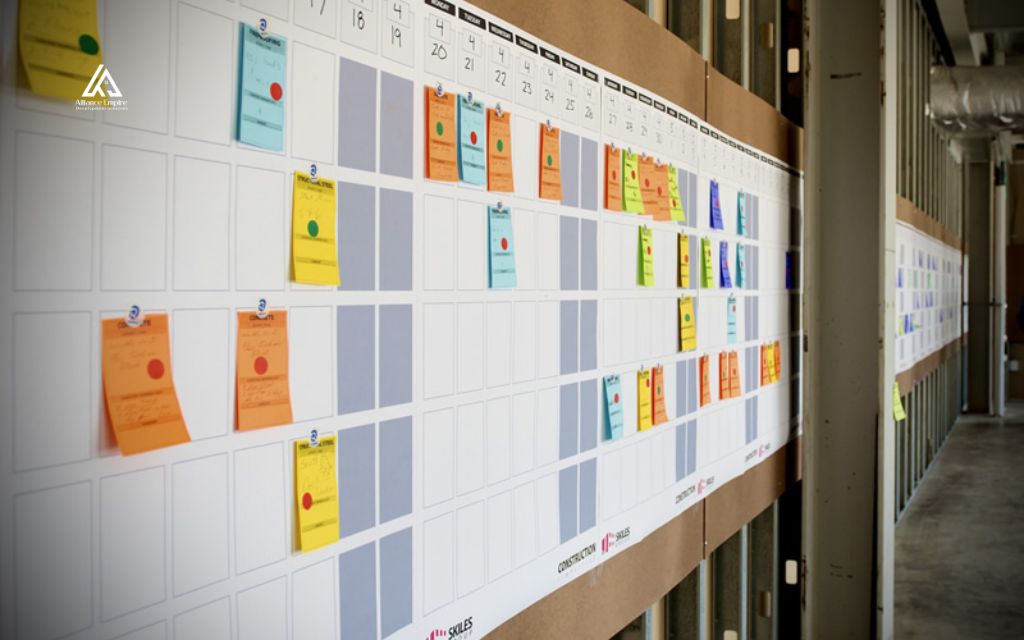
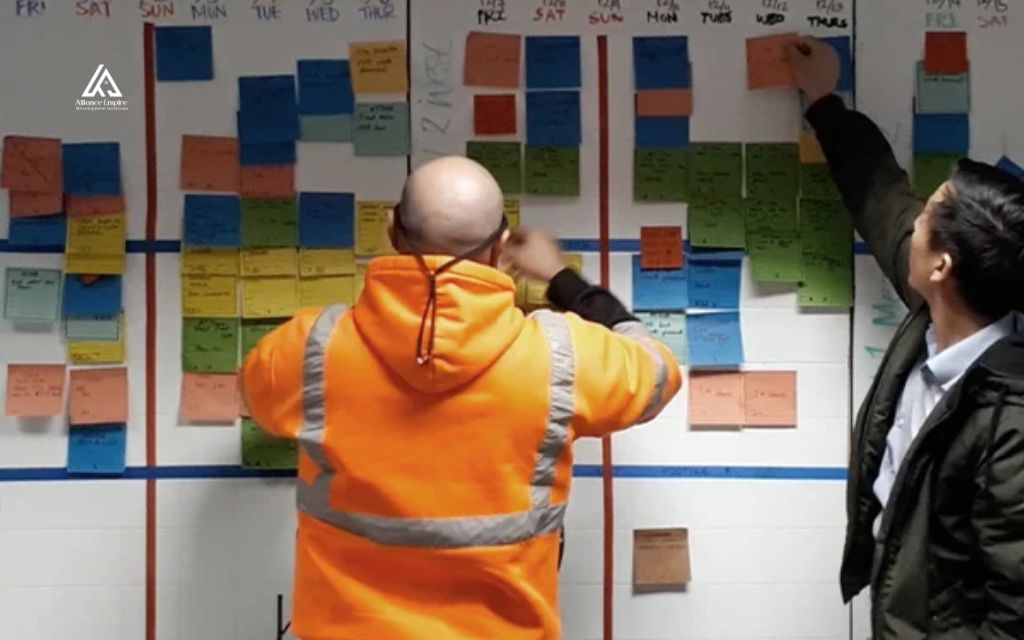
Pull planning usually involves mapping tasks on a large wall, so the room needs enough flat surface for the whole team to see and work with. Large conference rooms and open areas on-site both work well.
Remote sessions are possible using a virtual whiteboard, though in-person sessions tend to make it easier to keep everyone engaged.
Stock the session with the right supplies
Well-stocked sessions usually include:
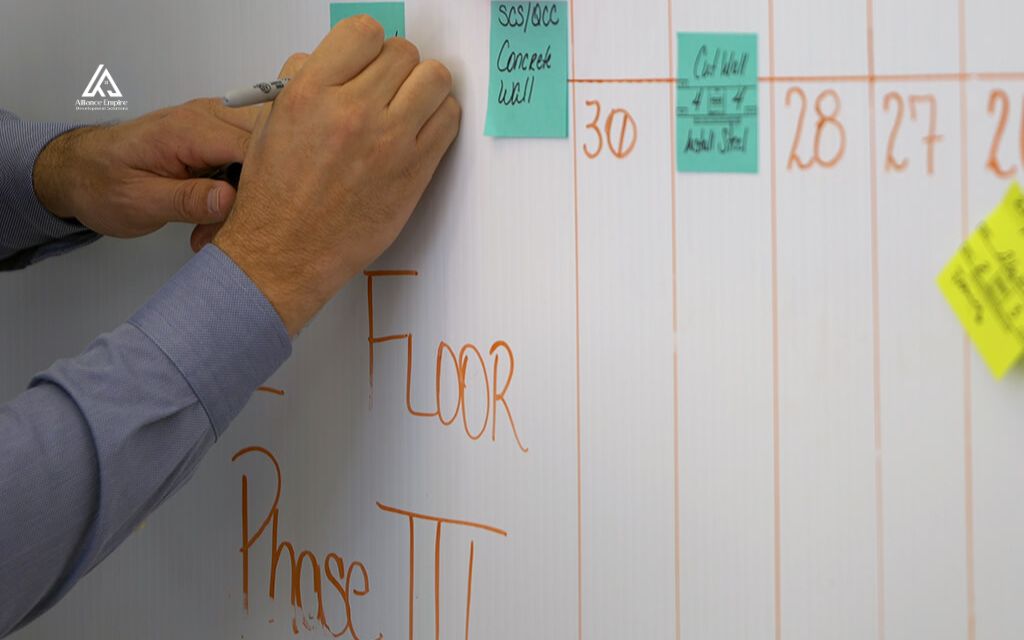
- Sticky notes in enough colors to distinguish each trade’s tasks
- Markers for writing durations and task names directly on the notes
- A full set of current project drawings for reference
- A blank timeline or grid, often divided by week, to place the notes against
Take the chairs out of the room
Removing chairs from the room might seem counterintuitive given how much wall space the session needs, but it tends to increase engagement. Standing keeps participants in an active role rather than letting a few people do most of the talking.
This is not a rule for every session. Anyone who needs to sit for the length of the meeting should be accommodated without hesitation.
Come in with background knowledge
The facilitator should walk in with a working understanding of the project and the phase being planned, including a rough sense of task durations and common obstacles for that type of work.
This background does not mean dictating the plan. It means being equipped to ask better questions and support the team while they build the sequence themselves.
Open with clear expectations
Starting the session with a clear introduction sets the tone for everything that follows. Cover the ground rules, explain how the process works, and give a realistic estimate of how long the meeting will run.
Showing one example task on a sticky note early on helps participants calibrate their own level of detail, such as writing door assembly instead of breaking it down into door handle and door hardware separately.
Ask questions throughout the session
Facilitators get the most out of a pull planning session by asking questions rather than directing the sequence. Why do you think that will take that long, and what are the steps in that process, are two examples that keep participants thinking critically.
This kind of curiosity often leads participants to find better ways of sequencing their own work, while also helping everyone in the room understand the obstacles other trades are facing.
Guide the discussion, do not dictate it
The facilitator’s job is to guide the conversation, keep it moving, and make sure every trade gets heard. It is not the facilitator’s job to dictate durations or lock in a sequence on their own.
Handing that authority to the trades performing the work is what separates pull planning from push planning in day-to-day practice.
Pull planning for a whole project vs. segments
Why segmenting a project works
Dividing a project into major parts keeps each session focused and manageable. Structure, exterior enclosure, mechanical and electrical rough-in, and interior finishes are common ways to split up the work.
Each segment still gets a collaborative session with the relevant stakeholders, just at a scale that is easier to sequence in a few hours rather than trying to map an entire project on one wall.
Common segments by project type
The right segments depend on the type of project, but a few patterns show up across most building types:
- Vertical construction often splits by structure, envelope, mechanical and electrical systems, and interior finishes
- Renovation and tenant improvement work often splits by floor, wing, or unit
- Infrastructure and civil projects often split by geographic segment or utility system
- Fast-track projects may run a pull planning session for each release of design documents
The 7 steps of a pull planning session
1. Fix the milestone on the board
The session starts with a clear milestone, usually a completion date or a specific segment of work such as finishing the building envelope or reaching a dry-in date.
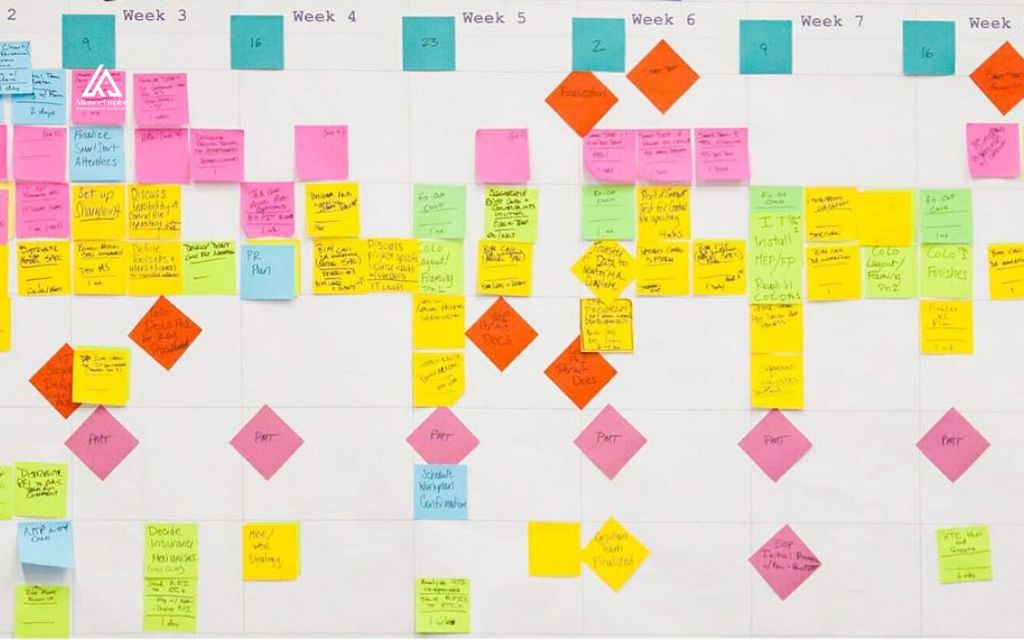
The milestone goes on the far right side of the board, often written on a note turned into a diamond shape so it stands out from the individual tasks around it.
2. List out the tasks
Working backward from the milestone, participants write out the tasks their trade needs to complete, along with a rough duration for each one. Color-coding notes by trade keeps the board easier to read once dozens of tasks are on it.
This step relies heavily on trade expertise, since the people writing the notes are the ones who will actually perform the work.
3. Place tasks on the timeline
Tasks move onto the board one at a time, starting from the milestone and working backward. Boards are often divided into weekly columns to make scheduling easier to visualize.
Facilitators should ask about task durations and whether any tasks can run in parallel rather than one after another, since finding opportunities to overlap work is one of the biggest efficiency gains a session can produce.
4. Flag the constraints
Once the sequence is laid out, the team reviews it for bottlenecks, resource limits, and anything outside the team’s control that could cause a delay.
Common constraints include material lead times, inspection windows, design clarifications, and weather-sensitive work. Naming these early gives the team time to resolve them before they threaten the schedule.
5. Lock in commitments
Every participant should leave the session clear on their own deadlines and what they are responsible for delivering. Sending a follow-up email that thanks the group and shares the resulting plan reinforces those commitments.
This step is also where accountability starts to take hold, since commitments made out loud in front of the group tend to carry more weight than ones written down privately.
6. Put the plan in writing
Photographing the board and converting it into a formal schedule preserves the detail the team just built. That pull planning schedule can then be shared with stakeholders and referenced throughout the phase.
If the original board used paper or sticky notes, keeping it intact, even rolled up and stored, gives the team a physical reference to point back to later.
7. Track progress and adjust the plan
Pull plans are not static documents. As work progresses or conditions change, the team should revisit the plan and adjust the sequence so everyone is working from an accurate, current reference.
Regular check-ins against the plan also make it easier to catch small delays before they compound into bigger ones.
Pull planning example: Interior phase before drywall
Set the milestone and sequence backward
The team sets its milestone as the date drywall installation is scheduled to start. Working backward, the group identifies the last task before that date, likely a rough-in inspection, and places it on the board first.
From there, participants add electrical rough-in, plumbing rough-in, and mechanical ductwork, sequencing each one based on which trade needs to finish before the next can begin its own work in the same space.
Capture constraints and commitments
During sequencing, the group notices that the mechanical trade needs a delivery of ductwork that typically takes two weeks to arrive. The team flags this as a constraint and adjusts the timeline to order materials earlier.
Each trade leaves the session with a confirmed duration and handoff point, giving the superintendent a realistic sequence to track instead of a set of estimates made without their input.
Tips for a strong pull plan
Be specific about the work and the handoff
Vague tasks lead to vague plans. Each note should identify the specific work a crew will produce and exactly which trade receives the handoff once it is done.
Ambiguity at this stage tends to surface later as confusion about who is responsible for what, usually at the worst possible time.
Create smooth flow
The goal of sequencing is a steady progression of work, sometimes described as a parade of trades, where each crew finishes its portion just as the next one is ready to start.
Handoffs that happen at the last responsible moment, rather than too early or too late, keep the schedule moving without idle time or congestion in the same work area.
Maintain steady crew sizes
Changing crew sizes from week to week tends to create inefficiency. Understaffing causes delays, while an oversized crew can create congestion or safety concerns in a confined work area.
Consistent staffing throughout a phase supports the kind of predictable production a pull plan is meant to deliver.
Account for all major constraints
Tasks are not truly ready to start until every constraint standing in their way has been resolved. Strong pull planning sessions capture these constraints early rather than assuming they will sort themselves out.
Tracking constraints separately from the main sequence, whether on a dedicated part of the board or in a follow-up document, keeps them visible until they are cleared.
Conclusion
Pull planning works because it puts the schedule in the hands of the people who will carry it out. Teams that invest the time to prepare a session, involve the right trades, and follow through with monitoring tend to see fewer surprises and smoother handoffs once work begins.
Whether a project is just getting started or heading into its next major phase, running a focused pull planning session before the work begins can save far more time than it costs.
Alliance EDS supports Denver-area contractors and property teams with construction planning and project delivery from the ground up. Call (720) 484-8181 to talk with the Alliance EDS team about scheduling your next phase with confidence.
Frequently asked questions (FAQs)
What is the main purpose of pull planning?
The purpose of pull planning is to build a reliable, field-driven sequence for a phase of work by involving the people who will actually perform it, rather than relying on a schedule handed down without their input.
Who should participate in a pull planning session?
Participants typically include the general contractor, superintendents, foremen, project engineers, and a representative from each subcontractor or trade partner working on the phase being planned.
How is pull planning different from weekly work planning?
Pull planning sets the overall sequence and handoffs for a phase, often weeks or months out. Weekly work planning takes that sequence and converts it into short-term, specific commitments each crew agrees to complete in the coming week.
How does pull planning compare to CPM scheduling?
CPM scheduling defines a project’s overall logic, milestones, and critical path across its full duration. Pull planning builds a detailed, field-driven sequence for a specific phase within that framework, and the two work best when used together.
When should a pull plan be updated?
Pull plans should be revisited whenever a milestone shifts, field conditions change, or a major constraint emerges that was not accounted for in the original session.
Can pull planning be done remotely?
Yes. Pull planning sessions can run over video call using a virtual whiteboard, though many facilitators find in-person sessions easier for keeping every participant engaged throughout.