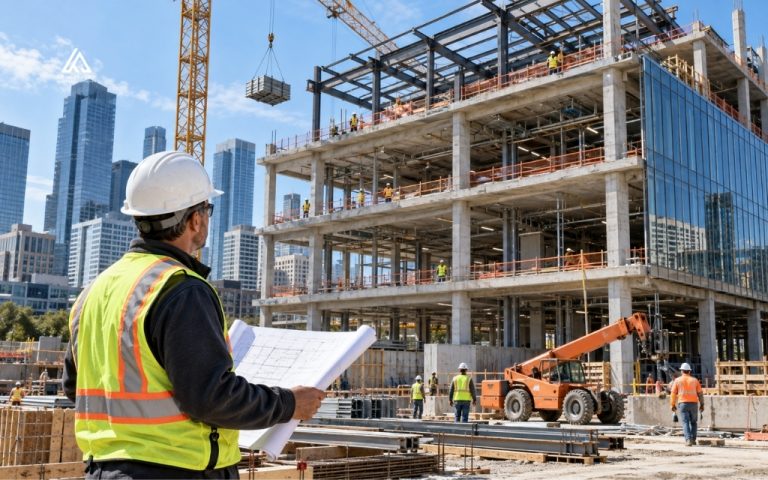


Construction estimating has always depended on accuracy under pressure. Estimators comb through drawings, specifications, and historical cost data to produce a number that a project ultimately has to live within, often on a tight bid deadline. AI estimating is changing how that number gets built. Instead of replacing the estimator, AI construction estimating tools are automating the repetitive parts of the process, from counting materials to flagging inconsistencies, so teams can move faster without sacrificing accuracy.
This article explains what AI construction estimating actually means, the technologies behind it, and how it fits into a real preconstruction workflow. It also covers where AI cost estimation genuinely helps, where its limitations show up, and what a construction firm should weigh before adopting an AI construction estimator into its process.
What is AI estimating?
AI estimating refers to the use of artificial intelligence, including machine learning and data analysis, to support the construction cost estimating process. Rather than relying purely on manual calculations and static spreadsheets, AI construction estimating software analyzes historical project data, current drawings, and market conditions to help estimators build faster, more consistent bids.
It helps to separate AI from automation, since the two terms often get used interchangeably. Automation handles repetitive tasks on a fixed set of rules, such as auto-populating a cost sheet once quantities are entered. AI goes further by learning from patterns in data and improving its output over time. In estimating, that might mean an AI cost estimator recognizing that certain assemblies typically run over budget in specific conditions, based on what happened on past projects.
AI estimating does not set final costs or make pricing decisions on its own. It supports the estimator by processing large volumes of data quickly and surfacing insights that would otherwise take hours to find manually.

How estimating has evolved toward AI
Construction estimating has moved through a few clear stages on its way to where AI fits in today. It started with manual takeoffs from paper or 2D drawings, calculators, and spreadsheets, then shifted to onscreen digital takeoff software, and later to 3D and BIM based quantification, where quantities are pulled directly from data rich models instead of flat drawings.
AI estimating is the latest step in that progression rather than a break from it, adding pattern recognition and predictive capability on top of the data those digital and BIM based systems already generate. Firms with more mature digital workflows typically see a smoother transition into AI supported estimating.
The technologies behind AI construction estimating
Machine learning
Machine learning is the foundation of most AI construction estimating tools. Algorithms are trained on historical project data, including past estimates, actual costs, and outcomes, so the system can recognize patterns and improve its predictions the more data it processes. Over time, this allows AI construction estimating platforms to refine cost predictions based on project type, region, and scope.
Computer vision
Computer vision allows software to interpret construction drawings and plans the way a person would, but faster. It identifies and counts elements such as doors, fixtures, or structural components directly from digital plan sets. This is what enables automated symbol detection during a quantity takeoff, cutting down on manual measurement.
Predictive analytics
Predictive analytics applies statistical modeling to historical and current data to forecast likely outcomes. In estimating, this can mean projecting how material prices, labor rates, or market conditions are likely to shift before a project breaks ground, giving estimators a more realistic cost range to work from.
BIM integration
Building Information Modeling, or BIM, gives estimators a data-rich 3D model to work from instead of static 2D drawings. When AI-powered estimating tools integrate directly with BIM, quantities can be extracted automatically from the model itself, reducing the manual re-measurement that traditional takeoffs require and keeping estimates aligned as the design changes.
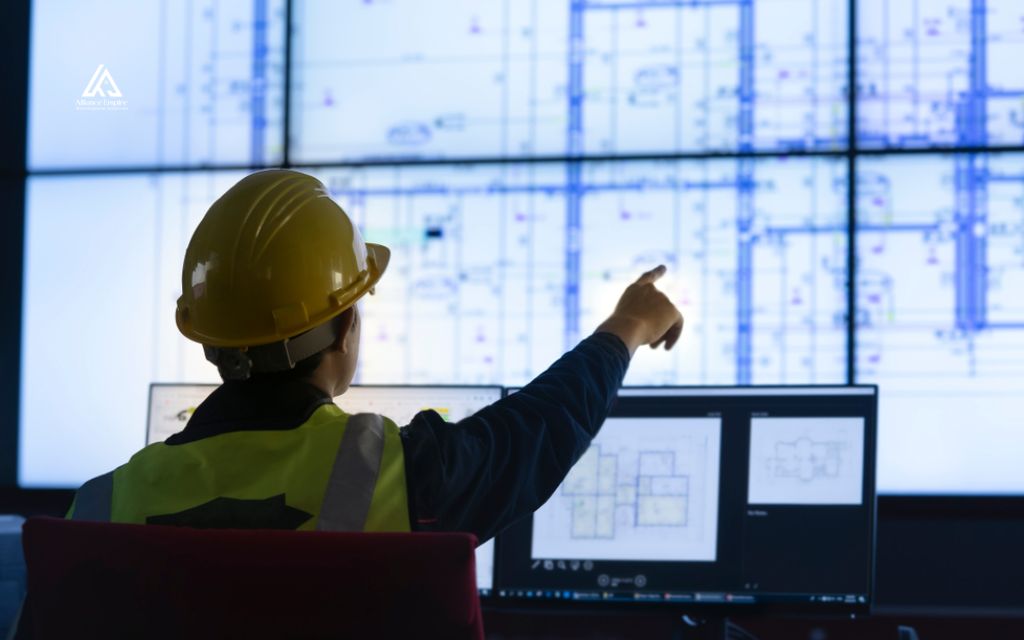
How AI is applied across the estimating process
Automated quantity takeoffs
This is the most common entry point for AI in estimating. Software scans digital plans, identifies elements using computer vision, and extracts quantities automatically, replacing much of the manual counting and measuring that traditional takeoffs require.
Drawing and specification analysis
AI tools can review large sets of drawings and specifications to flag missing information, inconsistencies between sheets, or scope items that might otherwise be overlooked during a manual review.
Cost prediction and forecasting
By analyzing historical project data alongside current market conditions, AI project cost estimation tools help generate more informed cost ranges, accounting for variables like material price trends and labor availability.
Risk identification
AI can compare a current project’s data against patterns from past projects to flag unusual line items, missing scope, or cost outliers that deserve a second look before a bid goes out.
Bid preparation and turnaround
By automating the data-heavy front end of estimating, AI tools for construction estimating free up time for the parts of bid preparation that require judgment, such as pricing strategy and final scope review, which can shorten overall turnaround time.
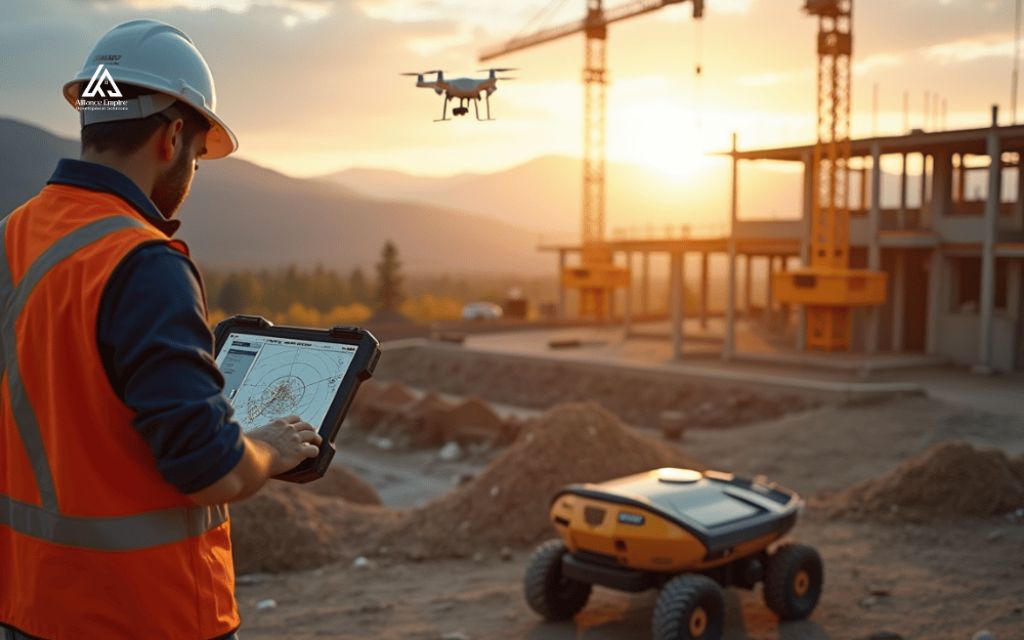
AI-assisted vs traditional estimating
The table below outlines how AI-assisted estimating generally compares to traditional, fully manual methods.
| Factor | Traditional estimating | AI-assisted estimating |
| Takeoff speed | Manual counting and measuring, time intensive | Automated extraction from drawings or BIM models |
| Consistency | Varies by estimator and workload | More standardized across estimators and projects |
| Error detection | Relies on manual review | Software flags anomalies and missing scope for review |
| Historical data use | Limited by individual recall and records | Systematically analyzed across past projects |
| Upfront cost | Lower software investment | Higher initial investment in software and training |
| Human oversight | Central to every step | Still required, but focused on judgment rather than data entry |
Key benefits of AI construction estimating
When implemented well, AI construction estimating offers measurable advantages over fully manual processes.
- Faster takeoffs and bid turnaround: Automating quantity extraction and data entry significantly reduces the time estimators spend on repetitive tasks.
- Improved consistency: Estimates produced across different estimators or offices tend to follow more standardized logic, reducing variation caused by individual habits or oversight.
- Fewer manual errors: AI can catch discrepancies in quantities or flag missing scope items that might otherwise slip through a manual review, resulting in more dependable AI construction estimates.
- Better use of historical data: Past project data becomes a usable resource for pricing future work rather than something buried in old files.
- Greater capacity: Firms can pursue more bids without proportionally increasing estimating staff, since routine tasks take less time to complete.
Challenges of AI in construction estimating
AI estimating is a support tool, not a substitute for estimator expertise, and it comes with real constraints that firms should plan around:
- Dependent on data quality: An AI construction estimator is only as reliable as the historical and current data it is given. Incomplete or inconsistent data leads to weaker predictions.
- Struggles with ambiguous scope: AI can process what is clearly shown on a drawing, but it cannot infer site conditions, unstated assumptions, or scope gaps the way an experienced estimator can. Because the construction estimate AI produces still depends on the completeness of the input, gaps in the drawings become gaps in the output.
- No accountability for pricing decisions: Final pricing strategy, risk tolerance, and bid decisions remain the responsibility of the estimator and the firm, not the software.
- Requires training and adjustment time: Teams need time to learn a new tool and validate its outputs before fully trusting it in a live bid.
- Upfront investment: Licensing, implementation, and training costs need to be weighed against the long-term time savings before adoption makes sense for a given firm.
Evaluating and adopting AI construction estimating tools
Data quality requirements
AI construction estimating tools depend on clean, organized historical project data to generate useful insights. Firms with disorganized or incomplete records should expect a longer ramp-up period before the software delivers reliable results.
Workflow integration fit
The tool needs to fit how estimators already work rather than forcing an entirely new process. Software that integrates with existing takeoff, BIM, and bid management systems tends to see smoother adoption than standalone tools that operate in isolation.
Training and change management
Estimators need dedicated time to learn a new system and build trust in its outputs. Skipping this step is one of the most common reasons AI-assisted estimating tools underdeliver on their promised time savings.
Human oversight and QA
Every AI-generated estimate should go through the same scrutiny a manually built one would. Regular audits help confirm that quantities, assumptions, and pricing logic remain accurate as the tool continues to learn from new project data.
The future of AI in construction estimating
AI estimating is still developing, and its role in preconstruction is expected to broaden over the next several years rather than plateau where it is today.
- More accurate cost forecasting: As AI construction estimating tools accumulate more historical project data, their cost predictions should become more reliable, particularly for factoring in material price shifts and labor market changes over time.
- Deeper integration across preconstruction: AI capabilities are increasingly being built directly into takeoff, BIM, and bid management platforms rather than sold as separate add on tools, which should reduce the friction of adopting them.
- Expanded risk and sustainability analysis: Beyond cost and quantities, AI is starting to support broader preconstruction decisions, including flagging project risk earlier and estimating the environmental impact of material choices.
- Estimator judgment remains central: None of these advances are expected to remove the need for experienced estimators. The consistent industry expectation is that AI will keep automating repetitive, data heavy work while judgment, accountability, and final pricing decisions stay with people.

Conclusion
AI estimating is reshaping how construction teams approach takeoffs, cost forecasting, and bid preparation, but it works best as a support system rather than a replacement for experienced judgment. The firms getting the most value from it are pairing faster, more consistent data processing with estimators who still own the final numbers.
If you are planning a construction project and want an estimate built on both accurate data and real field experience, Alliance EDS in Denver, Colorado, combines proven estimating practices with honest, transparent guidance from the first conversation. Call (720) 484-8181 to talk through your project with our team.
Frequently asked questions (FAQs)
Does AI estimating replace human estimators?
No. AI construction estimating automates data-heavy tasks like takeoffs and pattern recognition, but final scope interpretation, risk assessment, and pricing decisions still require an experienced estimator’s judgment.
How accurate are AI-assisted estimates compared to traditional methods?
Accuracy depends heavily on the quality of the data behind the tool. When trained on solid historical project data, AI-assisted estimating can reduce the manual errors common in spreadsheet-based takeoffs, but it still requires human review before a number goes into a bid.
What size construction firms benefit from AI construction estimating software?
Firms of nearly any size can benefit, though the impact is often most noticeable for teams handling a high volume of bids or repetitive project types, where automating takeoffs saves the most estimator hours.
How long does it take to implement AI-powered estimating tools?
Implementation timelines vary based on data readiness and team size, but most firms should expect a period of training and validation before the tool is fully integrated into live bidding, rather than an immediate switch.
What is the 30 percent rule for AI?
The 30 percent rule is a general AI adoption guideline, not specific to construction: AI handles roughly 70 percent of repetitive, data-heavy work while people retain 30 percent for judgment and oversight. In estimating, that means AI automates tasks like quantity extraction and pattern recognition while estimators keep control over scope interpretation, risk, and final pricing.
Can ChatGPT do construction takeoffs?
Not reliably. Takeoffs require computer vision and measurement tools trained on construction drawings and BIM models, capabilities a general-purpose chatbot does not have. It can help summarize scope or answer estimating questions in plain language, but it is not a substitute for purpose-built AI construction estimating software.