

Every construction project runs on more than materials and labor. Timing decides whether a build finishes on budget or spirals into costly delays, and that timing lives inside the construction schedule. Construction scheduling turns a list of tasks into a coordinated plan that tells every trade what to do, when to do it, and in what order.
This guide breaks down what construction scheduling involves, the methods professionals rely on, and the tools that keep a schedule accurate as a project moves forward. Whether the goal is building a first schedule or refining an existing process, the sections below cover the concepts that shape reliable project timelines.
What is construction scheduling
Construction scheduling is the process of planning, sequencing, and tracking every activity required to complete a project. It functions as a structured system that maps how tasks connect, how long each one takes, and how delays in one area affect the rest of the job, going well beyond a simple task list. Contractors rely on scheduling in construction management to keep resources, deadlines, and communication aligned across the entire project team.
The construction schedule itself is the document, or set of documents, that displays this plan. It typically shows target start and finish dates for every task along with the dependencies between activities. Some professionals use the terms scheduling and schedule interchangeably, but scheduling refers to the process while the schedule is the output of that process.
The list below defines the terms most commonly used when building or reading a construction schedule:
- Milestone: a significant point in the schedule marking the start or completion of a key phase.
- Duration: the amount of time, usually in work days, required to complete an activity.
- Dependency: a relationship where one task must start or finish before another can begin.
- Lead time: the time an activity starts ahead of a related activity.
- Lag time: a required waiting period between two dependent activities, such as concrete curing.
- Float: the amount of time a task can be delayed without pushing back the project finish date.
- Resource allocation: the assignment of labor, equipment, and materials to specific tasks.
- Baseline schedule: the approved version of the schedule used as the benchmark for tracking progress.
Why construction scheduling matters
Reliable construction scheduling delivers benefits that extend well beyond keeping a calendar:
- Resource efficiency: crews, equipment, and materials arrive when needed instead of sitting idle or causing bottlenecks.
- Cost control: fewer delays and less rework keep the project within budget.
- Deadline accuracy: stakeholders can trust completion dates because the plan accounts for real dependencies.
- Risk visibility: potential conflicts and bottlenecks surface early, before they affect the job site.
- Team alignment: everyone from the general contractor to individual subcontractors works from the same timeline.

Who is involved in construction scheduling
Construction scheduling is a team effort that draws on several roles:
- Construction scheduler: builds and maintains the schedule, keeping sequencing and durations realistic.
- Project manager: aligns the schedule with the project’s overall goals and budget.
- Superintendent: brings field insight that keeps the plan workable on site.
- Architect or engineer: coordinates design milestones with construction sequencing.
- Subcontractors: supply trade-specific timelines that feed into the master plan.
- Owner or developer: reviews and approves the schedule before and during construction.
How to build a construction schedule step by step
Construction scheduling follows a repeatable process from scope to closeout, whether the project is a small renovation or a multi-phase commercial build.
Step 1: Define project scope and goals
Every schedule starts with a clear scope. Establishing the project’s goals, budget, and major milestones upfront prevents scope creep later and gives the schedule a foundation to build on.
Step 2: Build a work breakdown structure
Work breakdown structure (WBS) organizes the project into phases, deliverables, and individual tasks. Breaking the job into smaller, measurable pieces makes it easier to estimate, assign, and track each part of the work.
Step 3: Sequence tasks and map dependencies
Determining which tasks depend on others establishes the correct order of construction. Some activities, like pouring a foundation before framing, can only happen in sequence, while others can run in parallel to save time.
Step 4: Estimate task durations
Duration estimates should draw on historical data, crew productivity rates, and input from subcontractors. Realistic estimates protect the schedule from the kind of overly optimistic timelines that lead to delays.
Step 5: Identify the critical path
The critical path is the longest sequence of dependent tasks in the project, and it sets the minimum possible completion date. Any delay to a task on the critical path pushes back the entire project, which makes this step central to how to create a construction schedule that holds up under pressure.
Step 6: Allocate resources
Labor, equipment, and materials need to be assigned to tasks based on availability and the sequence established earlier. Poor resource allocation causes bottlenecks even when the sequencing itself is sound.
Step 7: Assess and plan for risks
Weather, supply delays, and labor shortages affect almost every job at some point. Building contingency time into the schedule, and identifying which risks threaten the critical path, keeps a single setback from derailing the entire timeline.
Step 8: Finalize, communicate, and monitor the schedule
Once the schedule earns approval from stakeholders, it becomes the project’s baseline. From that point forward, the team tracks actual progress against the baseline and updates the plan as conditions change on site.

Common construction scheduling methods
Critical path method (CPM)
CPM identifies the sequence of tasks that determines the shortest possible project duration. Schedulers list every activity, map dependencies, and calculate which path through the network has zero float. Tasks on the critical path require the closest monitoring, since any delay there delays the whole project.
Program evaluation and review technique (PERT)
PERT accounts for uncertainty by using three duration estimates for each task, optimistic, most likely, and pessimistic, and calculating a weighted average. This approach works well for construction project scheduling where past data is limited or tasks carry higher variability.
Last planner system (LPS)
LPS is a collaborative approach that pulls scheduling decisions down to the people executing the work. Frontline teams commit to specific tasks during short planning cycles, which improves reliability and surfaces constraints before they cause delays.
Line of balance (LOB)
LOB suits projects with repetitive units, like apartment buildings or housing developments. It tracks the pace at which each task moves from unit to unit, helping crews maintain a steady, uninterrupted flow of work.
Q scheduling and resource-oriented scheduling
Two additional methods round out the toolkit. Q scheduling uses bar charts to plan the delivery and use of materials and equipment across a site, while resource-oriented scheduling prioritizes the availability of labor, equipment, or materials when multiple activities compete for the same limited resource.
Types of construction schedules
Master schedule
The master schedule covers the entire project from start to finish, showing major phases and milestones at a high level. Stakeholders use it to track overall progress and communicate the big picture to owners and investors.
Phase or milestone schedule
Phase schedules break the master schedule into major stages, such as site work, structural work, and finishes. They give teams a clearer view of what needs to happen within a specific segment of the project.
Look-ahead schedule
Look-ahead schedules cover a short window, usually two to six weeks, and focus on tasks that are fully resourced and ready to start. Updating this schedule weekly keeps the team focused on what’s immediately actionable.
Short-interval or daily work plan
Daily or weekly work plans break the look-ahead schedule down even further, assigning specific crews to specific tasks on specific days. This level of detail keeps field teams coordinated on a day-to-day basis.
Visualizing a construction schedule
Gantt charts
Gantt charts display tasks as horizontal bars along a timeline, with bar length representing duration and arrows showing dependencies. They remain the most common way to visualize a construction timeline because they’re intuitive and easy to update.
Network diagrams
Network diagrams emphasize the logical sequence of tasks rather than the timeline itself. Nodes represent activities and arrows represent dependencies, making it easier to trace the critical path through a complex project.
Time-scaled logic diagrams
Time-scaled logic diagrams combine elements of both formats, showing the sequence of activities while scaling them against a calendar. They condense large schedules into a format that’s easier to review at a glance, though they take more effort to build and maintain.
4D BIM models
4D building information modeling links a 3D model of the project with schedule data, creating a visual simulation of construction over time. Teams use it to spot clashes and sequencing issues before work begins on site.

Common construction scheduling challenges
Even the most disciplined construction scheduling runs into obstacles once work begins on site. Common challenges include:
- Weather delays: outdoor work stalls during storms, extreme cold, or heavy precipitation.
- Unforeseen site conditions: unexpected soil, utility, or structural issues can halt work until they’re resolved.
- Supply chain disruptions: material shortages or shipping delays push back dependent tasks.
- Labor availability: shortages of skilled trades can slow progress even when materials are on hand.
- Scope changes: design revisions or change orders ripple through the rest of the schedule.
- Permitting and inspection delays: waiting on approvals from local authorities can stall an otherwise ready project.
- Coordination breakdowns: miscommunication between trades leads to rework and sequencing conflicts.
Strategies to keep a schedule on track
Schedule compression
Fast-tracking overlaps tasks that were originally planned in sequence, while crashing adds resources to critical path tasks to finish them faster. Both techniques shorten the schedule, but they also raise costs or increase the risk of rework, so teams should apply them carefully and only where the impact is worth the tradeoff.
Resource leveling
Resource leveling adjusts the schedule to smooth out periods where labor, equipment, or materials are overallocated. Spreading demand more evenly reduces burnout and avoids the added cost of overtime or emergency hires, though it can extend the overall timeline.
Forensic schedule analysis
Forensic schedule analysis reviews a completed or delayed project to determine what caused deviations from the plan. Contractors and owners use these findings to resolve disputes over delay claims and to avoid repeating the same mistakes on future projects.
Construction scheduling software and tools
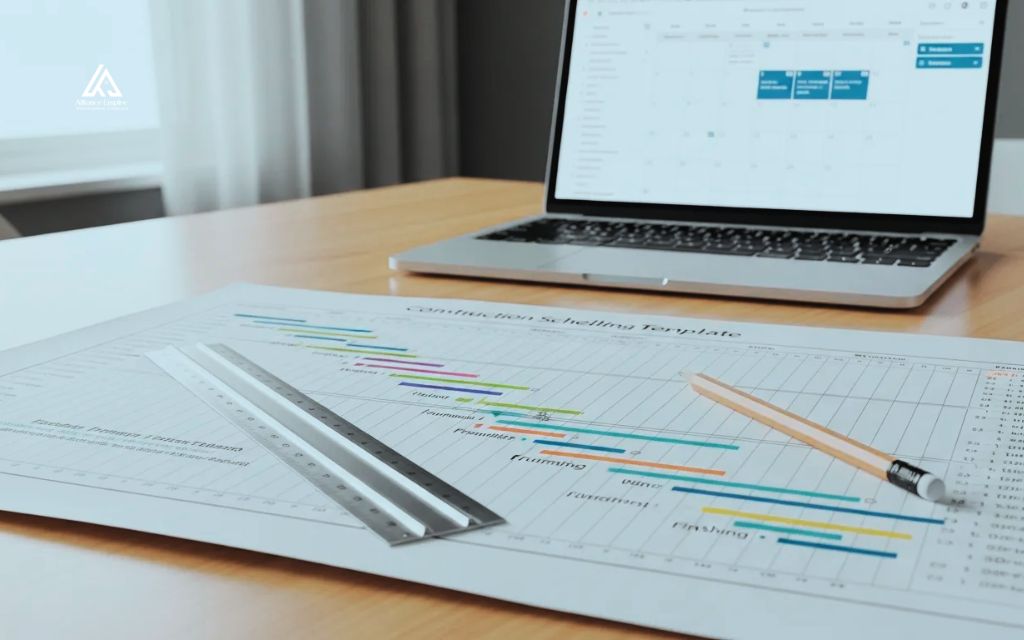
Most construction scheduling today happens in software rather than on manual spreadsheets, especially for complex projects with many interdependent tasks.
Common categories include CPM scheduling software for building and analyzing critical path networks, cloud-based construction management platforms that connect the schedule to budgets and documents, and BIM-integrated tools that link scheduling data directly to a 3D model. The right choice depends on project size, team familiarity, and how tightly scheduling needs to connect with other project data.
Regardless of the platform, the schedule is only as reliable as the data entered into it. Teams that update progress consistently and verify dependencies get far more value from scheduling software than teams that treat it as a one-time setup.
Conclusion
Construction scheduling turns a complex project into a coordinated plan, giving every task a place in the sequence and every team member a clear understanding of what comes next. From building a work breakdown structure to tracking progress against a baseline, the practices covered in this guide apply whether a project is a small renovation or a large commercial build.
Alliance EDS brings this same disciplined approach to every construction, remodeling, and roofing project it manages in the Denver, Colorado area. Property owners and developers who want a partner that plans, communicates, and delivers on schedule can reach the Alliance EDS team at (720) 484-8181 to start a project conversation.
Frequently asked questions (FAQs)
What is the difference between construction scheduling and a construction schedule?
Construction scheduling is the ongoing process of planning, sequencing, and updating project activities. The construction schedule is the document, or set of documents, that results from that process and is used to track and communicate the plan.
What is the critical path in construction scheduling?
The critical path is the longest sequence of dependent tasks in the project, and it determines the shortest possible completion date. Delays to any task on the critical path push back the entire project.
How often should a construction schedule be updated?
Most teams update the overall schedule at least monthly and review a look-ahead schedule weekly. Projects with tight timelines or frequent changes may need more frequent updates.
What is a look-ahead schedule?
Look-ahead schedules cover a short window, typically two to six weeks, focusing on tasks that are ready to start and fully resourced. Teams review and update them weekly to stay ahead of potential delays.
What software is used for construction scheduling?
Construction teams commonly use CPM scheduling software, cloud-based construction management platforms, and BIM-integrated tools. The best option depends on the project’s size, complexity, and how closely the schedule needs to connect with budgets, documents, or 3D models.