
Walk onto any active jobsite and you will hear a dozen equipment names tossed around in a single conversation. A foreman calls for a skid steer, a superintendent asks if the telehandler arrived, and a new hire nods along without knowing which machine is which. Learning building construction equipment names is one of the fastest ways to feel confident on a jobsite, whether you are a student, a new construction worker, a homeowner planning a renovation, or a project manager coordinating a rental fleet.
This guide breaks down the most common equipment used in building construction, organized so you can recognize each machine, understand what it does, and know where it typically shows up on a project. You will also find clear comparisons between machines that often get confused, such as excavators and backhoes, or boom lifts and scissor lifts, along with guidance on what to consider before renting or buying.
41 building construction equipment names you should know
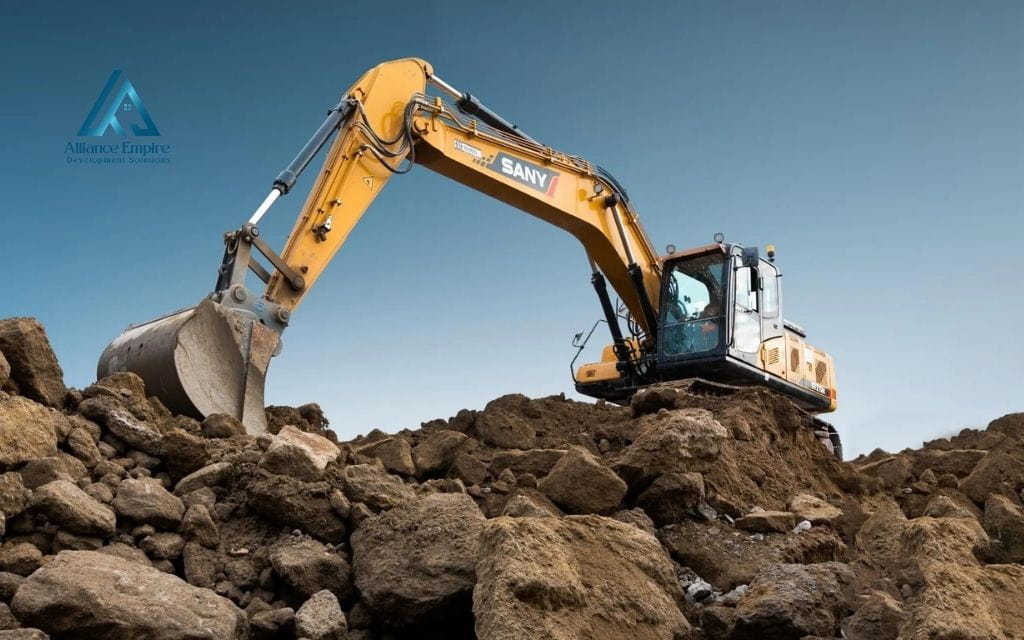
Excavator
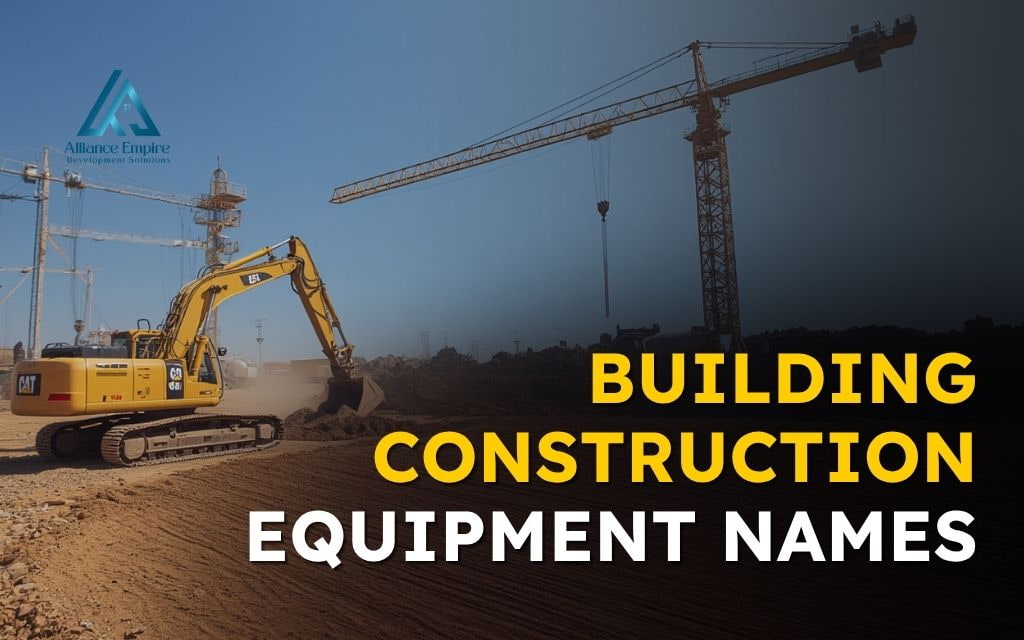
An excavator is one of the most recognizable machines on a construction site. It features a rotating cab mounted on tracks or wheels, connected to a boom, stick, and bucket. The cab can rotate a full 360 degrees, which lets the operator dig, lift, and dump material in any direction without repositioning the whole machine. Excavators are used for digging foundations, trenching, demolition, and material handling, and they range from compact mini excavators to large machines used on industrial sites.
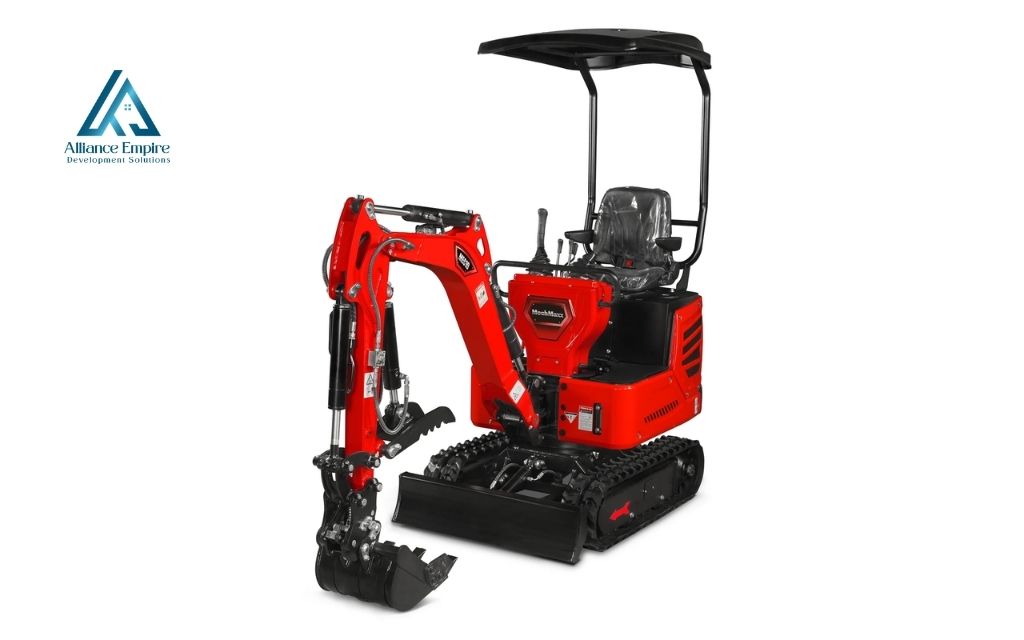
Mini excavator
A mini excavator is a smaller, lighter version of a standard excavator, typically weighing under 10 tons. It still offers 360-degree cab rotation but in a more compact footprint, which makes it useful for tight residential lots, backyard projects, and indoor demolition where a full-size excavator would not fit. Mini excavators are popular for utility trenching, landscaping, and small foundation work.
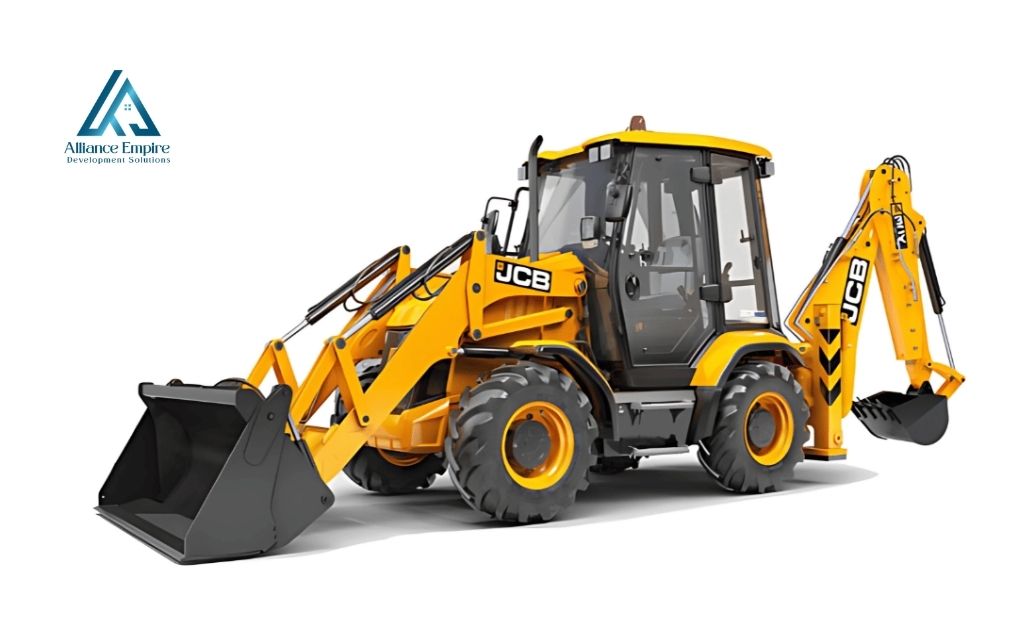
Backhoe loader
A backhoe loader, often shortened to backhoe, combines a front loader bucket with a rear digging arm on a single wheeled chassis. Unlike an excavator, the digging arm typically swings through a more limited range rather than a full circle, and the cab usually does not rotate independently of the machine. Because it rides on wheels, a backhoe loader can travel on roads between job sites more easily than a tracked excavator. It is commonly used for trenching, loading materials, and light to medium excavation work.
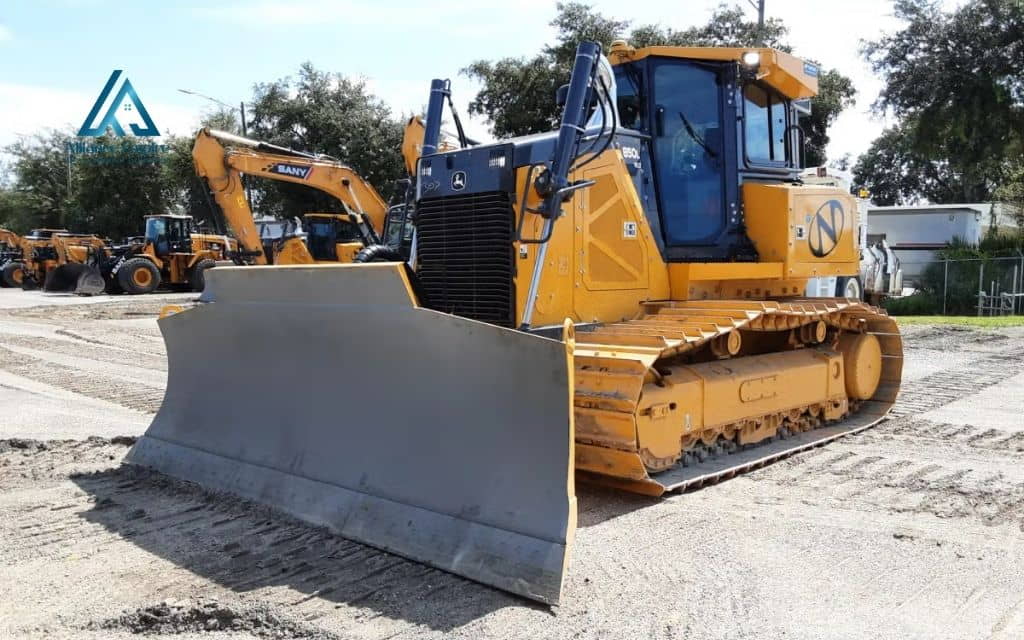
Bulldozer
A bulldozer is a tracked machine with a wide, flat blade mounted on the front. The blade pushes soil, debris, or other loose material to clear, grade, or level a site. Bulldozers are common in early-stage site preparation, road construction, and land clearing, and they come in a range of sizes depending on the scope of the job.
Skid steer loader
A skid steer loader is a small, highly maneuverable machine that rides on four wheels and turns by skidding, meaning the wheels on one side move independently from the other side. This gives it a tight turning radius that works well in confined spaces. Skid steers accept a wide variety of attachments, including buckets, forks, augers, and sweepers, making them useful for material handling, grading, and site cleanup on firmer ground.
Compact track loader
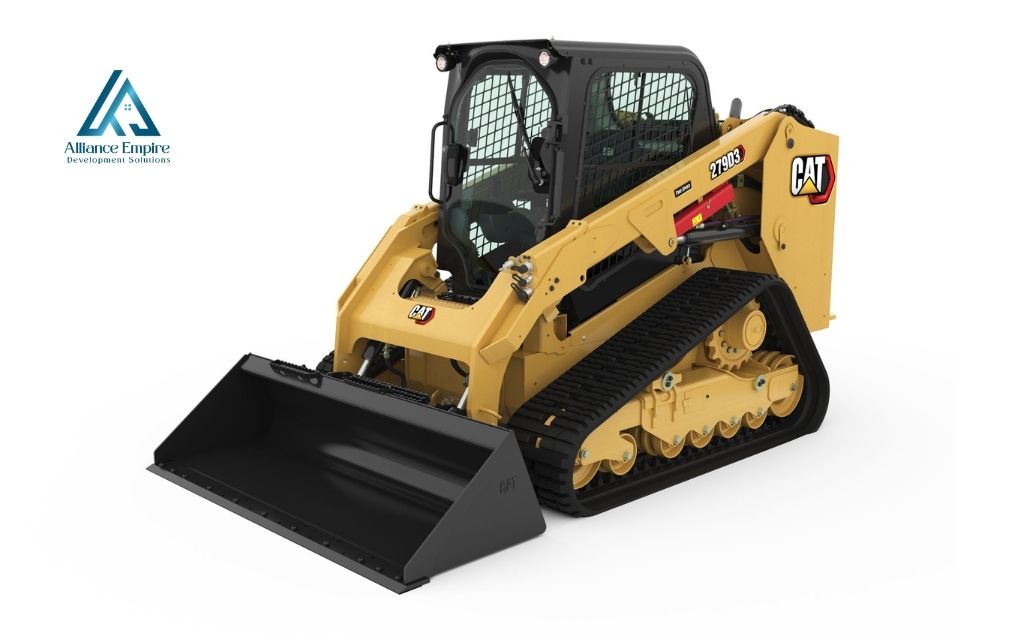
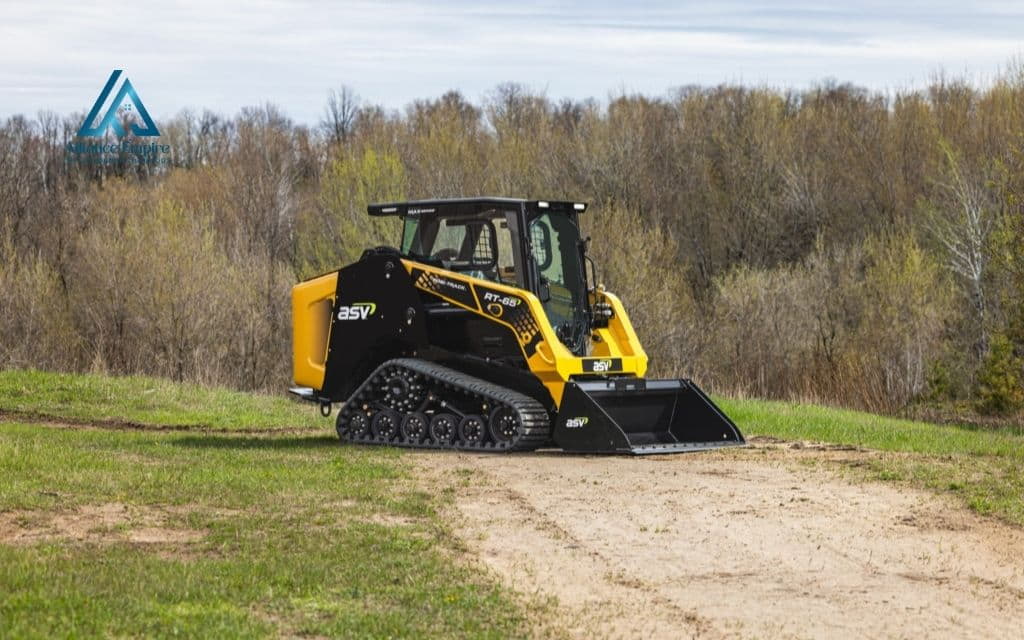
A compact track loader looks similar to a skid steer but rides on rubber tracks instead of wheels. The tracks spread the machine’s weight over a larger surface area, which lowers ground pressure and improves traction on soft, muddy, or uneven terrain where a wheeled skid steer might get stuck or tear up the surface. Compact track loaders are often chosen over skid steers specifically because of this terrain advantage, even though they typically cost more to maintain.
Motor grader
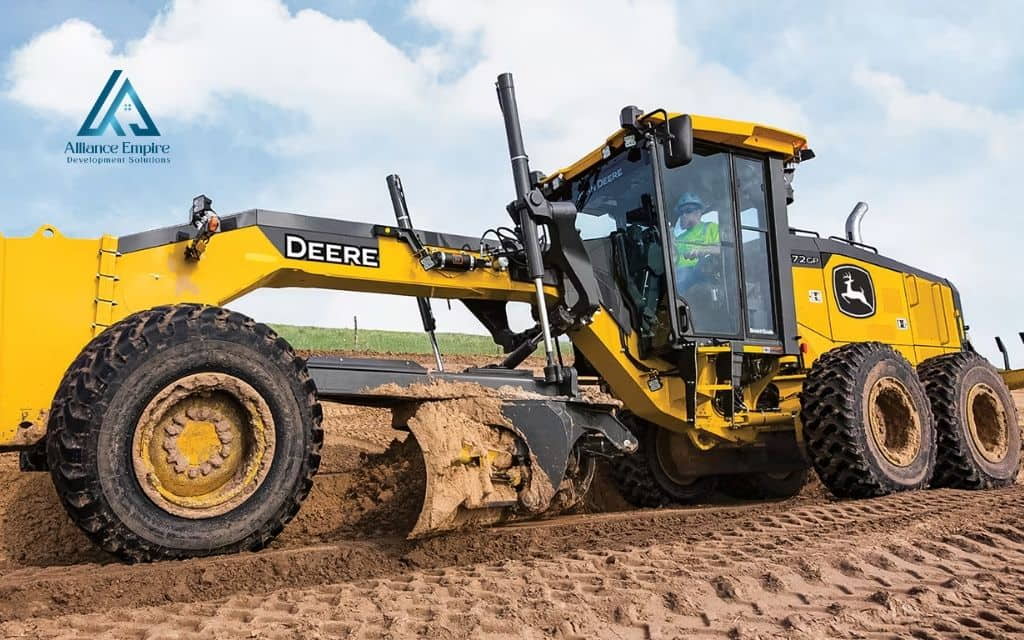
A motor grader is a long, wheeled machine with an adjustable blade mounted between the front and rear axles. The blade can angle, tilt, or rotate to fine-grade soil or gravel into a flat, even surface. Motor graders are essential in road construction and site work where a precise, level grade is required before paving or foundation work begins.
Wheel loader
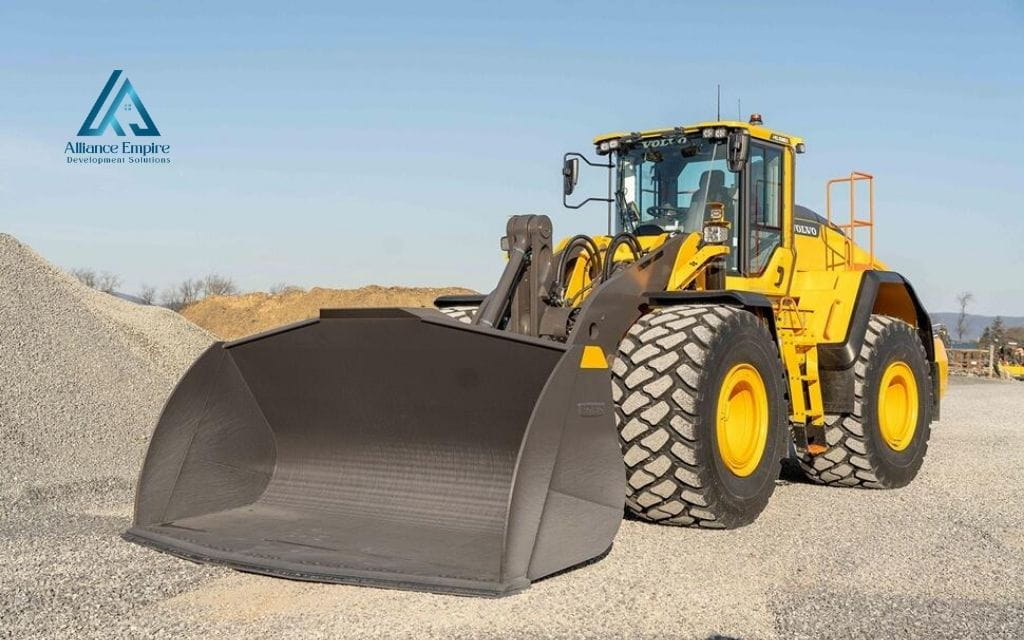
A wheel loader is a large, wheeled machine with a front-mounted bucket used to scoop, carry, and dump materials such as soil, gravel, or debris. It is one of the most versatile pieces of earthmoving equipment on a site, and many models accept attachments like forks, augers, or snow blades to expand their use.
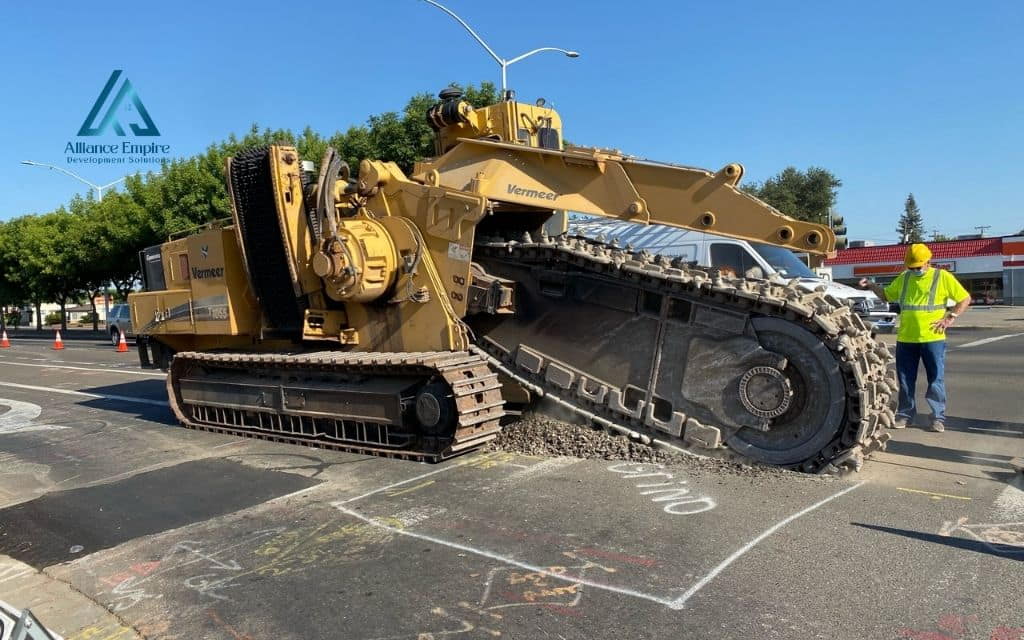
Trencher
A trencher is built specifically for digging narrow, long trenches, often for utility lines, irrigation, or drainage pipe. Depending on the model, it may use a chain-driven cutting wheel or a rotating wheel with teeth to cut through soil at a consistent width and depth.
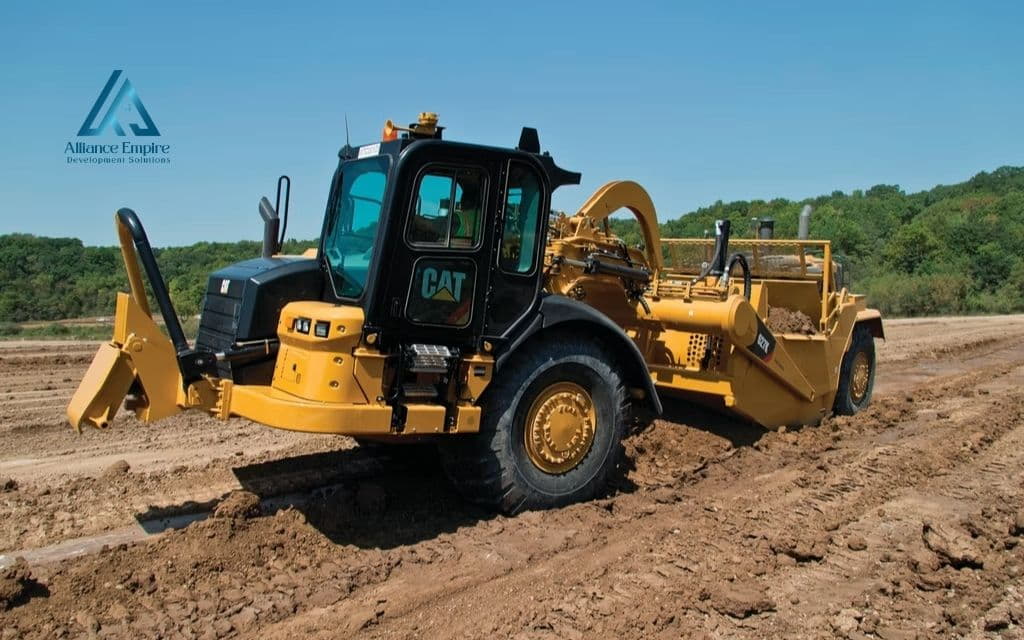
Wheel tractor-scraper
A wheel tractor-scraper is a large earthmoving machine made up of a tractor unit and a rear-mounted scraper bowl. As it moves across the ground, the scraper’s cutting edge loosens soil and collects it inside the bowl, which can then be transported and dumped elsewhere. This makes it effective for large-scale grading and earthmoving where material needs to be moved over a distance rather than just pushed aside.
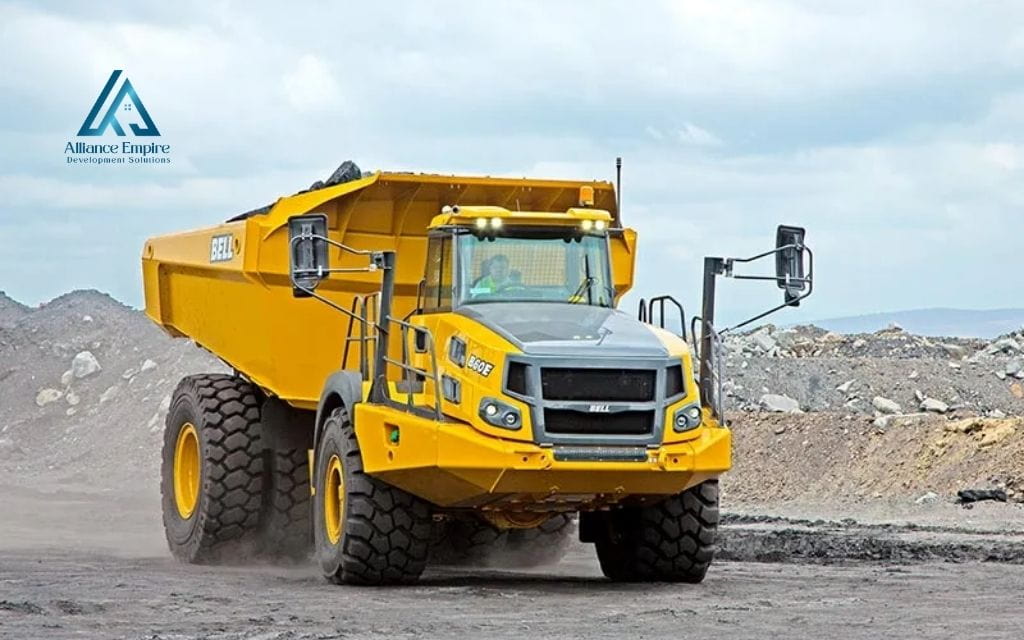
Dump truck
A dump truck carries a large open bed mounted on a truck chassis. Hydraulic rams tilt the front of the bed upward so material slides out the back. Dump trucks haul soil, gravel, demolition debris, and other bulk materials to and from a jobsite, and some models are built for road use while others are designed for rugged, off-road conditions.
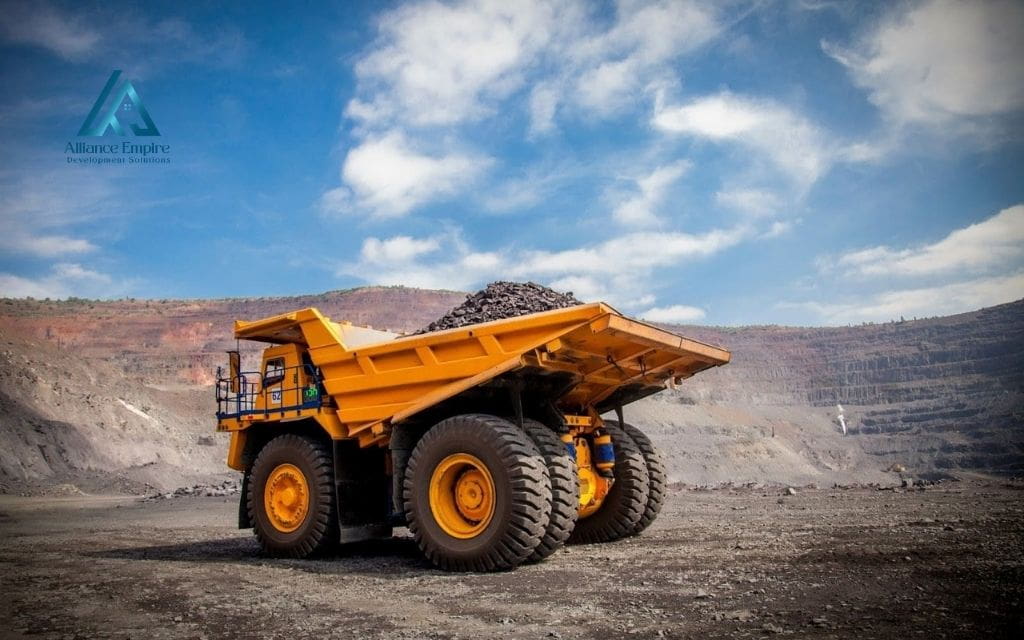
Off-highway truck
An off-highway truck is a heavy-duty hauling vehicle built for rugged terrain rather than public roads. It typically has a rigid frame, oversized tires, and a high-capacity dump body, and it is used on large sites, quarries, and projects where massive volumes of material need to move efficiently across uneven ground.
Boom lift
A boom lift is an aerial work platform with an extendable arm, or boom, that raises a small platform so workers can reach elevated areas safely. The boom can be telescopic, extending in a straight line, or articulating, with joints that allow it to bend around obstacles. Boom lifts are commonly used for exterior work on buildings, electrical and HVAC installation, and any task that requires reaching heights with some horizontal reach as well.
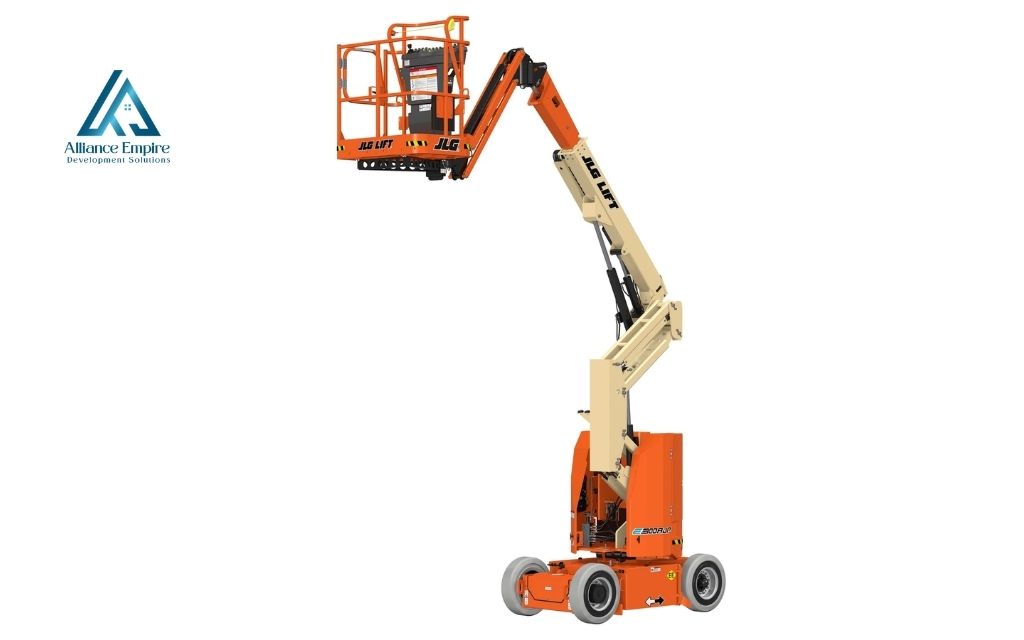
Scissor lift
A scissor lift raises a platform straight up using a crisscrossing metal support structure that expands as the platform rises. Unlike a boom lift, a scissor lift only moves vertically and cannot extend outward, which makes it well-suited for tasks directly above the machine’s base, such as ceiling work, interior finishing, or warehouse storage access.
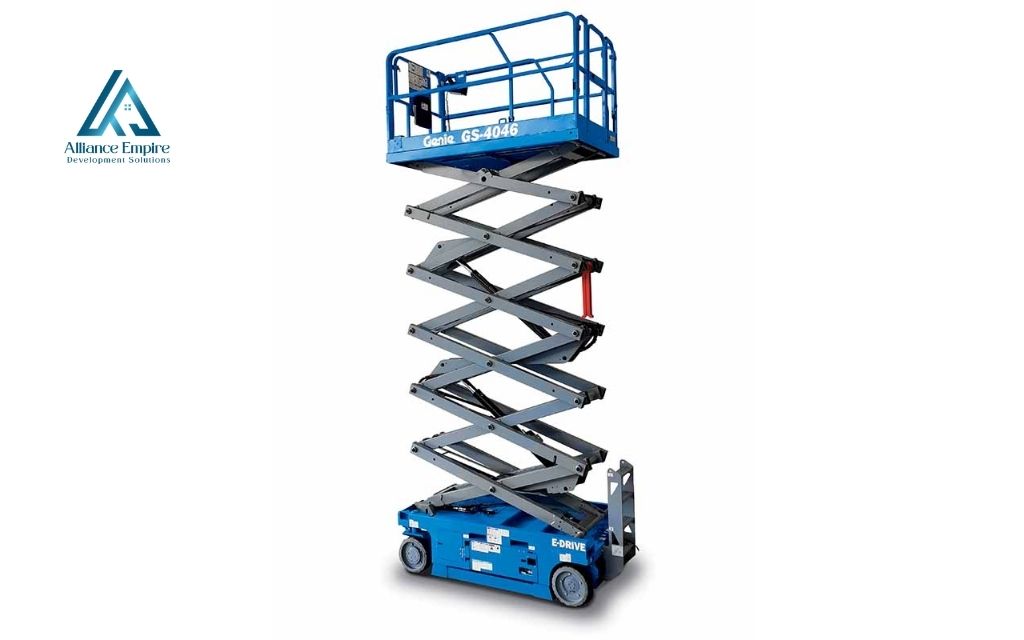
Tower crane
A tower crane is a tall, fixed crane typically anchored to a concrete base, used on mid-rise and high-rise construction projects. It features a horizontal arm with a counterweight on one end and a hook on the other, allowing it to lift heavy materials to upper floors as a building rises. Tower cranes require certified operators and careful site planning due to their height and lifting capacity.

Mobile crane
A mobile crane is mounted on wheels or tracks so it can be driven or transported between locations rather than staying fixed in one spot. It uses a hydraulic boom to lift and move heavy loads, and many models can rotate to reposition loads without moving the entire machine. Mobile cranes are common on sites where lifting needs change throughout the project or where a permanent tower crane is not practical.
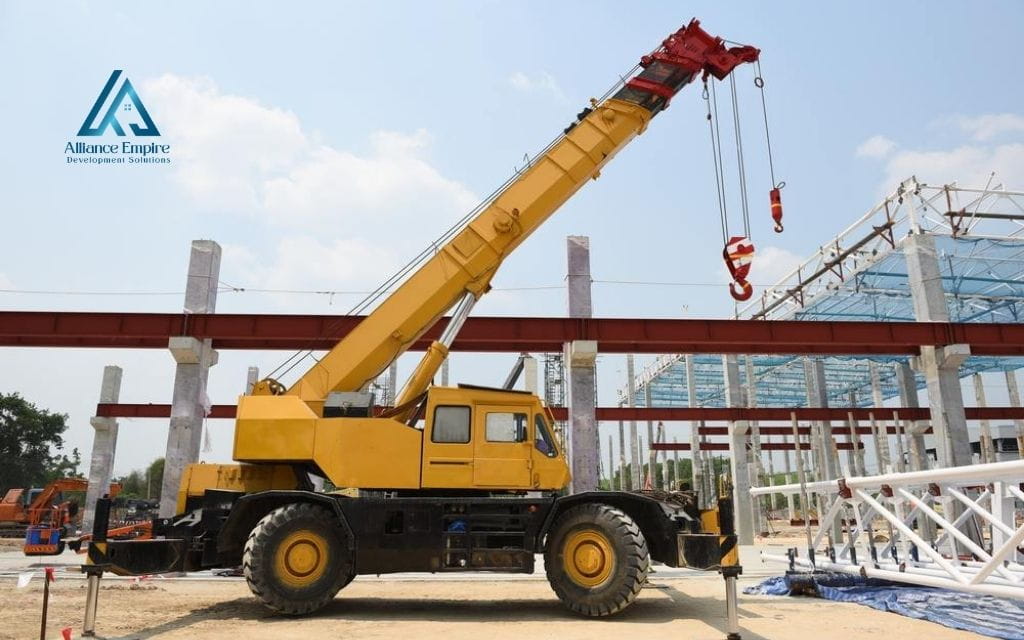
Carry deck crane
A carry deck crane is a small, mobile crane with a flat deck that wraps around the base of a centrally mounted, rotating boom. Its compact size and four-wheel steering make it useful for lifting in tight indoor or congested spaces where a larger crane would not fit.
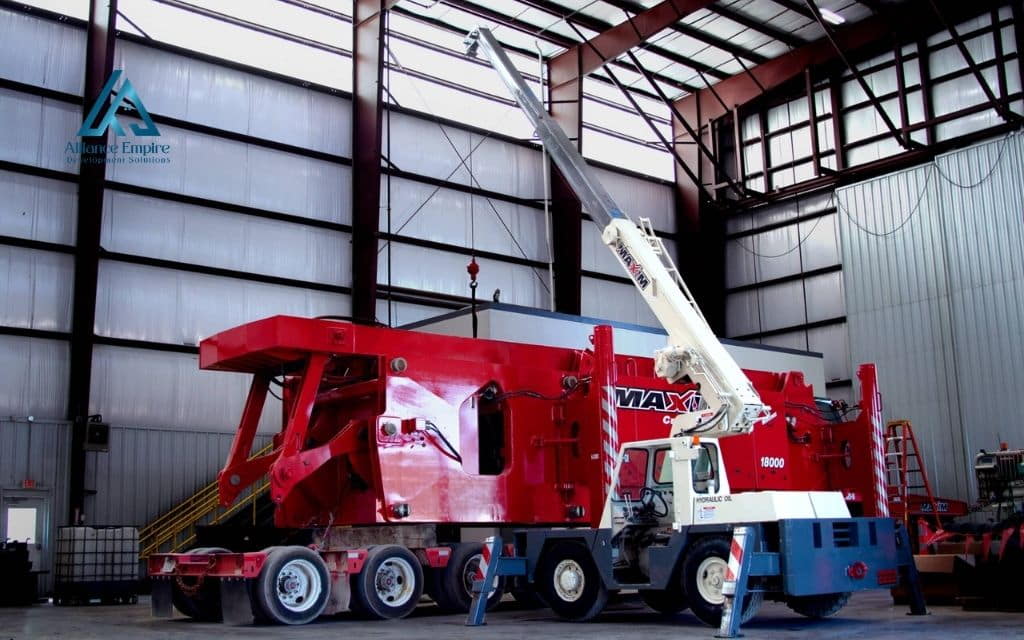
Forklift
A forklift is a powered industrial truck with two forward-mounted fork tines and a vertical mast used to lift and move palletized materials. A rear-mounted counterweight balances the load carried at the front. Forklifts are common wherever materials need to be moved short distances and stacked, including warehouses, lumber yards, and construction sites with palletized deliveries.
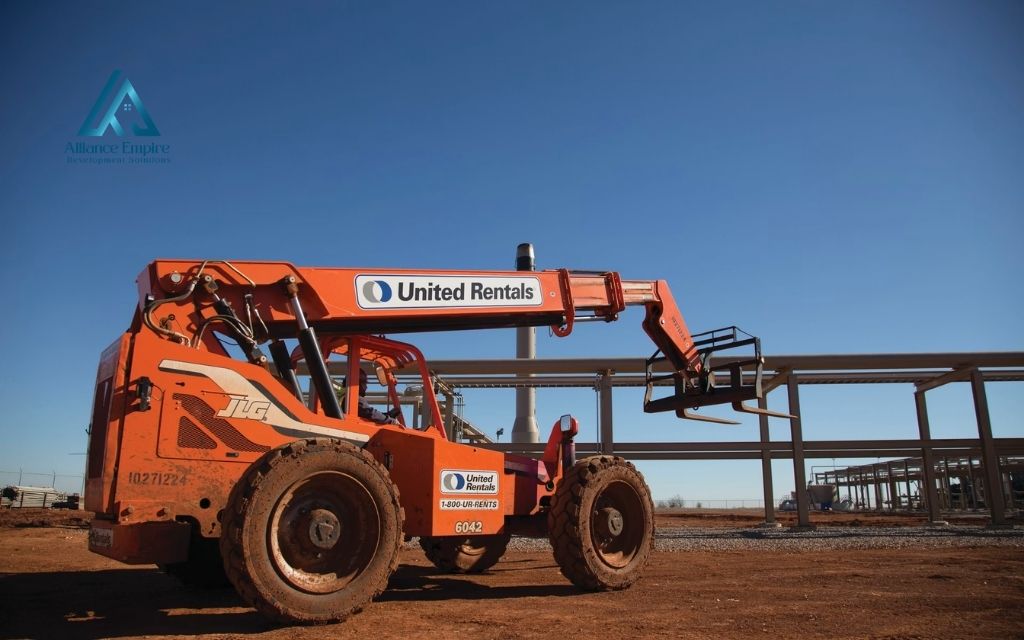
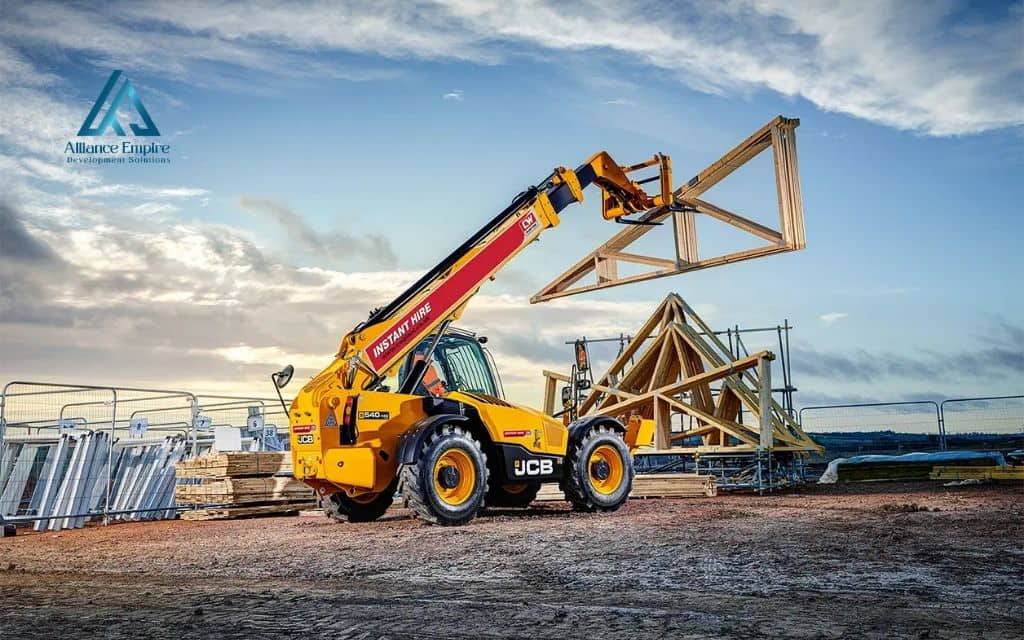
Telehandler
A telehandler, short for telescopic handler, combines features of a forklift and a crane. It has a telescoping boom that extends both outward and upward, with forks or other attachments at the end, mounted on a chassis with large, off-road-capable tires. Compared to a standard forklift, a telehandler can lift materials higher and further, making it useful for moving materials to upper floors or over obstacles on uneven ground.
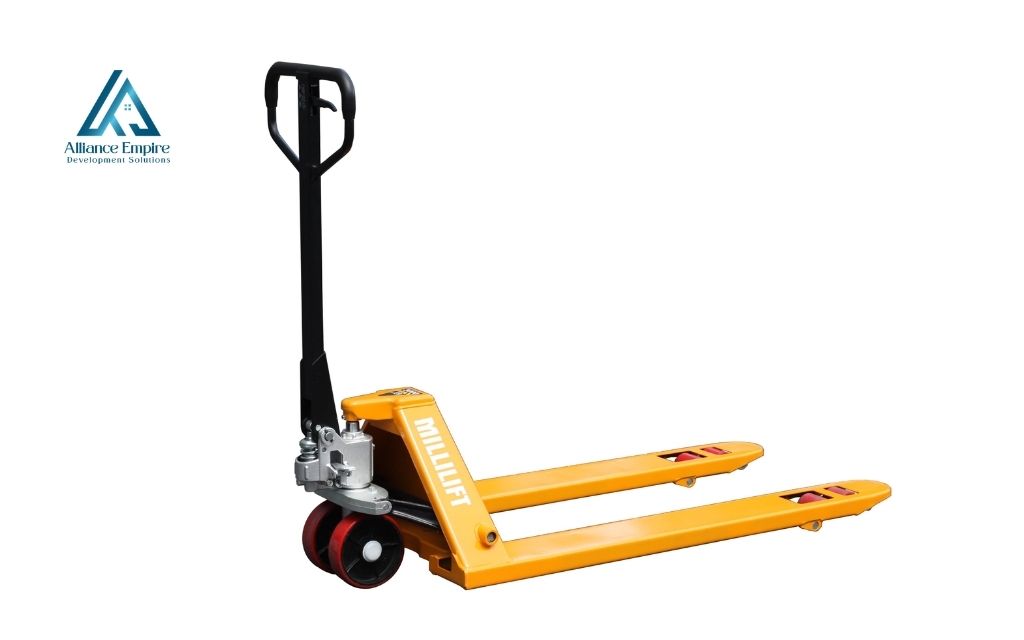
Pallet jack
A pallet jack is a simple, manually operated or electric-powered tool used to lift and move palletized loads short distances across a flat surface. It slides under a pallet and uses a hydraulic or electric lift mechanism to raise the load just enough to roll it to a new location.
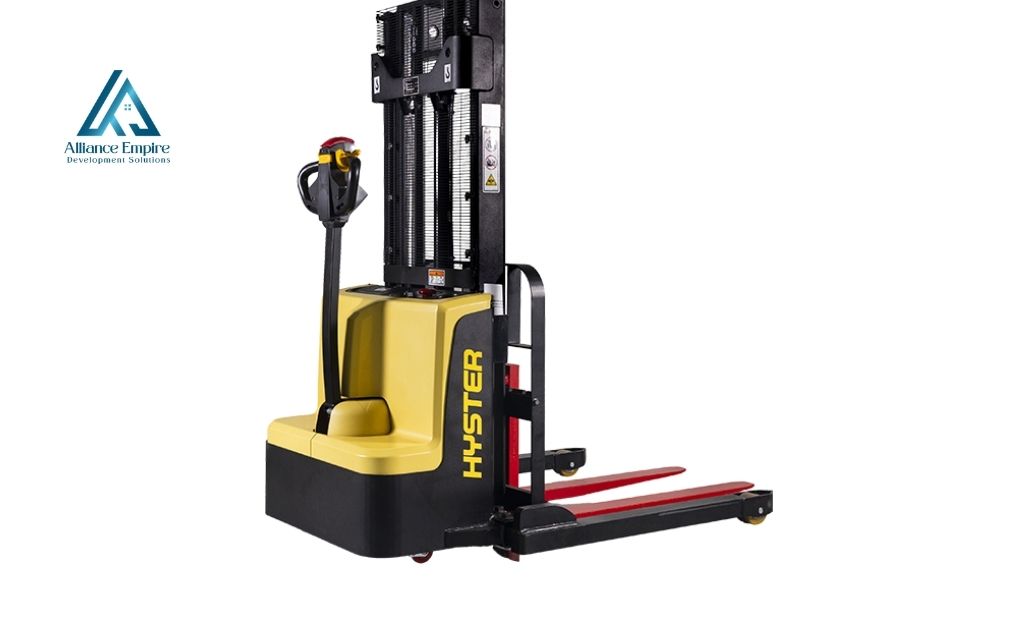
Walkie stacker
A walkie stacker is a compact, walk-behind material handling machine with an upright mast and fork-style lifting arms. Unlike a forklift, the operator walks behind the machine rather than sitting in a cab, which makes it useful in narrow aisles or smaller indoor spaces where a seated forklift would not fit.
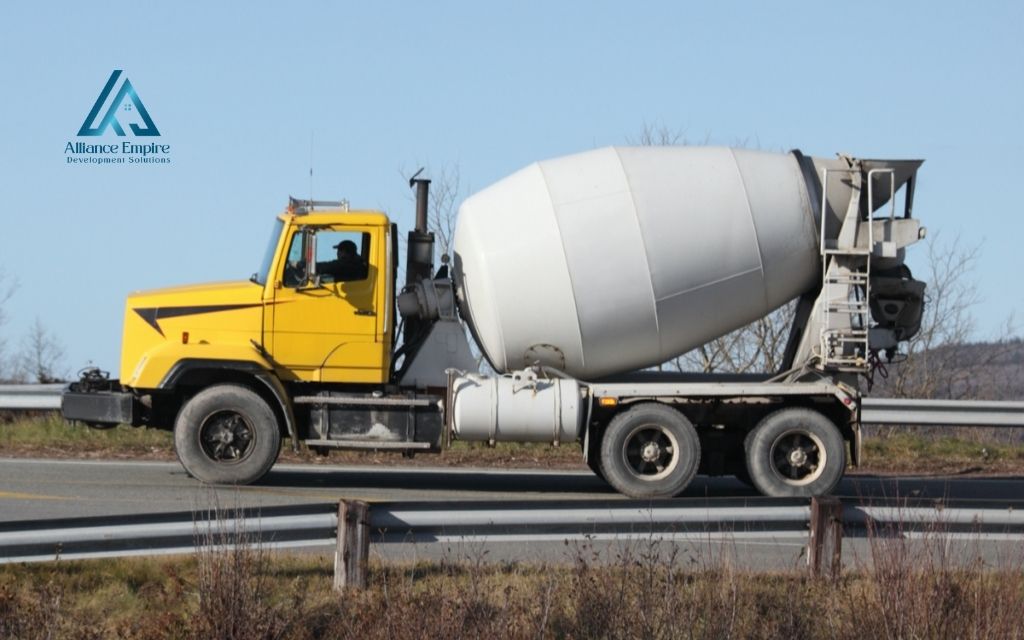
Concrete mixer truck
A concrete mixer truck has a large rotating drum mounted behind the cab that continuously mixes concrete during transport from the batching plant to the jobsite. The drum’s interior spiral blades keep the concrete workable until it is poured, and hydraulic controls allow the operator to control the discharge rate.
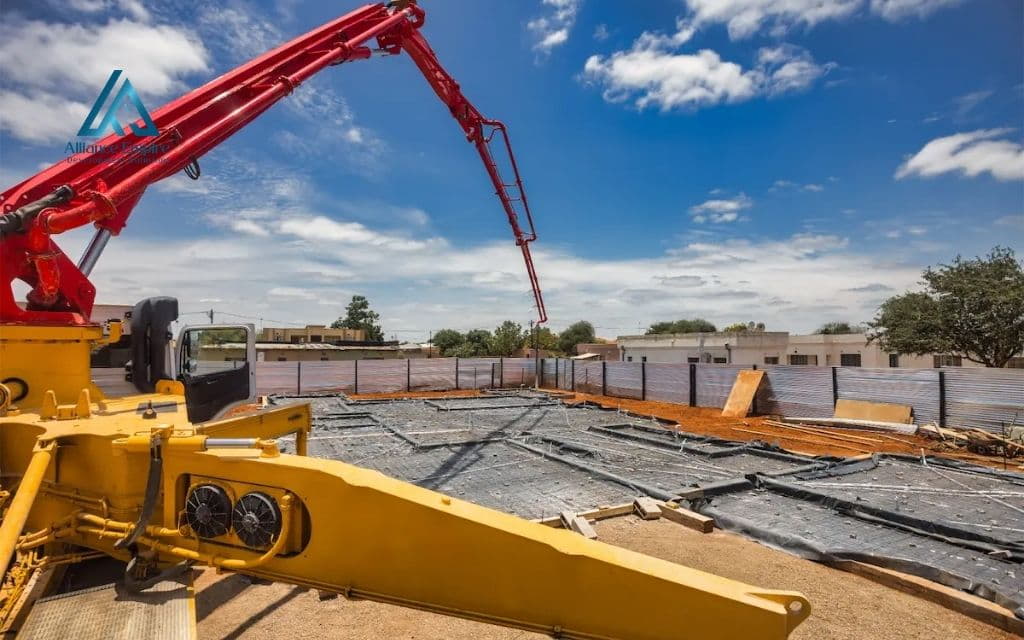
Concrete pump
A concrete pump moves wet concrete from a mixer truck or hopper through a delivery pipeline or boom to the exact location where it needs to be poured. This is especially useful for pours that are hard to reach directly, such as upper floors of a building or areas blocked by other site obstacles.
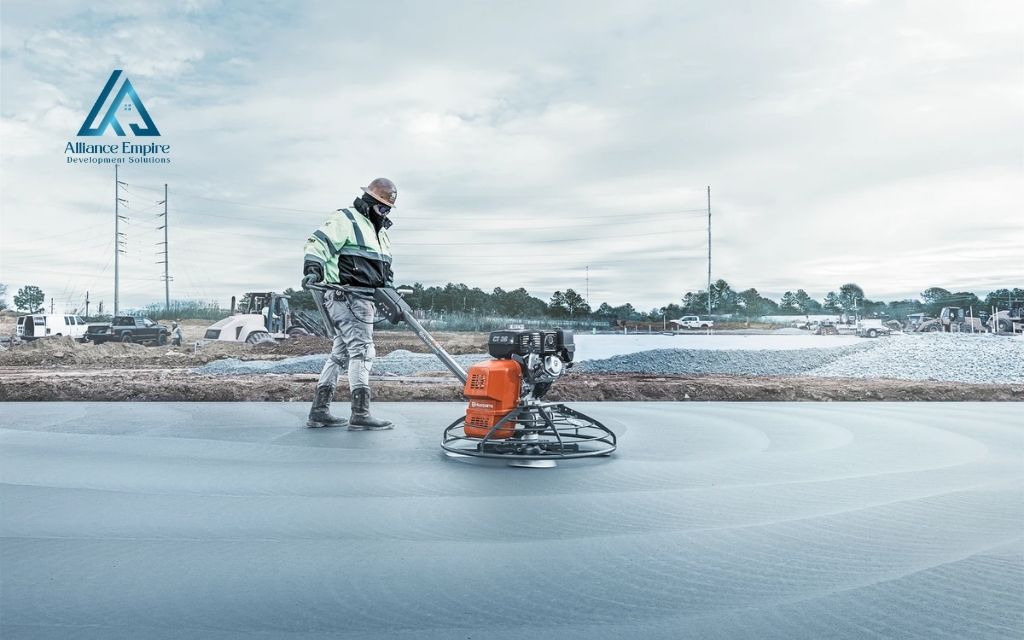
Power trowel
A power trowel is a machine with rotating blades used to smooth and finish freshly poured concrete slabs. Walk-behind models cover smaller areas, while ride-on versions cover larger surfaces more quickly, producing a flat, even finish before the concrete fully cures.
Concrete buggy
A concrete buggy is a small, motorized cart used to transport wet concrete short distances across a jobsite, especially in areas a mixer truck cannot reach directly. It allows crews to deliver concrete to the pour location in smaller, manageable loads.
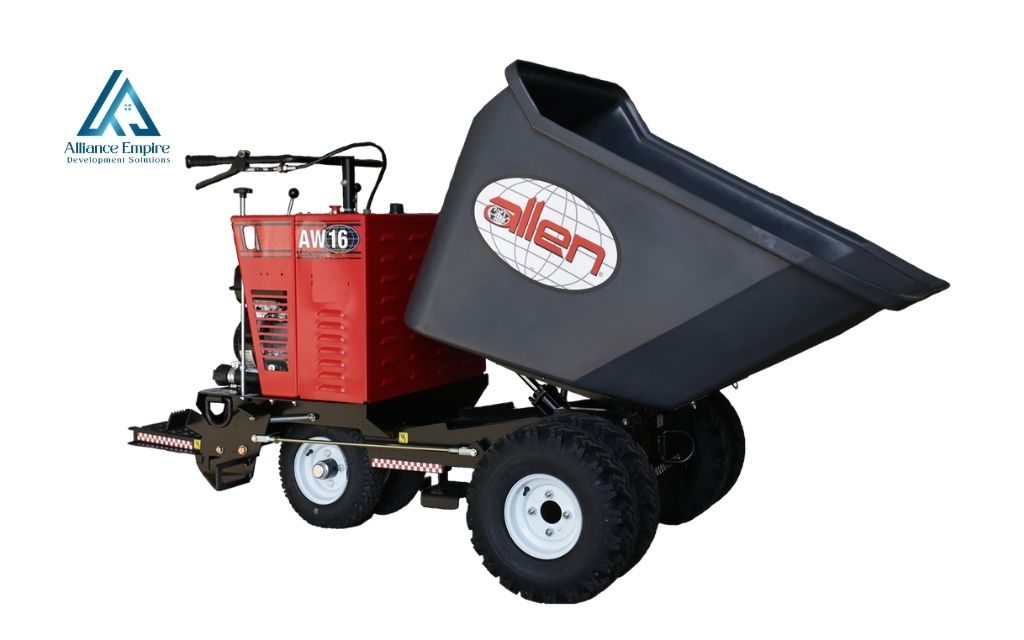
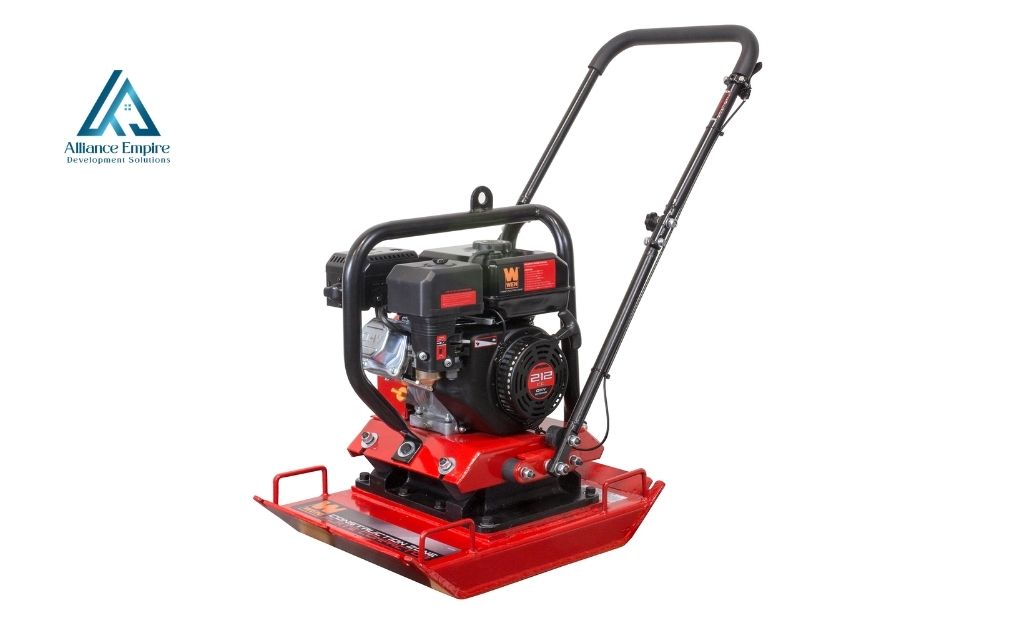
Plate compactor
A plate compactor is a machine with a vibrating base plate that compresses soil, gravel, or asphalt into a dense, stable surface. Smaller walk-behind models suit driveways, sidewalks, and small-scale projects, while larger models handle bigger compaction jobs.
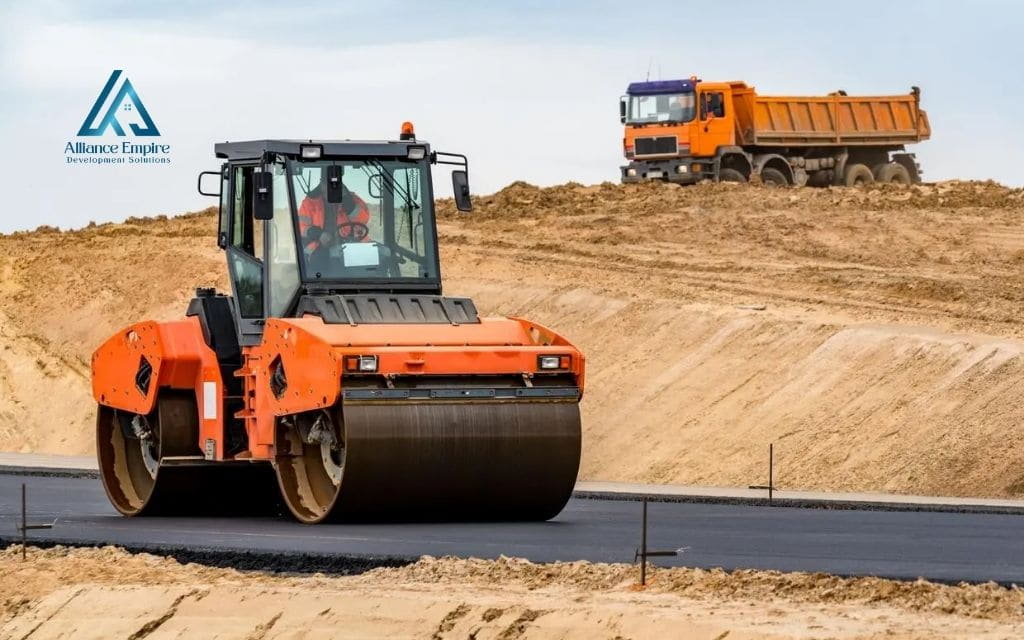
Drum roller
A drum roller, also called a road roller, uses one or more large cylindrical drums to compact soil, gravel, or asphalt as it moves across a surface. Some models use smooth drums for a finished surface, while others use textured or vibrating drums for deeper compaction.
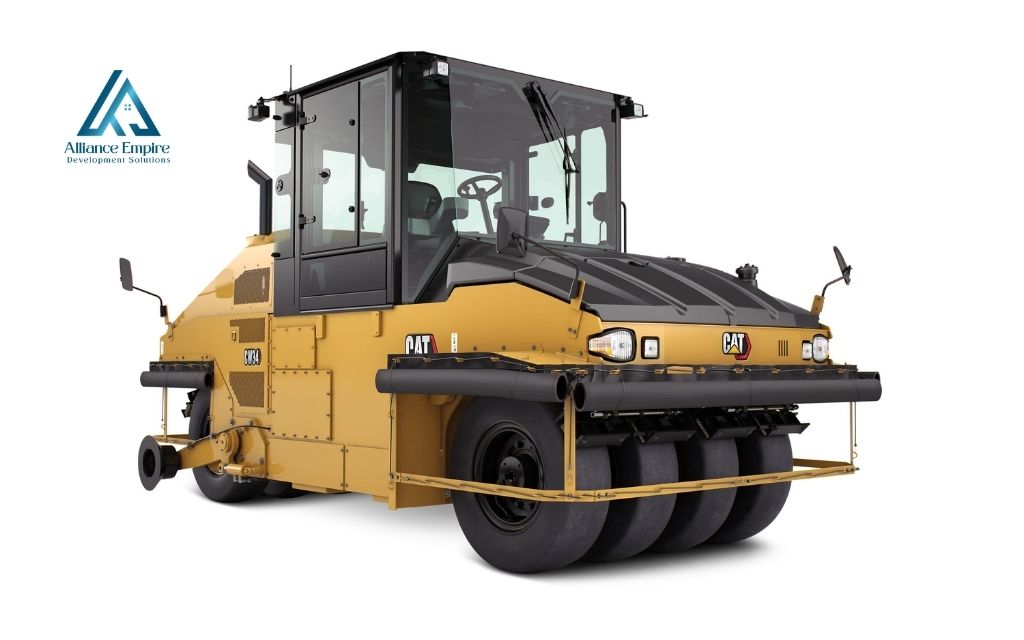
Pneumatic roller
A pneumatic roller compacts surfaces using multiple rubber tires instead of a steel drum. The flexible tires conform slightly to the surface as they roll, which helps seal and smooth asphalt during paving projects, often used as a finishing step after a drum roller has done the initial compaction.
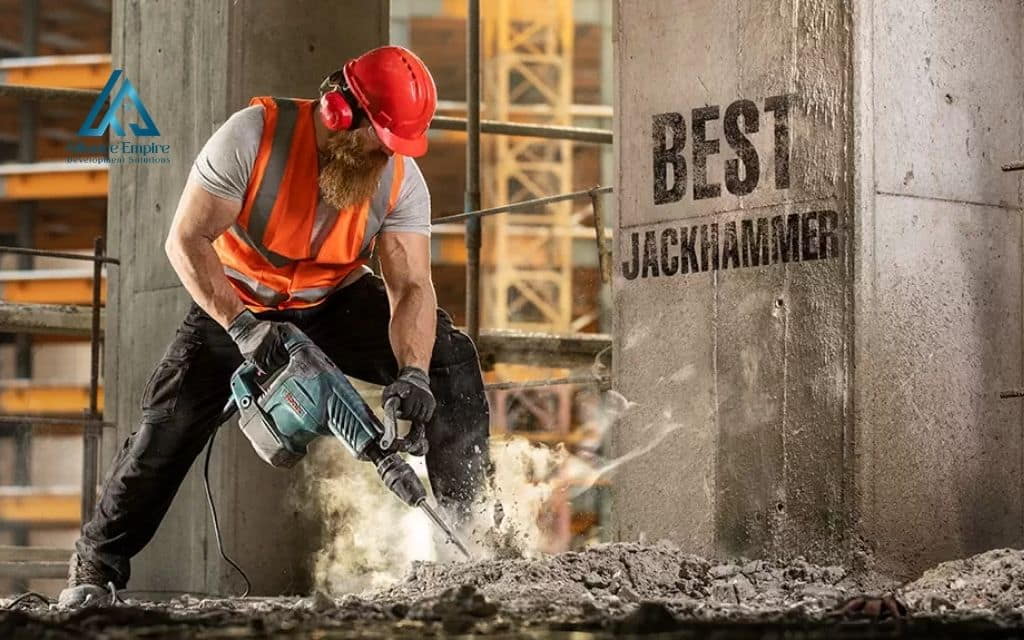
Jackhammer
A jackhammer is a handheld or machine-mounted tool that uses repeated, forceful impacts to break up concrete, asphalt, or rock. Handheld pneumatic or electric jackhammers are common for smaller demolition tasks, sidewalk removal, and breaking up pavement in tight spaces.
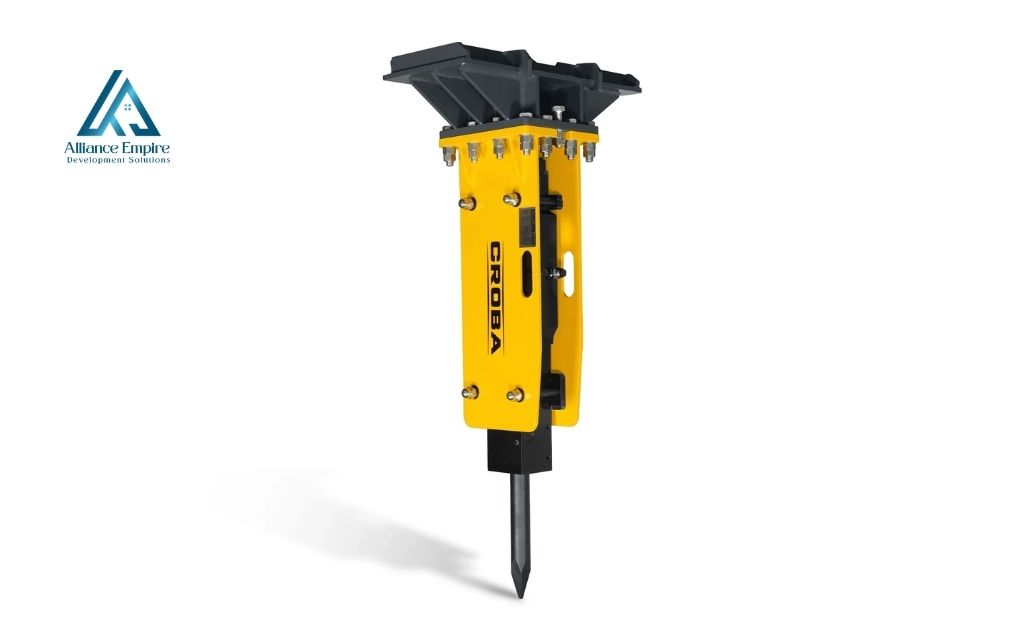
Hydraulic breaker attachment
A hydraulic breaker is an attachment mounted to an excavator or skid steer in place of a bucket, using hydraulic power to deliver repeated, high-force impacts. It performs the same basic function as a jackhammer but on a larger scale, making it suitable for breaking up thick concrete, foundations, or rock during demolition.
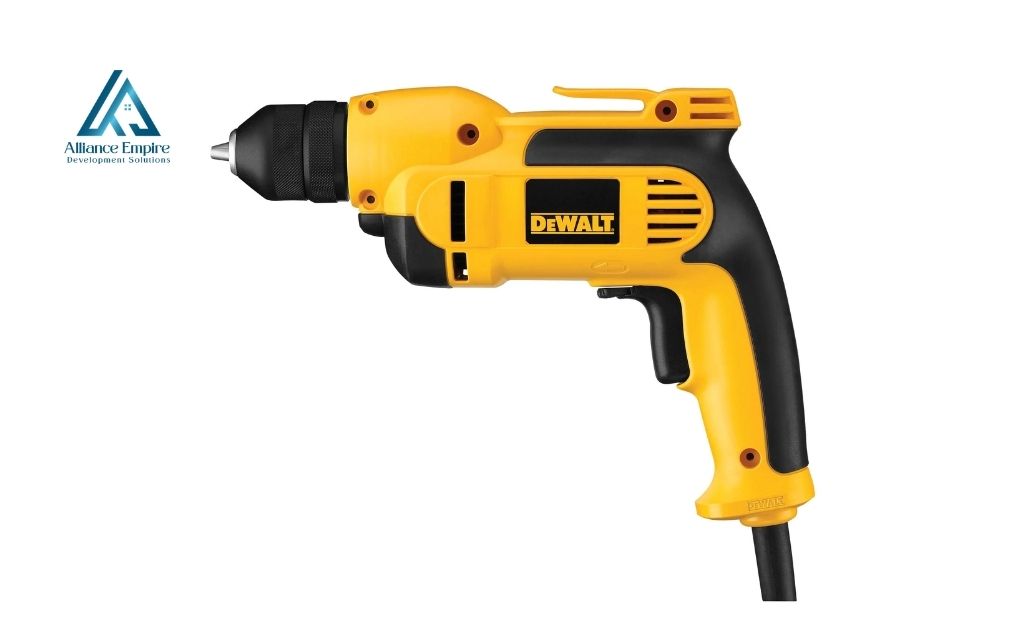
Electric drill
An electric drill is a handheld power tool used to bore holes and drive screws or other fasteners. It is one of the most frequently used tools on a construction site, common in framing, installation, and general assembly tasks.
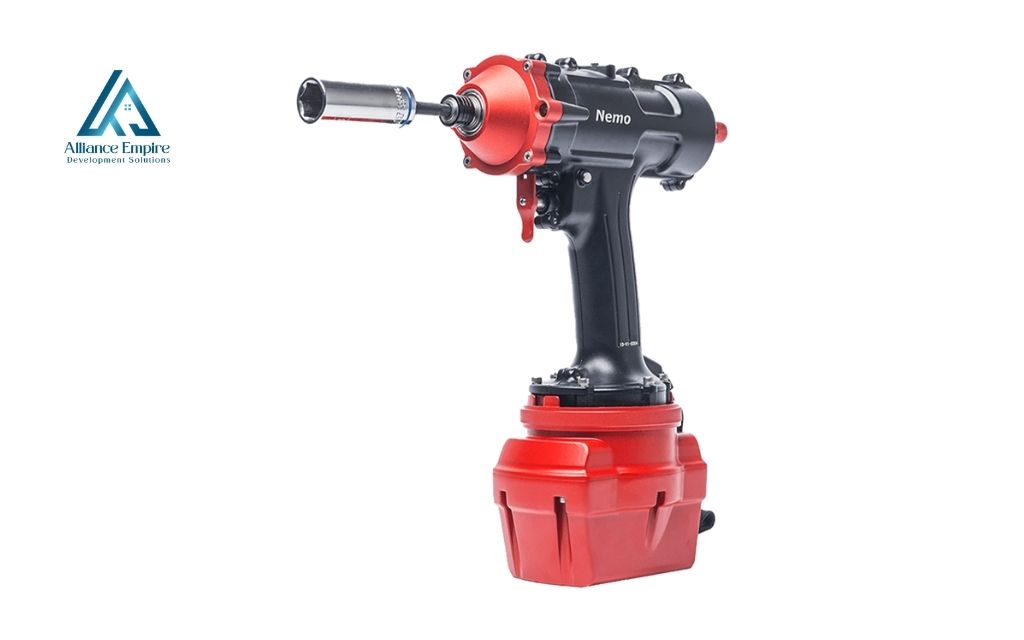
Impact driver
An impact driver looks similar to a drill but delivers rotational force in short, high-torque bursts, which makes it more effective for driving long screws or bolts into dense materials without stripping the fastener head.
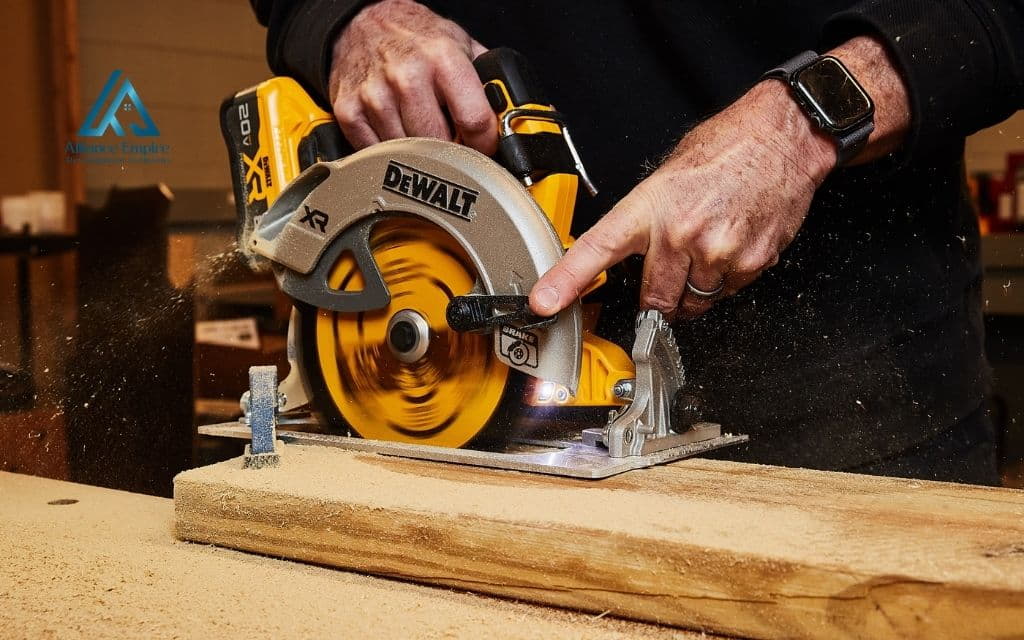
Circular saw
A circular saw uses a rotating, toothed blade to make straight cuts through wood, plywood, and certain other materials depending on the blade selected. It is a standard tool for framing, sheathing, and general cutting tasks on a jobsite.
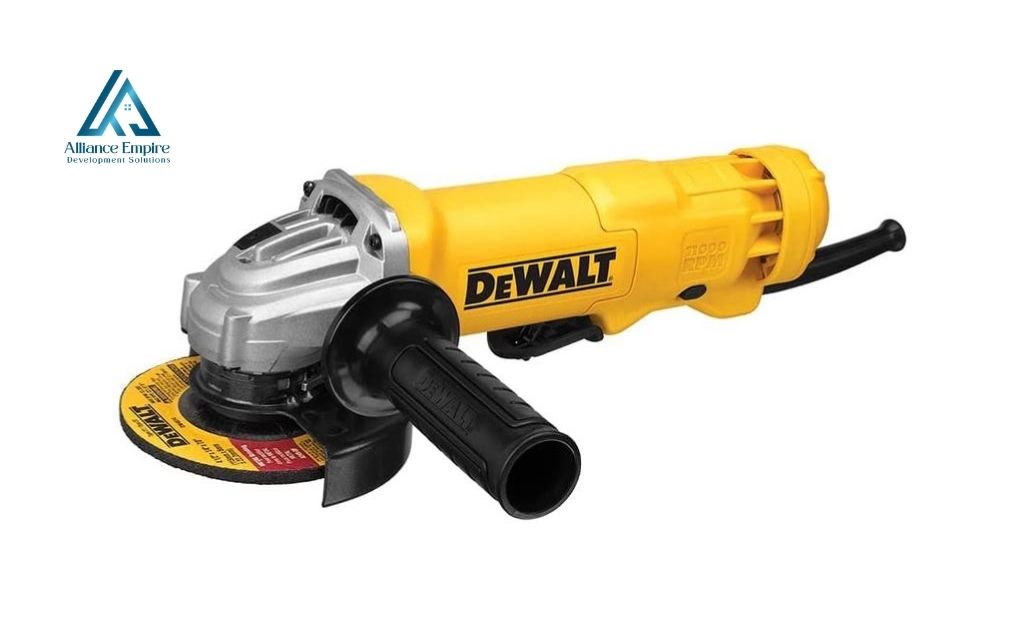
Angle grinder
An angle grinder is a handheld power tool with a rotating abrasive disc used for cutting, grinding, or polishing materials like metal, tile, and masonry. Different discs allow the same tool to perform different tasks depending on the material being worked.
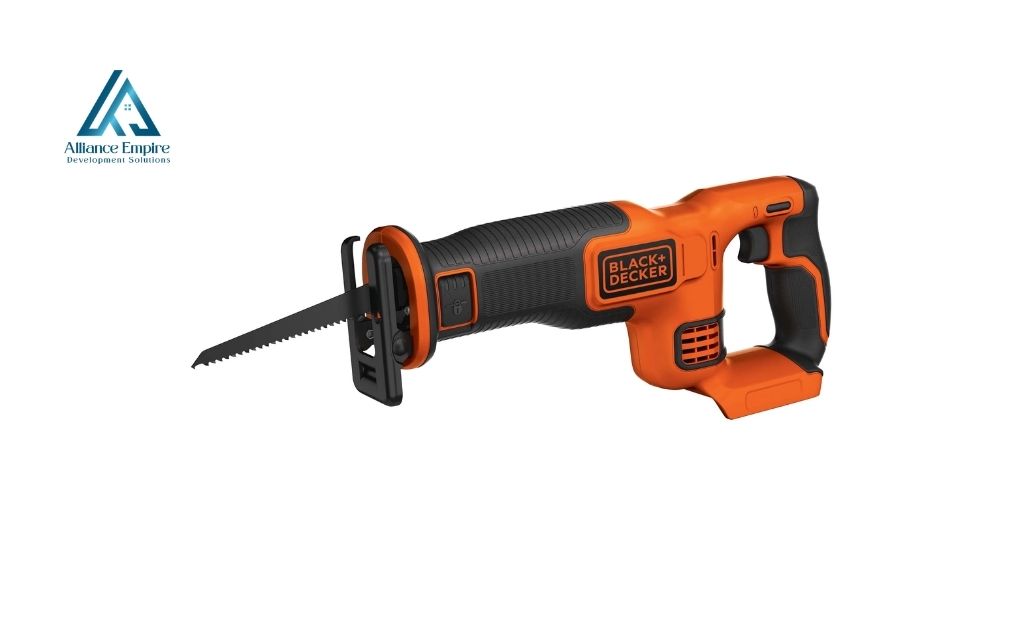
Reciprocating saw
A reciprocating saw uses a back-and-forth blade motion to cut through a variety of materials, including wood, metal, and drywall. It is especially useful in demolition and remodeling work where cuts need to be made in tight or awkward spaces.
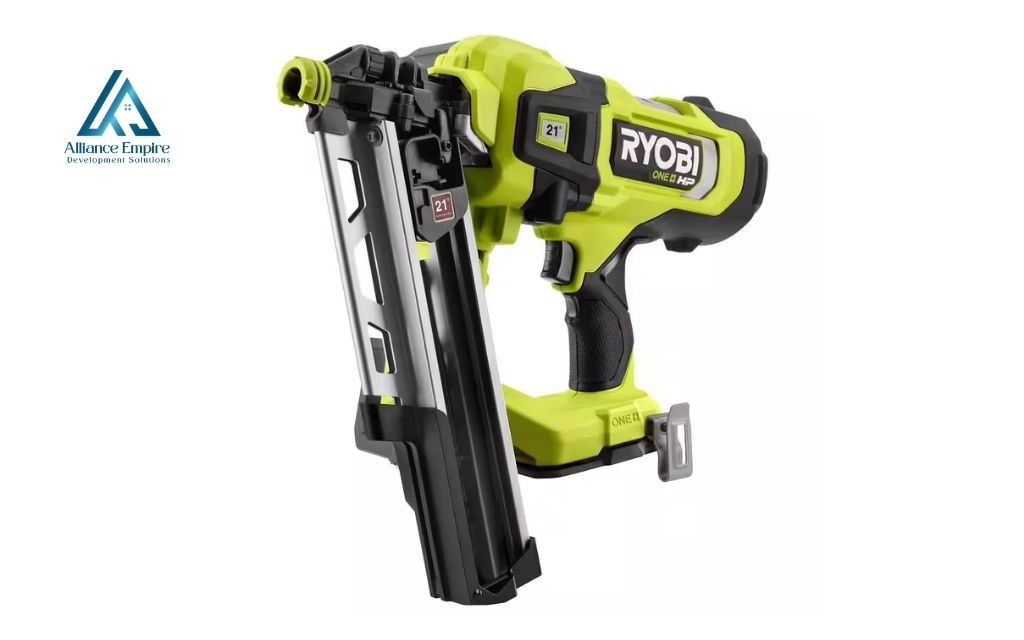
Nail gun
A nail gun, or pneumatic nailer, drives nails into material quickly and consistently using compressed air, a battery, or a combustion mechanism, depending on the model. It speeds up framing, roofing, and trim work compared to driving nails by hand.
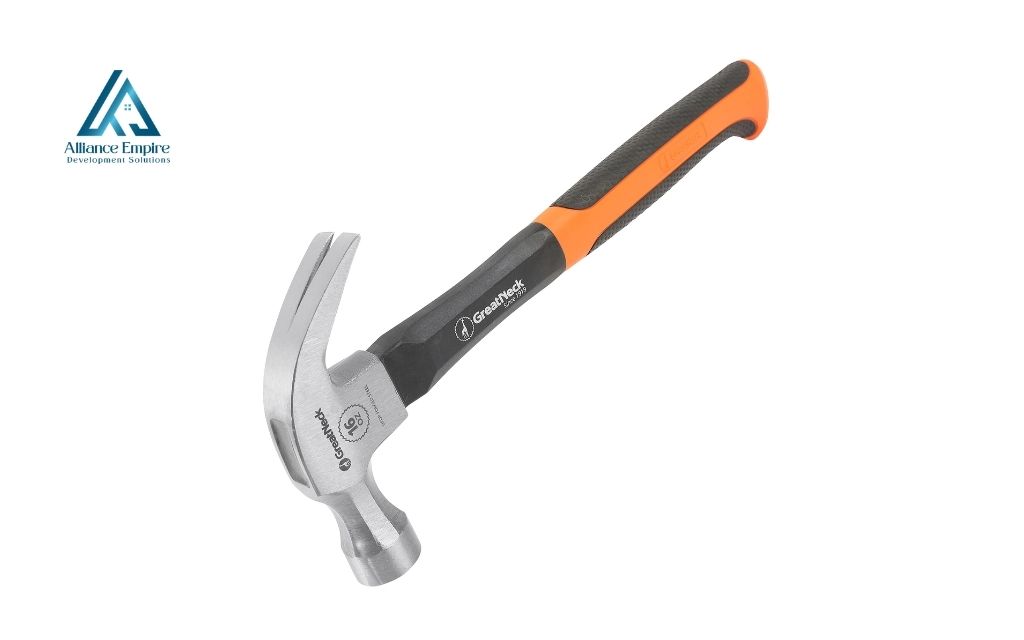
Claw hammer
A claw hammer is a basic hand tool with a flat striking face on one side and a curved, forked claw on the other, used for driving and removing nails. It remains one of the most fundamental tools in carpentry and general construction work.
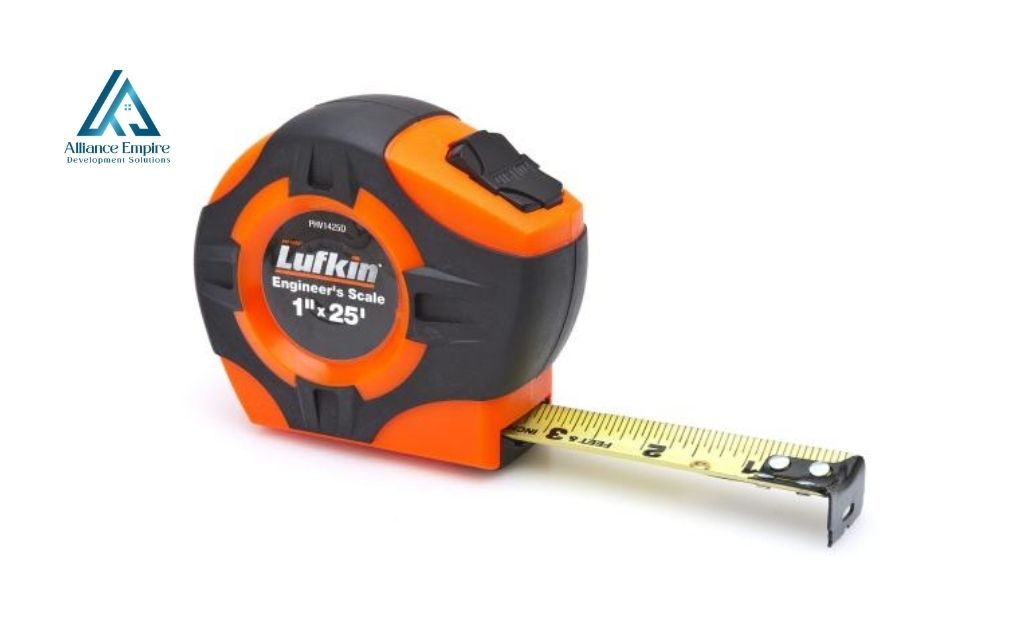
Tape measure
A tape measure is a flexible ruler wound into a compact case, used to measure distances during layout, cutting, and installation tasks. Accurate measurements are essential throughout nearly every phase of a construction project.
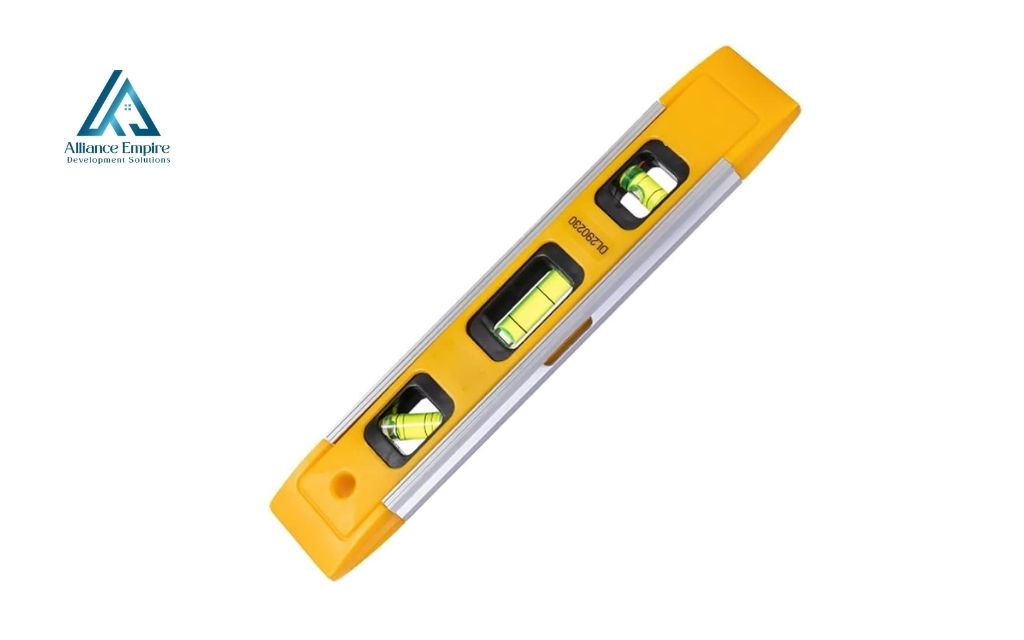
Spirit level
A spirit level, or bubble level, is a tool used to confirm whether a surface is perfectly horizontal or vertical. A small bubble inside a liquid-filled vial shows the surface’s alignment, helping installers and builders keep structures level and plumb.
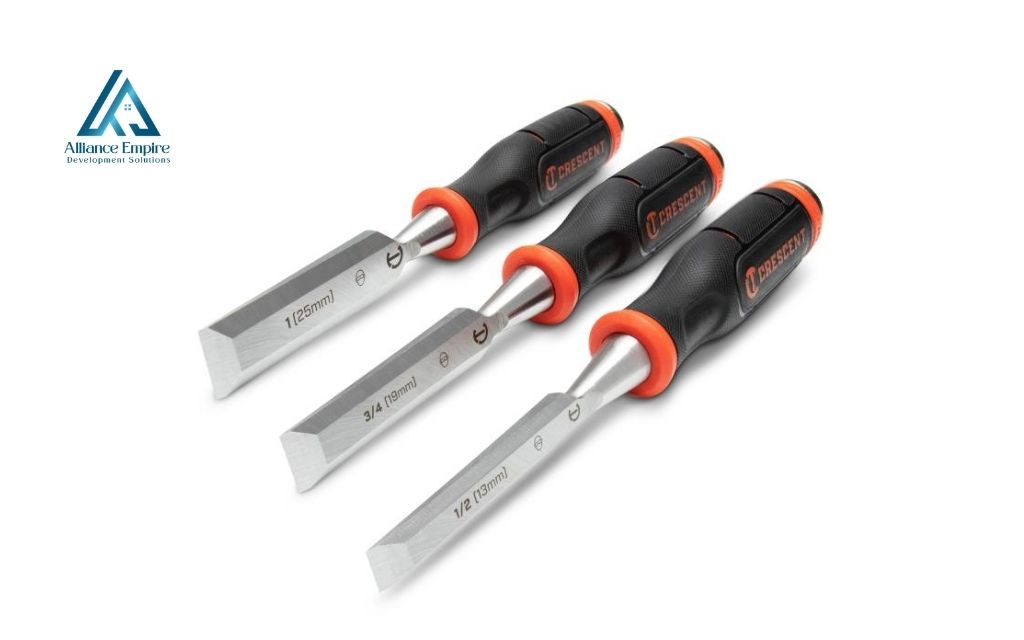
Chisel
A chisel is a hand tool with a sharpened edge used to carve, cut, or shape materials like wood, stone, or concrete. It is typically struck with a hammer or mallet to drive the blade into the material being worked.
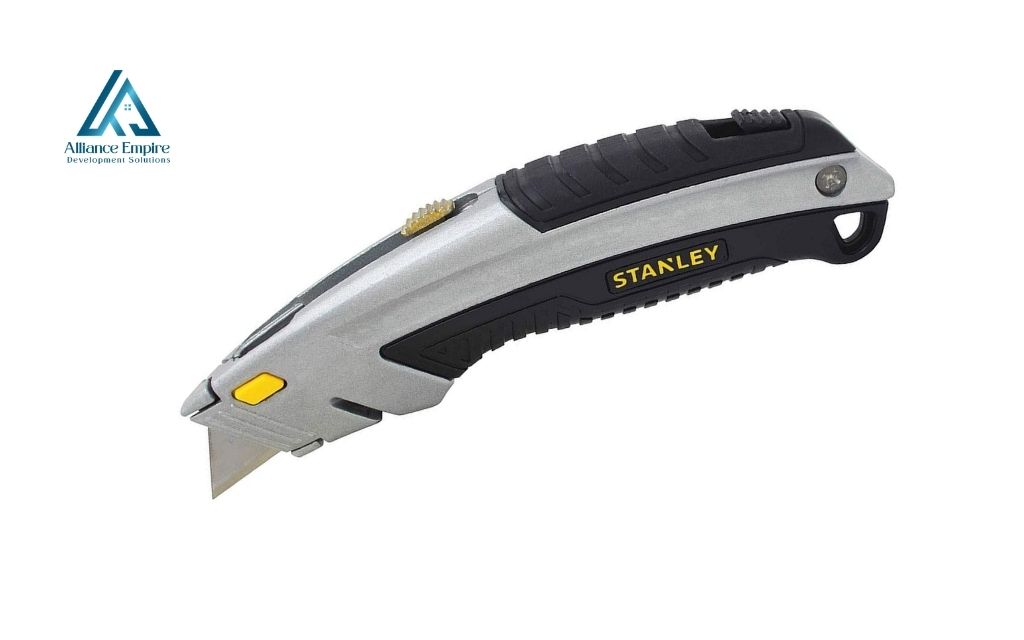
Utility knife
A utility knife is a small, handheld cutting tool with a retractable or replaceable blade, used for precise cutting tasks such as trimming drywall, cutting insulation, or opening packaging on a jobsite.
How to choose the right construction equipment for your project
Picking the right machine is rarely just about what is available to rent. The best equipment choice depends on several project-specific factors:
- Project size and scope: A backyard landscaping job calls for different equipment than a commercial building foundation.
- Site access: Narrow gates, tight urban lots, or low ceilings may rule out larger machines in favor of compact or mini equipment.
- Terrain and ground conditions: Soft, muddy, or sandy ground favors tracked equipment, while firm, paved surfaces work well with wheeled machines.
- Load capacity: The weight and size of materials being moved determines whether a forklift, telehandler, or larger crane is appropriate.
- Digging depth or lifting height: Trenching to 6 feet is a different job than digging a 20-foot foundation, just as reaching a single story is different from reaching the fifth floor of a building.
- Soil conditions: Rocky, clay-heavy, or previously disturbed soil can affect which earthmoving equipment performs best.
- Operator training and certification: Cranes, aerial lifts, and certain heavy earthmoving machines require trained or certified operators under OSHA and manufacturer guidelines.
Conclusion
Choosing the right equipment for a project takes more than knowing names. It means matching machine capability to your site conditions, project scope, and safety requirements. Whether you are managing a small residential job or coordinating equipment across a larger commercial build, understanding these building construction equipment names helps you communicate clearly with crews, vendors, and project partners.
If your project involves roofing or building work in the Denver area and you want guidance on what equipment or approach fits your job, Alliance EDS is here to help. With over 15 years of experience, our team offers honest assessments and proven workmanship rather than sales pressure. Call us at (720) 484-8181 to talk through your project today!
Frequently asked questions (FAQs)
What is the most common piece of construction equipment?
Excavators and skid steer loaders are among the most commonly used machines because of how versatile they are across digging, grading, and material handling tasks on almost any type of project.
What is the difference between an excavator and a backhoe?
An excavator’s cab rotates a full 360 degrees and is typically mounted on tracks, which makes it more powerful and precise for digging and demolition. A backhoe loader rides on wheels, has a more limited swing range on its digging arm, and includes a front loader bucket, which makes it more versatile for mixed tasks like loading and light excavation.
What is the difference between a boom lift and a scissor lift?
A boom lift has an extendable arm that can reach outward as well as upward, while a scissor lift only raises its platform straight up. Boom lifts work well for reaching over obstacles, while scissor lifts are better suited for tasks directly above the machine’s base.
Do I need a license to operate construction equipment?
Many types of heavy equipment, including cranes, aerial lifts, and certain earthmoving machines, require operator training or certification under OSHA and manufacturer standards. Always confirm training requirements before operating unfamiliar equipment.
What is the difference between a skid steer and a compact track loader?
A skid steer rides on wheels and works best on firm, stable ground, while a compact track loader rides on rubber tracks that lower ground pressure and improve traction on soft, muddy, or uneven terrain.
What is the difference between a forklift and a telehandler?
A forklift lifts and moves palletized materials over short distances on relatively flat ground. A telehandler has a telescoping boom that extends both outward and upward, allowing it to lift materials higher and reach further, often on rougher terrain than a standard forklift can handle.